Everlasting love Quote by John Newton
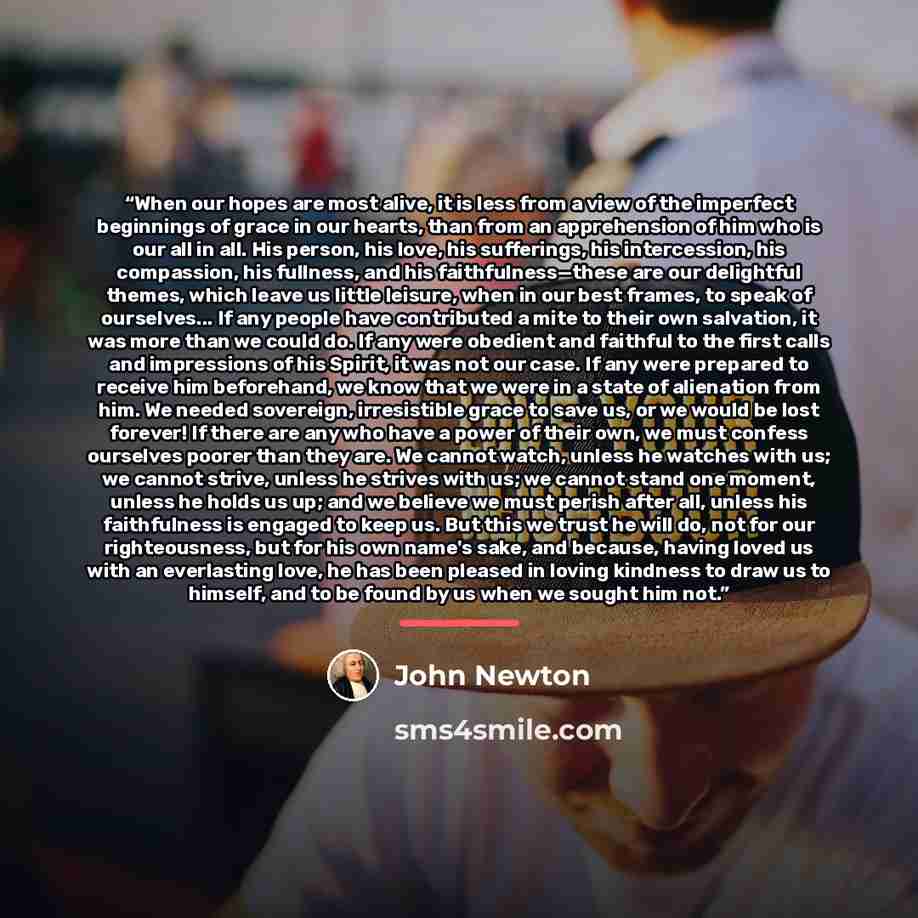
““When our hopes are most alive, it is less from a view of the imperfect beginnings of grace in our hearts, than from an apprehension of him who is our all in all. His person, his love, his sufferings, his intercession, his compassion, his fullness, and his faithfulness—these are our delightful themes, which leave us little leisure, when in our best frames, to speak of ourselves... If any people have contributed a mite to their own salvation, it was more than we could do. If any were obedient and faithful to the first calls and impressions of his Spirit, it was not our case. If any were prepared to receive him beforehand, we know that we were in a state of alienation from him. We needed sovereign, irresistible grace to save us, or we would be lost forever! If there are any who have a power of their own, we must confess ourselves poorer than they are. We cannot watch, unless he watches with us; we cannot strive, unless he strives with us; we cannot stand one moment, unless he holds us up; and we believe we must perish after all, unless his faithfulness is engaged to keep us. But this we trust he will do, not for our righteousness, but for his own name's sake, and because, having loved us with an everlasting love, he has been pleased in loving kindness to draw us to himself, and to be found by us when we sought him not.””
About This Quote
Source Sermon: The Grace of God, John Newton, 1779
Human effort is insufficient; divine grace is essential for salvation and continual reliance on God's power.
In simple terms: We need God's grace, not our own strength, to be saved.
Key Takeaway
Rely on divine grace, not self‑reliance.
Themes
salvation
grace
humility
dependence
faith
Mood
humious
reverent
hopeful
Type
theological
inspirational
reflective
When to use this quote
- personal prayer
- church worship
- spiritual counseling
- mission work
- daily devotion
Key Concepts
Divine sovereignty
spiritual dependence
theology of grace
Questions to Reflect On
- How do you recognize God's grace in daily life?
- What steps can you take to trust more fully in divine help?
A Different Perspective
Human attempts at self‑salvation are limited without God's intervention.






![“We have no clear ideas of the agency of [demonic] spirits, nor is it necessary. The Scripture says little to satisfy our curiosity; but tells us plainly that he is always watching us, and desiring to sift us as wheat. I believe we give him no more than his due, when we charge him with having a…” quote by John Newton](https://sms4smile.com/quotes/img-quotes/c75/john-newton-6629_abundance_we-have-no-clear-ideas-of-the-agency-of_2907.jpg)