Add Quote by John Milton
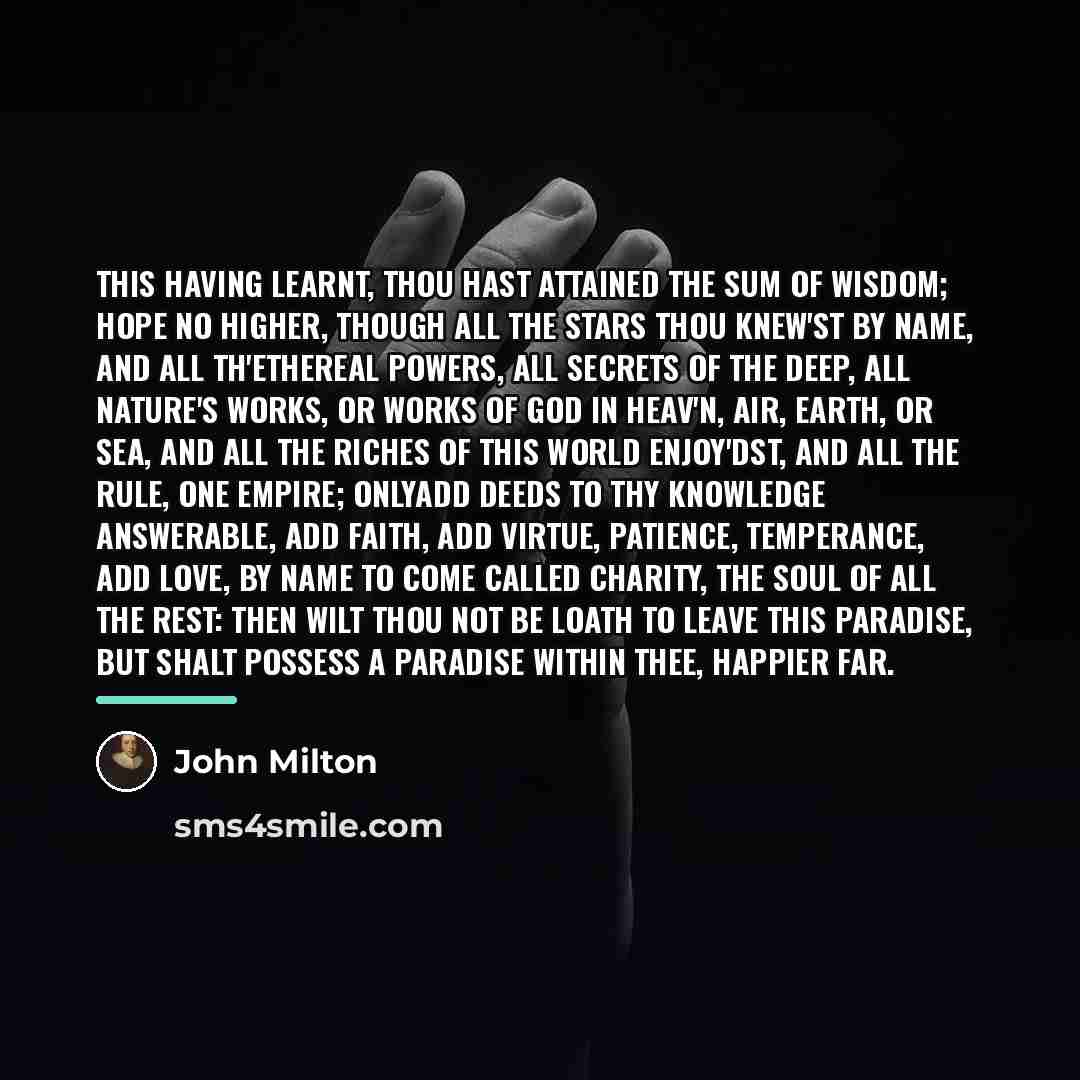
“This having learnt, thou hast attained the sum Of wisdom; hope no higher, though all the stars Thou knew'st by name, and all th'ethereal powers, All secrets of the deep, all nature's works, Or works of God in heav'n, air, earth, or sea, And all the riches of this world enjoy'dst, And all the rule, one empire; onlyadd Deeds to thy knowledge answerable, add faith, Add virtue, patience, temperance, add love, By name to come called charity, the soul Of all the rest: then wilt thou not be loath To leave this Paradise, but shalt possess A paradise within thee, happier far.”
About This Quote
Source Poem: Paradise Lost, Book 1, 1667
A call to pursue wisdom, virtue, and love, adding moral qualities to knowledge to achieve inner fulfillment.
In simple terms: Add virtues like love and patience to what you know for true happiness.
Key Takeaway
Cultivate virtue alongside learning.
Themes
wisdom
virtue
spirituality
self‑improvement
inner peace
Mood
reflective
inspirational
hopeful
Type
philosophical
spiritual
inspirational
When to use this quote
- education
- personal development
- spiritual practice
- leadership
- community service
Key Concepts
moral development
philosophical growth
ethical living
Questions to Reflect On
- What virtues do you need to develop further?
- How does knowledge become meaningful when paired with love?
A Different Perspective
Virtue alone cannot guarantee happiness without practical action and compassion.