Decision making Quote by Jerome Groopman
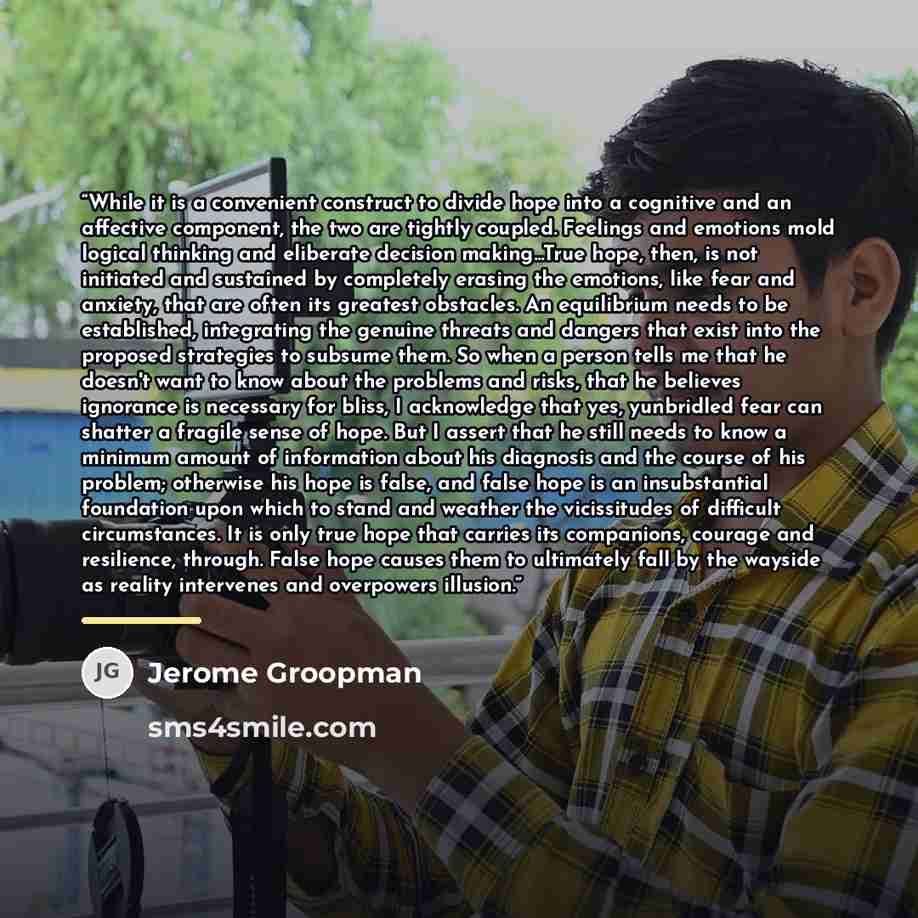
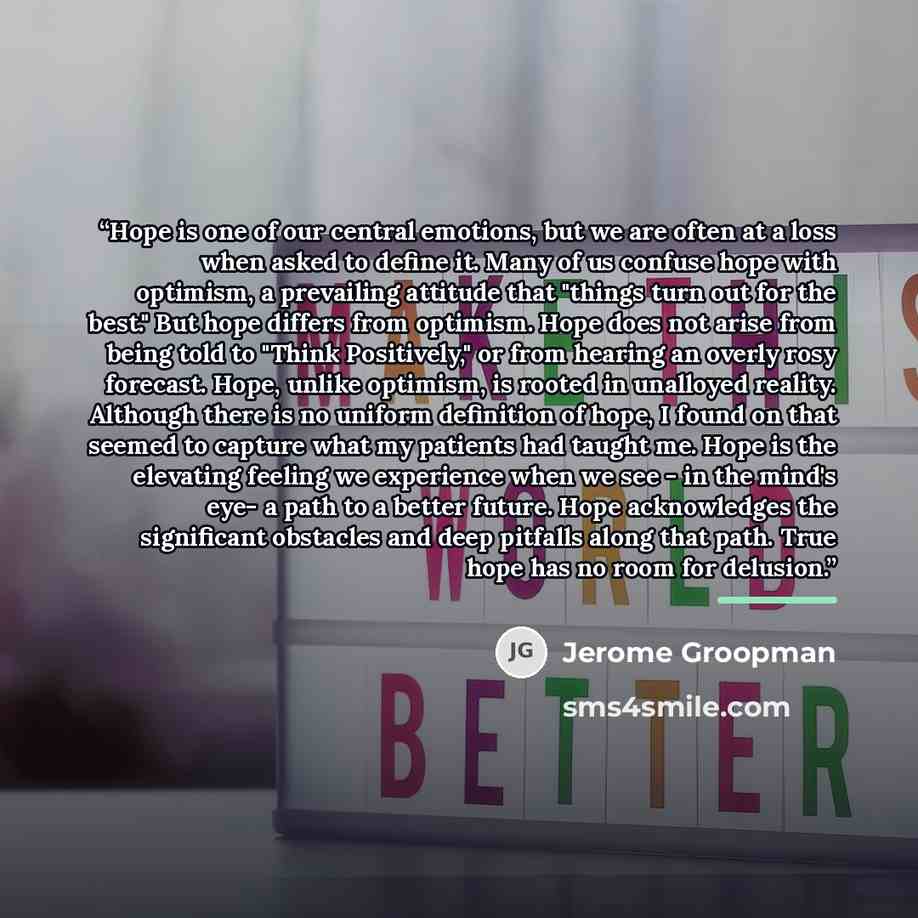
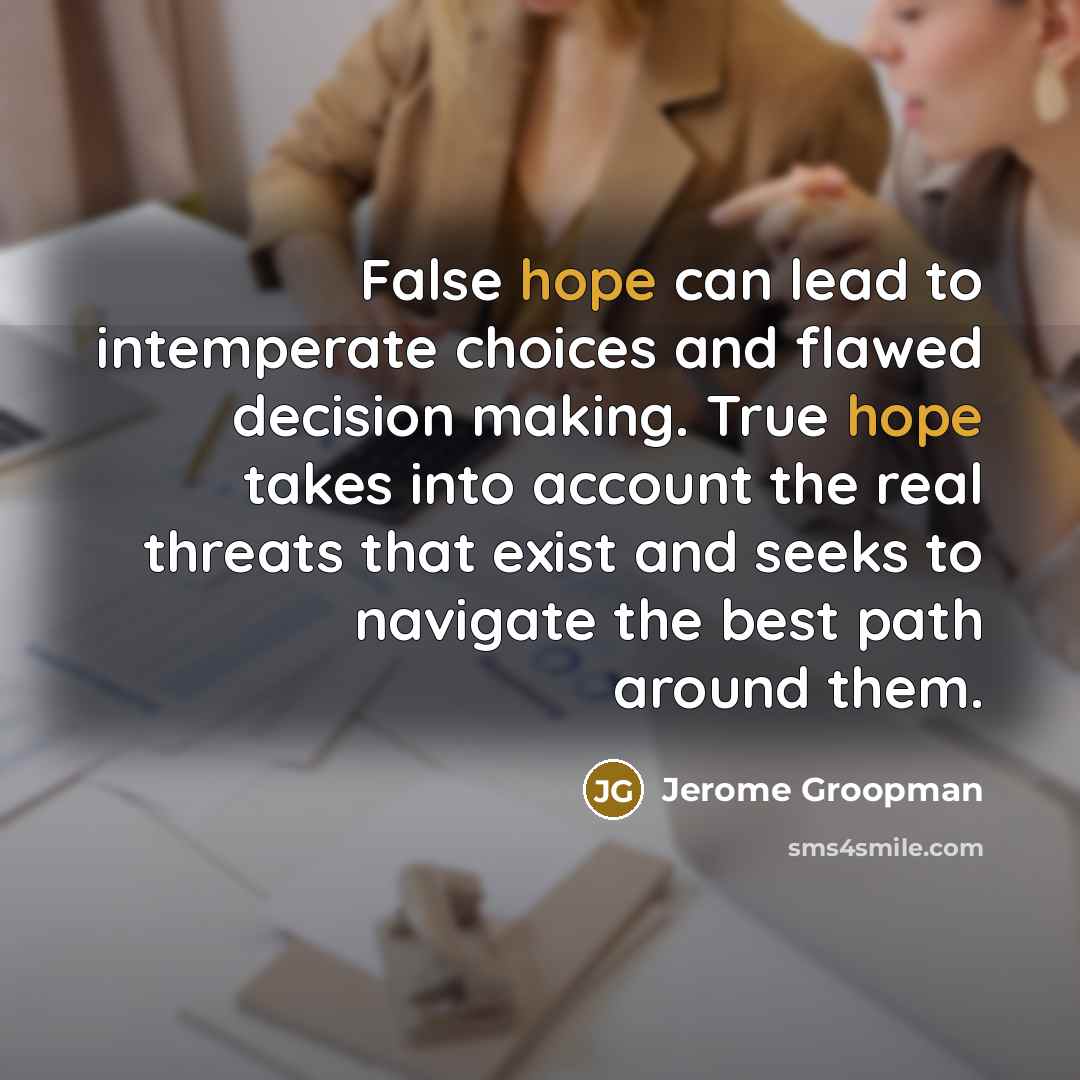
““While it is a convenient construct to divide hope into a cognitive and an affective component, the two are tightly coupled. Feelings and emotions mold logical thinking and eliberate decision making...True hope, then, is not initiated and sustained by completely erasing the emotions, like fear and anxiety, that are often its greatest obstacles. An equilibrium needs to be established, integrating the genuine threats and dangers that exist into the proposed strategies to subsume them. So when a person tells me that he doesn't want to know about the problems and risks, that he believes ignorance is necessary for bliss, I acknowledge that yes, yunbridled fear can shatter a fragile sense of hope. But I assert that he still needs to know a minimum amount of information about his diagnosis and the course of his problem; otherwise his hope is false, and false hope is an insubstantial foundation upon which to stand and weather the vicissitudes of difficult circumstances. It is only true hope that carries its companions, courage and resilience, through. False hope causes them to ultimately fall by the wayside as reality intervenes and overpowers illusion.””
About This Quote
Source Book: How Doctors Think, Jerome Groopman, 2007
Hope must balance realistic awareness of risks with emotional support, integrating fear into informed strategies rather than ignoring it.
In simple terms: True hope mixes knowledge of danger with courage.
Key Takeaway
Seek informed optimism, not denial.
Themes
hope
resilience
courage
risk-awareness
decision-making
Mood
reflective
balanced
cautious
Type
philosophical
inspirational
When to use this quote
- patient counseling
- risk communication
- personal health decisions
- mental health therapy
Key Concepts
psychology
medical ethics
emotional intelligence
Questions to Reflect On
- How can you acknowledge threats while maintaining optimism?
- What information is essential for realistic hope?
A Different Perspective
Ignoring danger leads to fragile, false hope that collapses under reality.
![“Fear cannot be without hope nor hope without fear. [They are the two sides of a coin, so learning how to manage fear through learning, understanding, rationality, controlled imagination, preparation, mental focus (including distraction) and a gratitude attitude is very helpful.]” quote by Baruch Spinoza](https://sms4smile.com/quotes/img-quotes/d90/baruch-spinoza-1338_anticipation_fear-cannot-be-without-hope-nor-hope-wit_304096.jpg)
![“One of the difficulties I experienced in trying to learn about the biology of emotions was the definition of terms...How would [Prof. Richard Davidson], as an experimental psychologist, deconstruct [hope]? "I understand hope as an emotion made up of two parts: a cognitive part and an affective…” quote by Jerome Groopman](https://sms4smile.com/quotes/img-quotes/30f/jerome-groopman-23277_hope_one-of-the-difficulties-i-experienced-in_1380376.jpg)