Science Quote by James T. Patterson
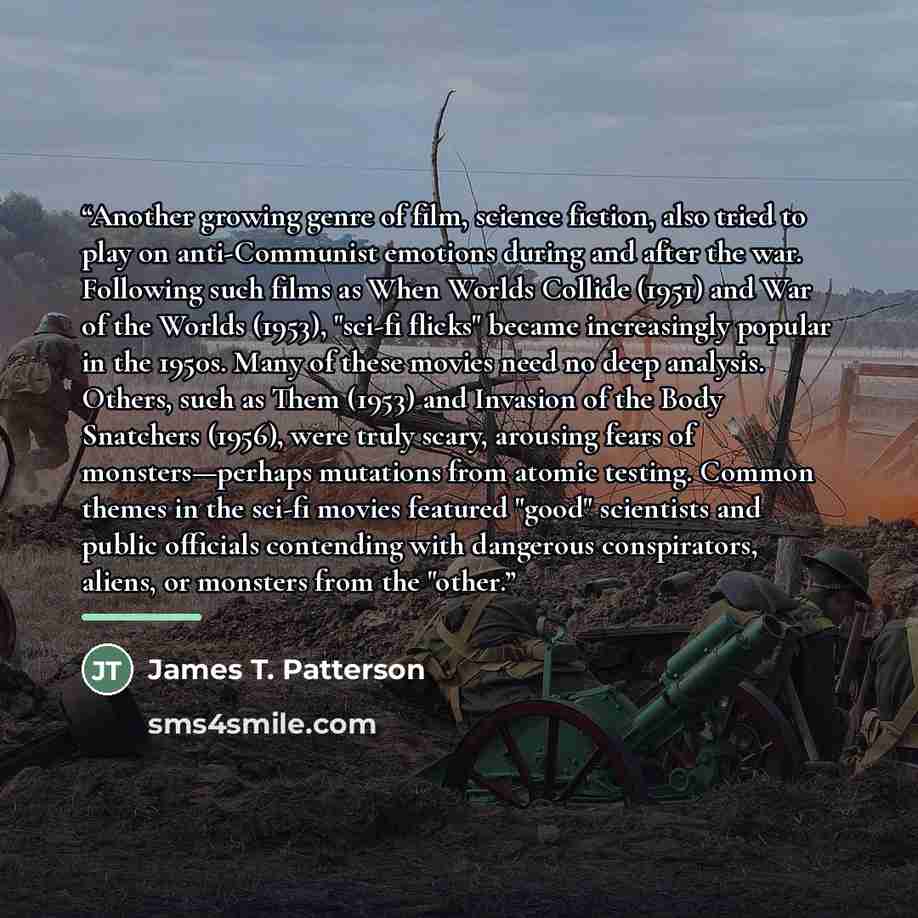
““Another growing genre of film, science fiction, also tried to play on anti-Communist emotions during and after the war. Following such films as When Worlds Collide (1951) and War of the Worlds (1953), "sci-fi flicks" became increasingly popular in the 1950s. Many of these movies need no deep analysis. Others, such as Them (1953) and Invasion of the Body Snatchers (1956), were truly scary, arousing fears of monsters—perhaps mutations from atomic testing. Common themes in the sci-fi movies featured "good" scientists and public officials contending with dangerous conspirators, aliens, or monsters from the "other.””
About This Quote
Source Book: The Cold War and the American People, 2000
1950s sci‑fi films reflected Cold War anxieties, using monsters and conspiracies to symbolize fears of communism and nuclear fallout.
In simple terms: Sci‑fi movies expressed Cold War fears through monsters and conspiracies.
Key Takeaway
Recognize how media mirrors societal fears.
Themes
culture
politics
media
fear
history
Mood
analytical
critical
Type
cultural
historical
When to use this quote
- film criticism
- historical research
- media literacy
- classroom teaching
Key Concepts
Cold War
propaganda
genre analysis
mythmaking
Questions to Reflect On
- What modern media echo these anxieties?
- How do we differentiate satire from propaganda?
A Different Perspective
Films can oversimplify complex political issues.