Endowment Quote by Immanuel Kant
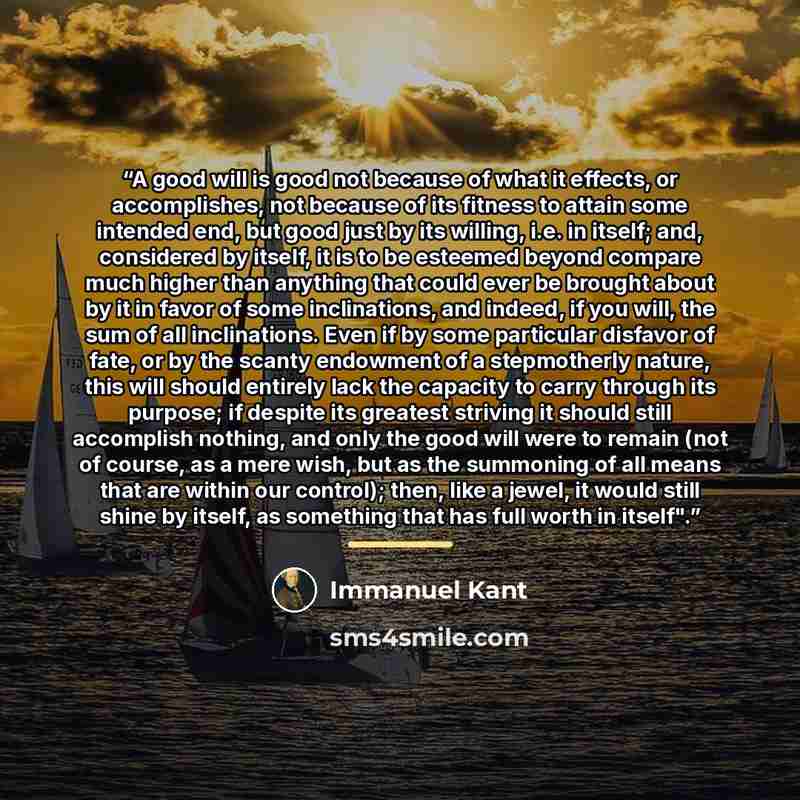
““A good will is good not because of what it effects, or accomplishes, not because of its fitness to attain some intended end, but good just by its willing, i.e. in itself; and, considered by itself, it is to be esteemed beyond compare much higher than anything that could ever be brought about by it in favor of some inclinations, and indeed, if you will, the sum of all inclinations. Even if by some particular disfavor of fate, or by the scanty endowment of a stepmotherly nature, this will should entirely lack the capacity to carry through its purpose; if despite its greatest striving it should still accomplish nothing, and only the good will were to remain (not of course, as a mere wish, but as the summoning of all means that are within our control); then, like a jewel, it would still shine by itself, as something that has full worth in itself".””
About This Quote
Source Philosophy: Groundwork of the Metaphysics of Morals, 1785
Moral worth lies in the intention behind actions, not their outcomes; a good will is valuable in itself.
In simple terms: Good will is valuable for its own sake.
Key Takeaway
Value intention over results.
Themes
ethics
philosophy
intrinsic value
Mood
reflective
thoughtful
Type
philosophical
ethical
When to use this quote
- personal decisionmaking
- leadership
- ethical dilemmas
Key Concepts
deontology
good will
moral worth
Questions to Reflect On
- Can intention alone justify moral praise?
- How do we assess actions with no tangible results?
A Different Perspective
If outcomes are harmful, a good will may be insufficient.