Nuclear proliferation Quote by Howard Zinn
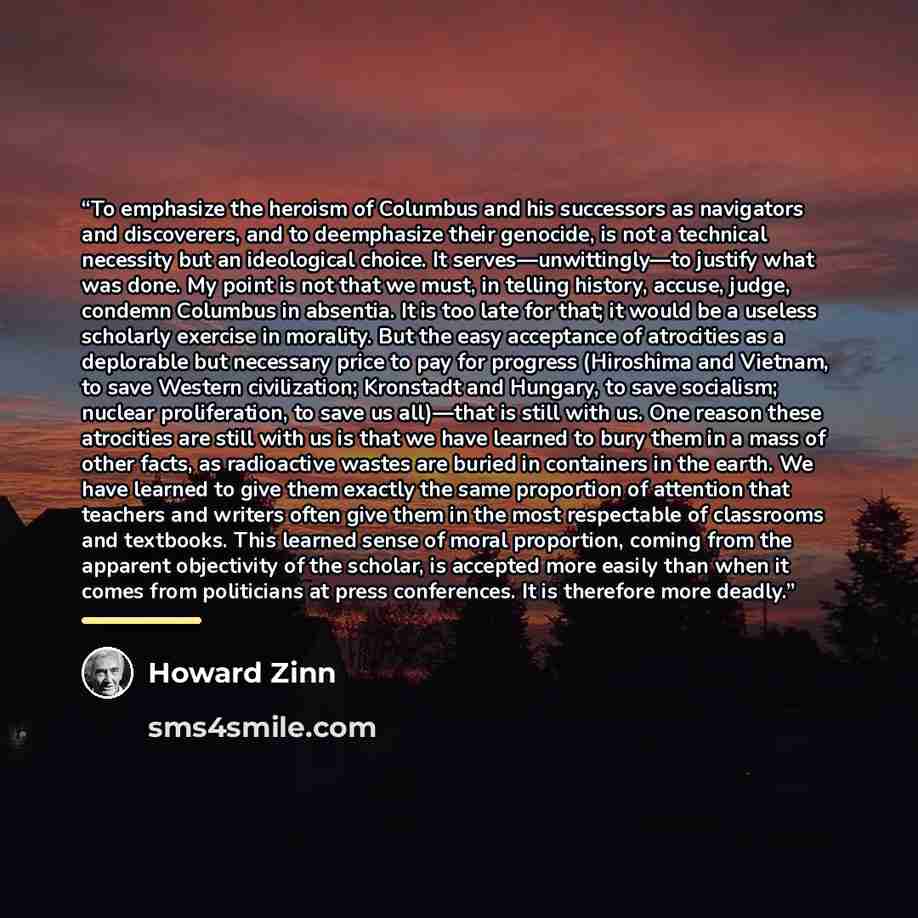
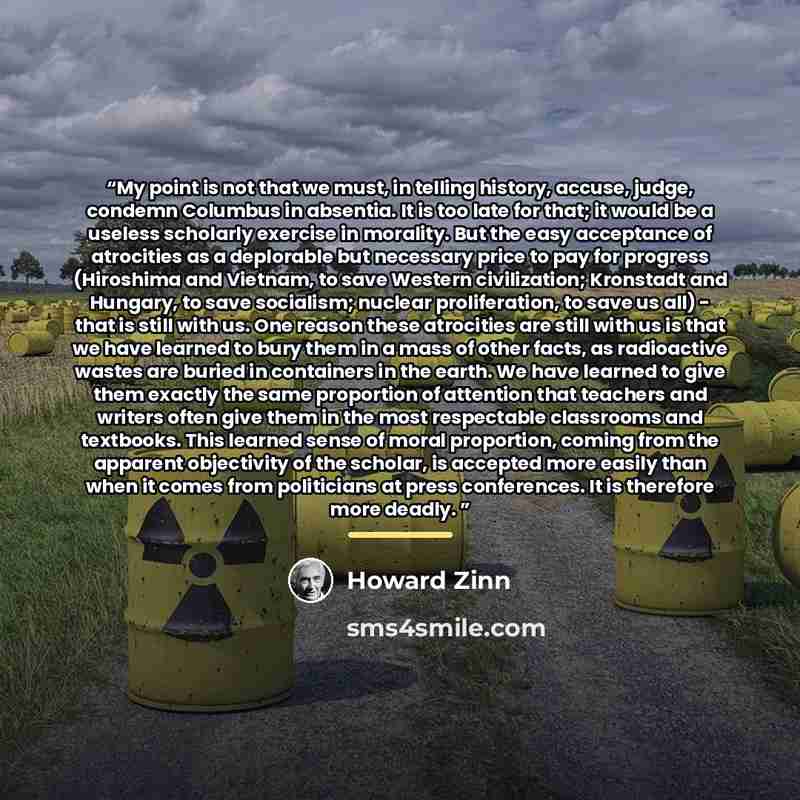
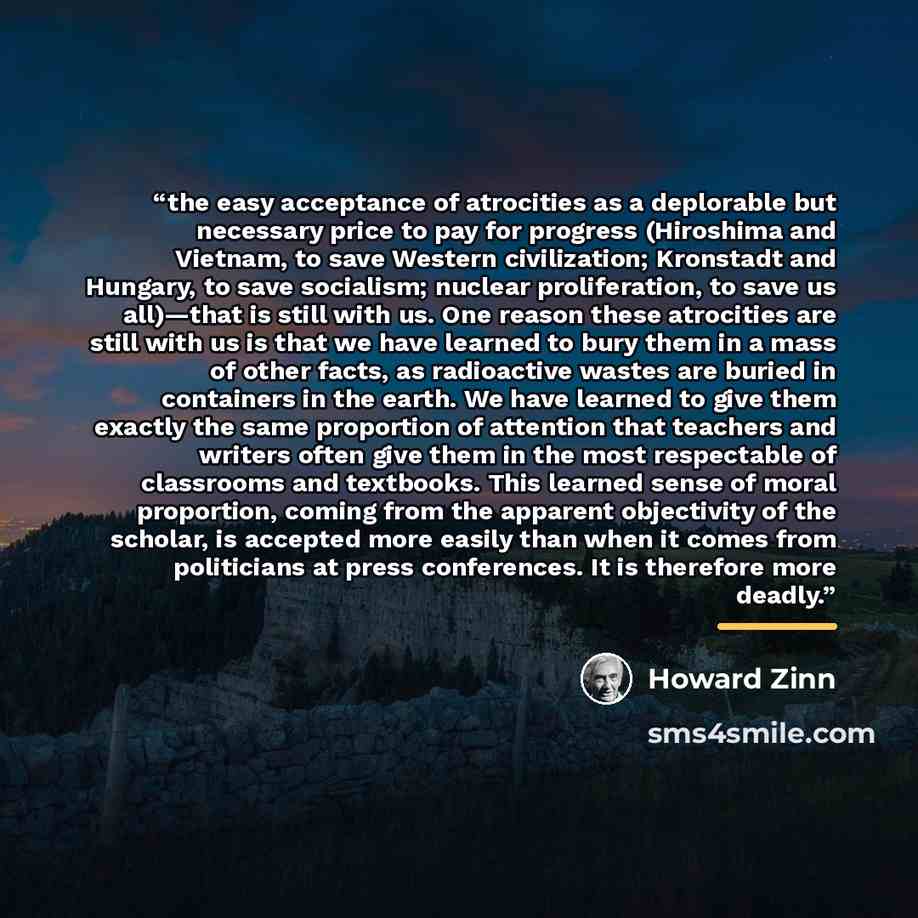
““To emphasize the heroism of Columbus and his successors as navigators and discoverers, and to deemphasize their genocide, is not a technical necessity but an ideological choice. It serves—unwittingly—to justify what was done. My point is not that we must, in telling history, accuse, judge, condemn Columbus in absentia. It is too late for that; it would be a useless scholarly exercise in morality. But the easy acceptance of atrocities as a deplorable but necessary price to pay for progress (Hiroshima and Vietnam, to save Western civilization; Kronstadt and Hungary, to save socialism; nuclear proliferation, to save us all)—that is still with us. One reason these atrocities are still with us is that we have learned to bury them in a mass of other facts, as radioactive wastes are buried in containers in the earth. We have learned to give them exactly the same proportion of attention that teachers and writers often give them in the most respectable of classrooms and textbooks. This learned sense of moral proportion, coming from the apparent objectivity of the scholar, is accepted more easily than when it comes from politicians at press conferences. It is therefore more deadly.””
About This Quote
Source Essay: A People’s History of the United States, 1980
Historical narratives often downplay atrocities to justify progress, shaping collective memory.
In simple terms: History can be selective, masking crimes.
Key Takeaway
Question dominant narratives and seek fuller truth.
Themes
history
memory
ethics
Mood
critical
somber
Type
philosophical
inspirational
When to use this quote
- education
- media
- political discourse
Key Concepts
colonialism
nationalism
moral relativism
Questions to Reflect On
- How does selective history affect identity?
- What responsibilities do scholars have in truth‑telling?
A Different Perspective
Ignoring past crimes can repeat them.



![“This man, although he may not have actually committed the crime attributed to him, is nevertheless morally culpable, because he is the enemy of our existing institutions. [Case of Nicola Sacco and Bartolomeo Vanzetti 1916-1927]” quote by Judge Webster Thayer](https://sms4smile.com/quotes/img-quotes/8fe/judge-webster-thayer-250866_crime_this-man-although-he-may-not-have-actual_375068.jpg)






![“The next most dangerous thing [after nuclear proliferation] is probably... global warming, and then, right behind that are overpopulation -- we need to get serious about family planning-and trying to alleviate poverty, to get clean, renewable energy, probably with solar panels to the billion and a…” quote by Ted Turner](https://sms4smile.com/quotes/img-quotes/dcf/ted-turner-2784_about-family_the-next-most-dangerous-thing-after-nucl_200482.jpg)