Food and wine Quote by Hilary Mantel
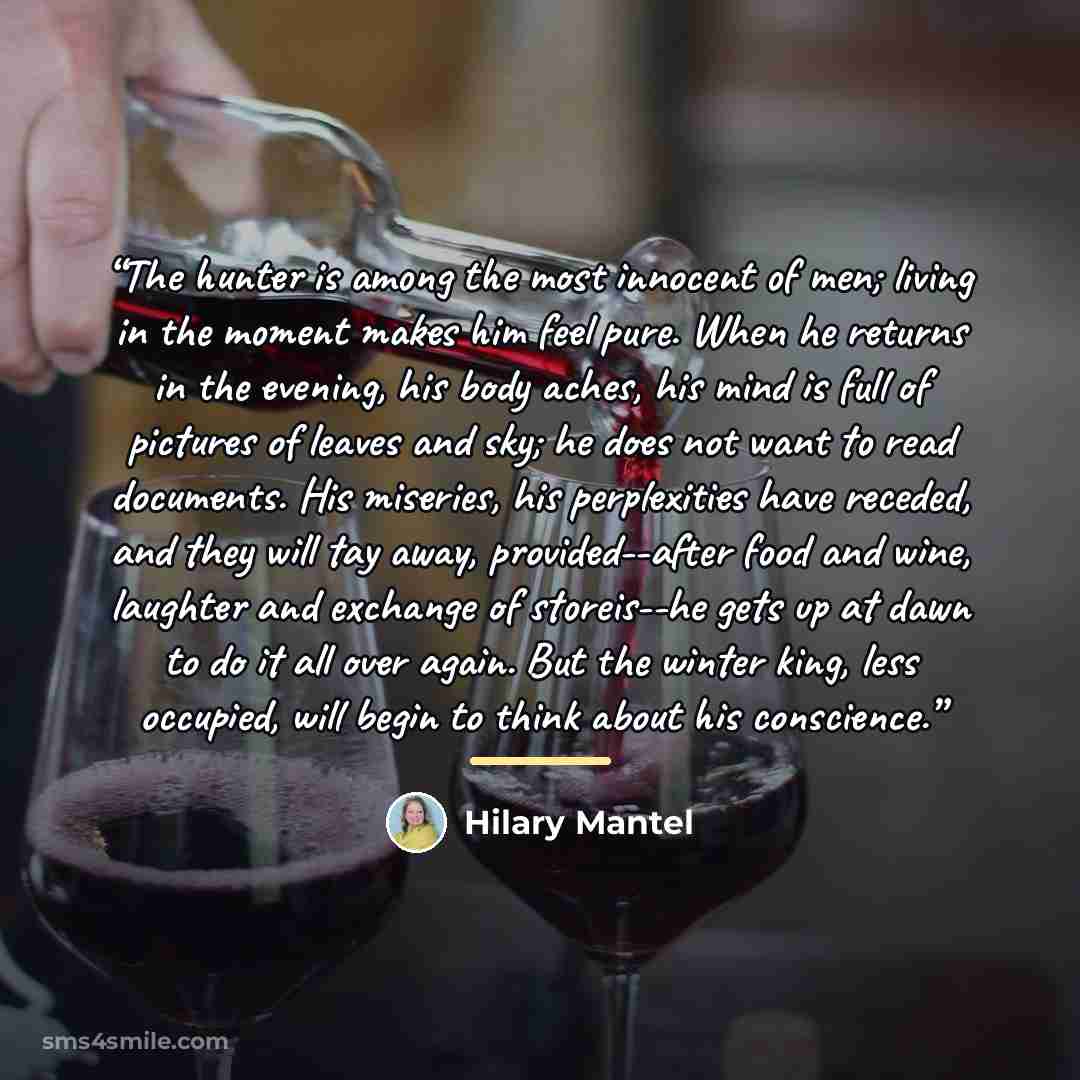
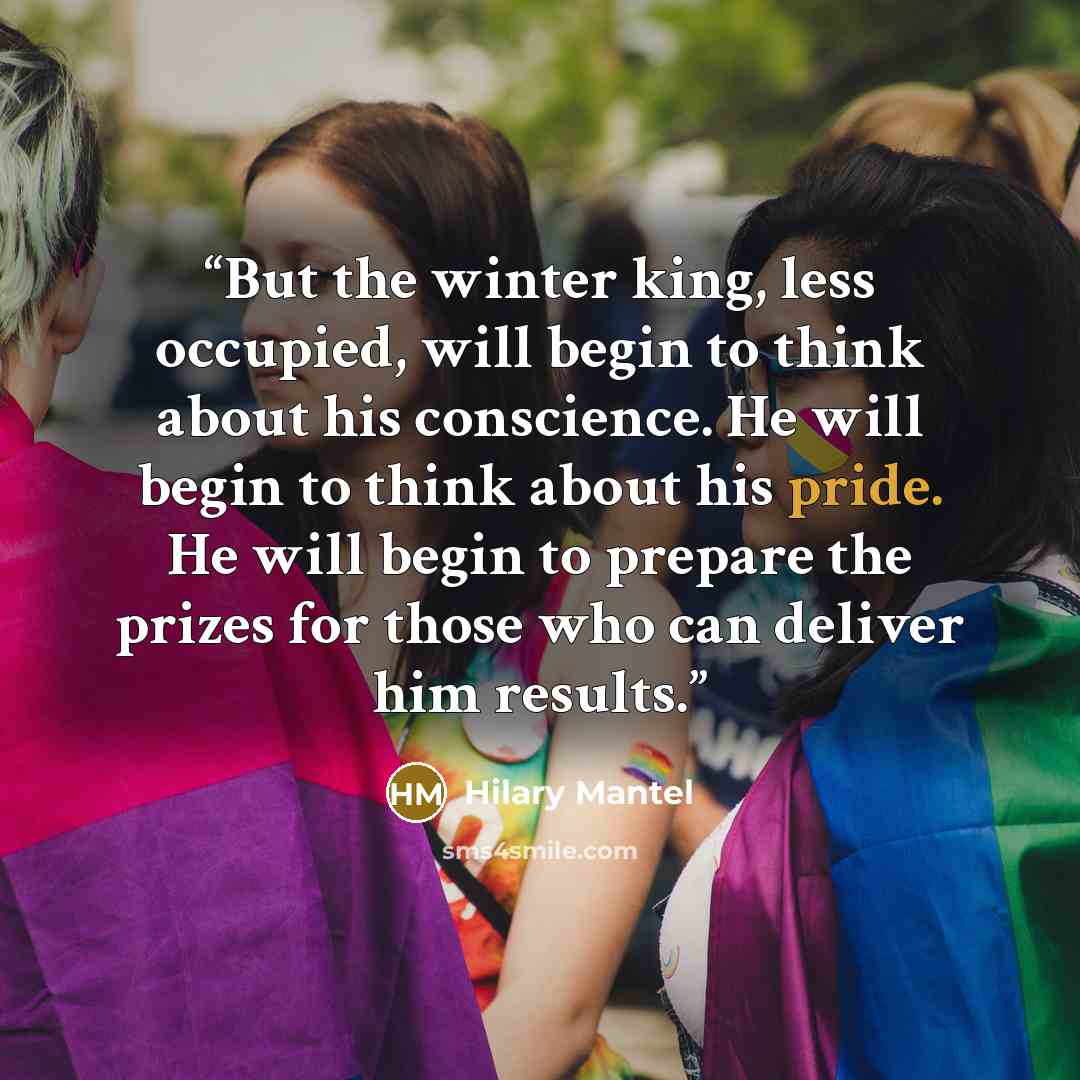
““The hunter is among the most innocent of men; living in the moment makes him feel pure. When he returns in the evening, his body aches, his mind is full of pictures of leaves and sky; he does not want to read documents. His miseries, his perplexities have receded, and they will tay away, provided--after food and wine, laughter and exchange of storeis--he gets up at dawn to do it all over again. But the winter king, less occupied, will begin to think about his conscience.””
About This Quote
The passage contrasts the visceral, present‑focused fulfillment of physical labor with the introspective, potentially burdensome mental life of those less engaged in tangible work.
In simple terms: Physical labor grounds the mind, while idle contemplation can stir conscience.
Key Takeaway
Embodied activity quiets existential anxiety.
Themes
presence
embodiment
consciousness
contrast
routine
solitude
Mood
contemplative
earthy
melancholic
Type
philosophical
narrative
reflective
When to use this quote
- after a day of outdoor work
- during a quiet evening at home
- while reflecting on personal values
- in a community gathering over food
Key Concepts
sensory immersion
mental fatigue
social ritual
seasonal cycles
Practical Applications
- use as a metaphor for work‑life balance
- illustrate the therapeutic value of physical activity
Questions to Reflect On
- How does routine physical work shape one's sense of self?
- What role does community play in alleviating existential concerns?
A Different Perspective
Some argue that intellectual pursuits can also provide deep fulfillment, not just physical labor.