Anti racism Quote by Harsha Walia

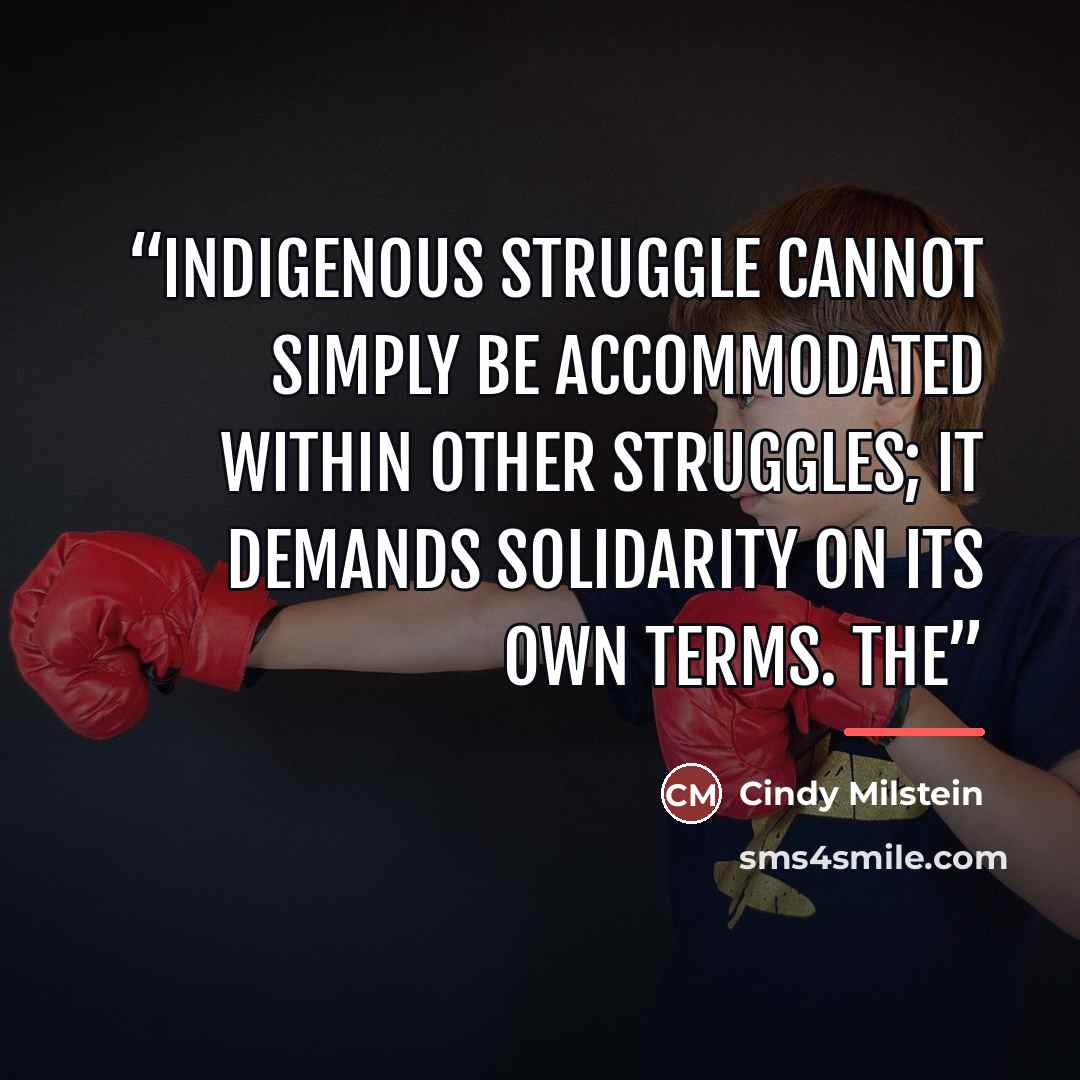
““It is a positive sign that a growing number of social movements are recognizing that indigenous self-determination must become the foundation for all our broader social justice mobilizing. Indigenous peoples are the most impacted by the pillage of lands, experience disproportionate poverty and homelessness, and overrepresented in statistics of missing an murdered women, and are the primary targets of repressive policing and prosecutions in the criminal injustice system. Rather than being treated as a single issue within a laundry list of demands, indigenous self-determination is increasingly understood as intertwined with struggles against racism, poverty, police violence, war and occupation, violence against women, and environmental justice. ... We have to be cautious to avoid replicating the state's assimilationist model of liberal pluralism, whereby indigenous identities are forced to fit within our existing groups and narratives. ... Indigenous struggle cannot simply be accommodated within other struggles; it demands solidarity on its own terms. Original blog post: Unsettling America: Decolonization in Theory and Practice. Quoted In: Decolonize Together: Moving beyond a Politics of Solidarity toward a Practice of Decolonization. Taking Sides.””
About This Quote
Source Blog post: Unsettling America: Decolonization in Theory and Practice, 2020
The quote argues that true social justice must center Indigenous self‑determination, linking it to broader struggles while warning against assimilative liberal frameworks.
In simple terms: Indigenous rights are essential to all justice work.
Key Takeaway
Center Indigenous voices in activism.
Themes
justice justice
decolonization
solidarity
indigenous rights
environmental justice
Mood
determ
determined
hopeful
Type
activist
theoretical
call‑to‑action
When to use this quote
- community organizing
- policy advocacy
- education curricula
- environmental campaigns
- legal reform
Key Concepts
intersectionality
self‑determination
colonial critique
Questions to Reflect On
- How can movements ensure Indigenous leadership remains primary?
- What concrete steps prevent assimilationist policies?
A Different Perspective
Risk of co‑option into mainstream narratives that dilute Indigenous autonomy.

![“Country must confront what he called institutional racism. [We should] create a country which provides economic, social and environmental justice for all.” quote by Bernie Sanders](https://sms4smile.com/quotes/img-quotes/ec1/bernie-sanders-233_country_country-must-confront-what-he-called-ins_1718017.jpg)

![“Environmental justice [means that] no community should be saddled with more environmental burdens and less environmental benefits than any other.” quote by Majora Carter](https://sms4smile.com/quotes/img-quotes/b07/majora-carter-17939_activism_environmental-justice-means-that-no-comm_852315.jpg)