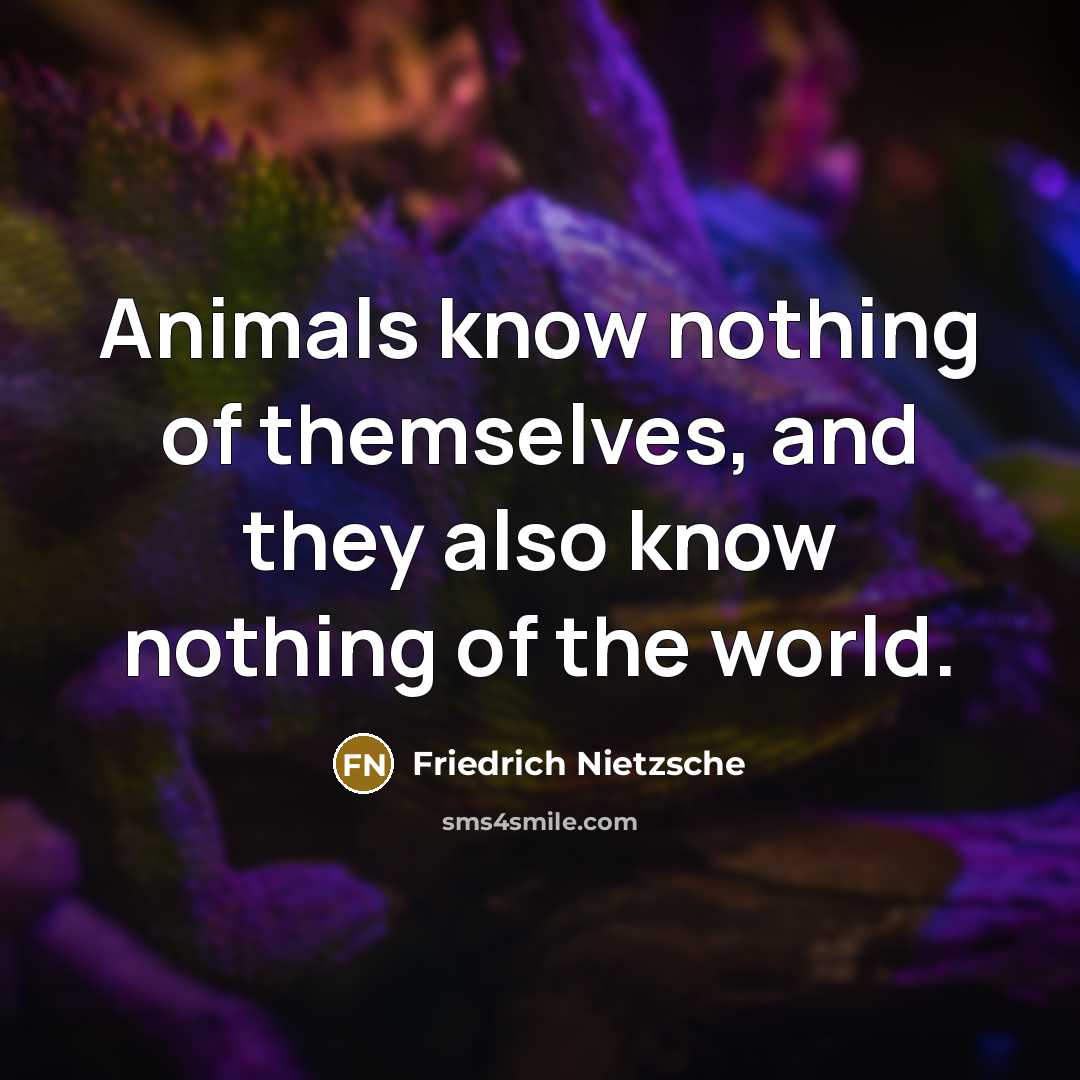
Character Quote by Friedrich Nietzsche
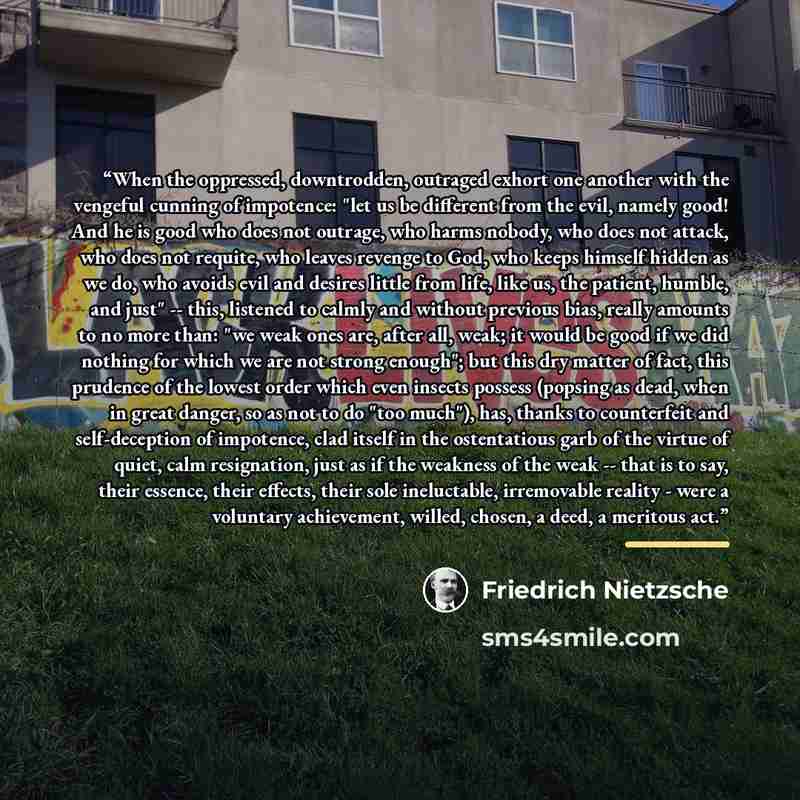
““When the oppressed, downtrodden, outraged exhort one another with the vengeful cunning of impotence: "let us be different from the evil, namely good! And he is good who does not outrage, who harms nobody, who does not attack, who does not requite, who leaves revenge to God, who keeps himself hidden as we do, who avoids evil and desires little from life, like us, the patient, humble, and just" -- this, listened to calmly and without previous bias, really amounts to no more than: "we weak ones are, after all, weak; it would be good if we did nothing for which we are not strong enough"; but this dry matter of fact, this prudence of the lowest order which even insects possess (popsing as dead, when in great danger, so as not to do "too much"), has, thanks to counterfeit and self-deception of impotence, clad itself in the ostentatious garb of the virtue of quiet, calm resignation, just as if the weakness of the weak -- that is to say, their essence, their effects, their sole ineluctable, irremovable reality - were a voluntary achievement, willed, chosen, a deed, a meritous act.””
About This Quote
A critique of passive resignation, arguing that the weak masquerade humility as virtue while avoiding real action.
In simple terms: Passive resignation masquerades as virtue.
Key Takeaway
Weakness is glorified as moral strength.
Themes
power dynamics
moral philosophy
resignation
illusion
strength vs. weakness
ethical hypocrisy
Mood
defiant
critical
reflective
Type
philosophical
critical
analytical
When to use this quote
- political activism
- social justice movements
- personal empowerment
- ethical decision‑making
Key Concepts
passivity
self-deception
virtue signaling
powerlessness
Practical Applications
- reframing narratives of victimhood
- encouraging proactive agency
Questions to Reflect On
- What does true strength look like in the face of oppression?
- How can we distinguish genuine humility from strategic passivity?