Doe Quote by Eric Hoffer
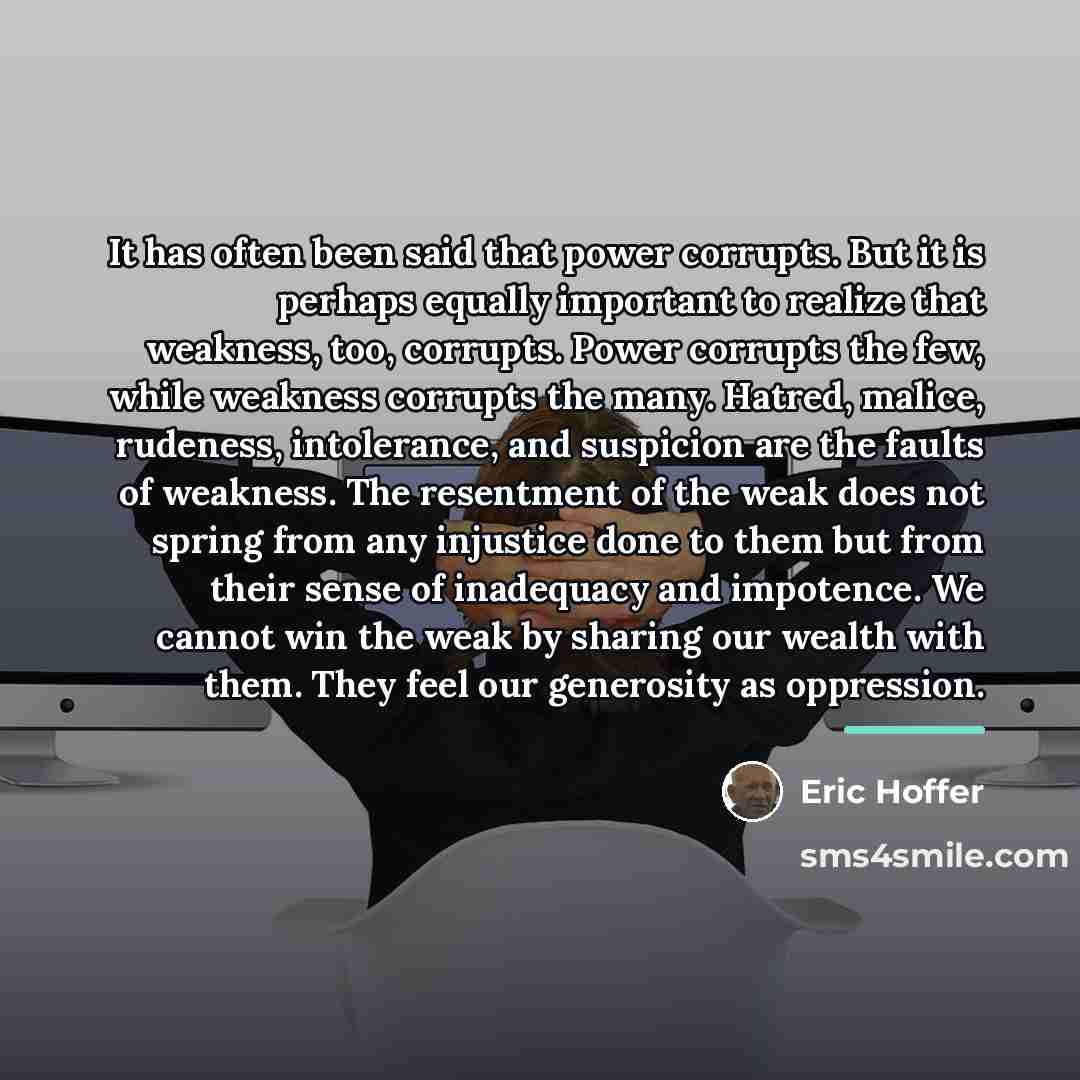
“It has often been said that power corrupts. But it is perhaps equally important to realize that weakness, too, corrupts. Power corrupts the few, while weakness corrupts the many. Hatred, malice, rudeness, intolerance, and suspicion are the faults of weakness. The resentment of the weak does not spring from any injustice done to them but from their sense of inadequacy and impotence. We cannot win the weak by sharing our wealth with them. They feel our generosity as oppression.”
About This Quote
Source Book: The True Believer, Eric Hoffer, 1951
Power and weakness each breed corruption; power corrupts a few elites, while weakness corrupts many through resentment and moral decay.
In simple terms: Both power and weakness can lead to corrupt behavior.
Key Takeaway
Recognize and address the moral failures of both the strong and the weak.
Themes
corruption
power
weakness
morality
social dynamics
Mood
reflective
critical
thoughtful
Type
philosophical
analytical
social commentary
When to use this quote
- leadership decisions
- community building
- policy making
- personal development
Key Concepts
ethical decay
psychology of resentment
social influence
Questions to Reflect On
- How does personal power affect your ethical choices?
- What can societies do to reduce the corrupting influence of weakness?
A Different Perspective
Weakness may also stem from systemic oppression, not just personal inadequacy.