Common people Quote by Erasmus
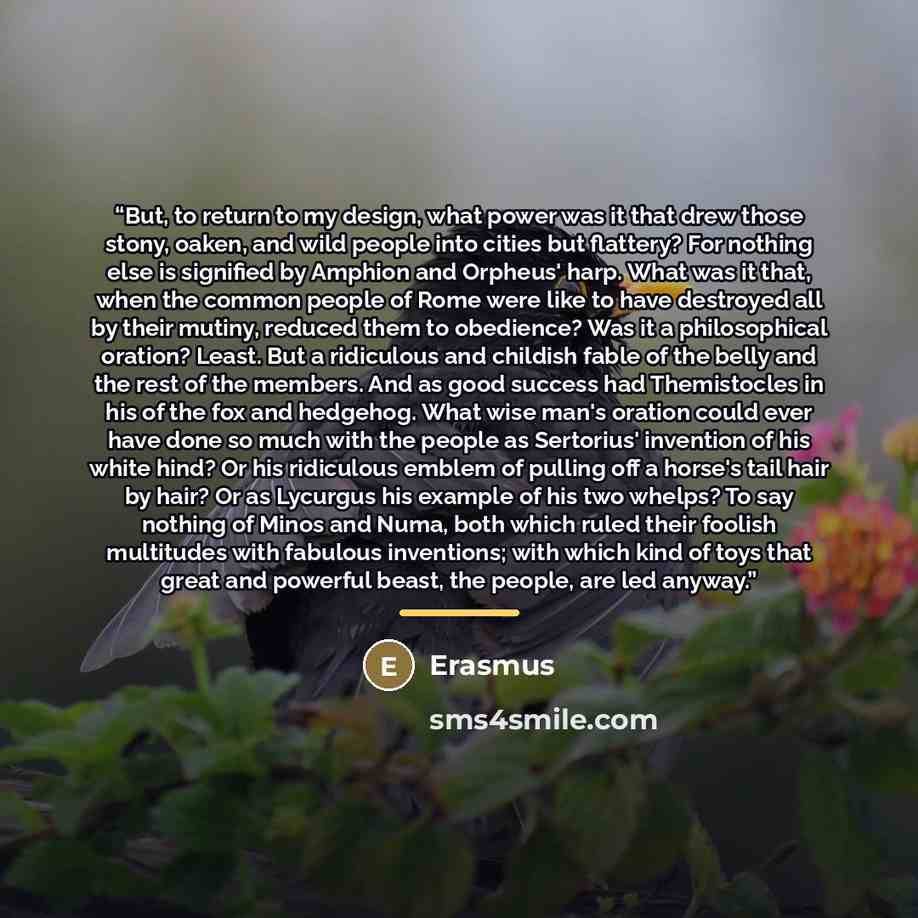
““But, to return to my design, what power was it that drew those stony, oaken, and wild people into cities but flattery? For nothing else is signified by Amphion and Orpheus' harp. What was it that, when the common people of Rome were like to have destroyed all by their mutiny, reduced them to obedience? Was it a philosophical oration? Least. But a ridiculous and childish fable of the belly and the rest of the members. And as good success had Themistocles in his of the fox and hedgehog. What wise man's oration could ever have done so much with the people as Sertorius' invention of his white hind? Or his ridiculous emblem of pulling off a horse's tail hair by hair? Or as Lycurgus his example of his two whelps? To say nothing of Minos and Numa, both which ruled their foolish multitudes with fabulous inventions; with which kind of toys that great and powerful beast, the people, are led anyway.””
About This Quote
Source Treat: The Praise of Folly, 1511
The quote satirizes how leaders use trivial symbols and myths to control masses, suggesting that simple tricks, not deep philosophy, sway people.
In simple terms: Leaders manipulate crowds with simple symbols and myths.
Key Takeaway
Recognize and question superficial influences.
Themes
politics
manipulation
myth
leadership
history
Mood
skeptical
critical
reflective
Type
satirical
historical
political
When to use this quote
- public speeches
- political campaigns
- education curricula
- media messaging
Key Concepts
symbolism
mass psychology
propaganda
Questions to Reflect On
- What symbols do modern leaders use to influence you?
- How can critical thinking reduce manipulation?
A Different Perspective
These tactics can backfire when people see through the deception.