Bootlegging Quote by Donnie Eichar
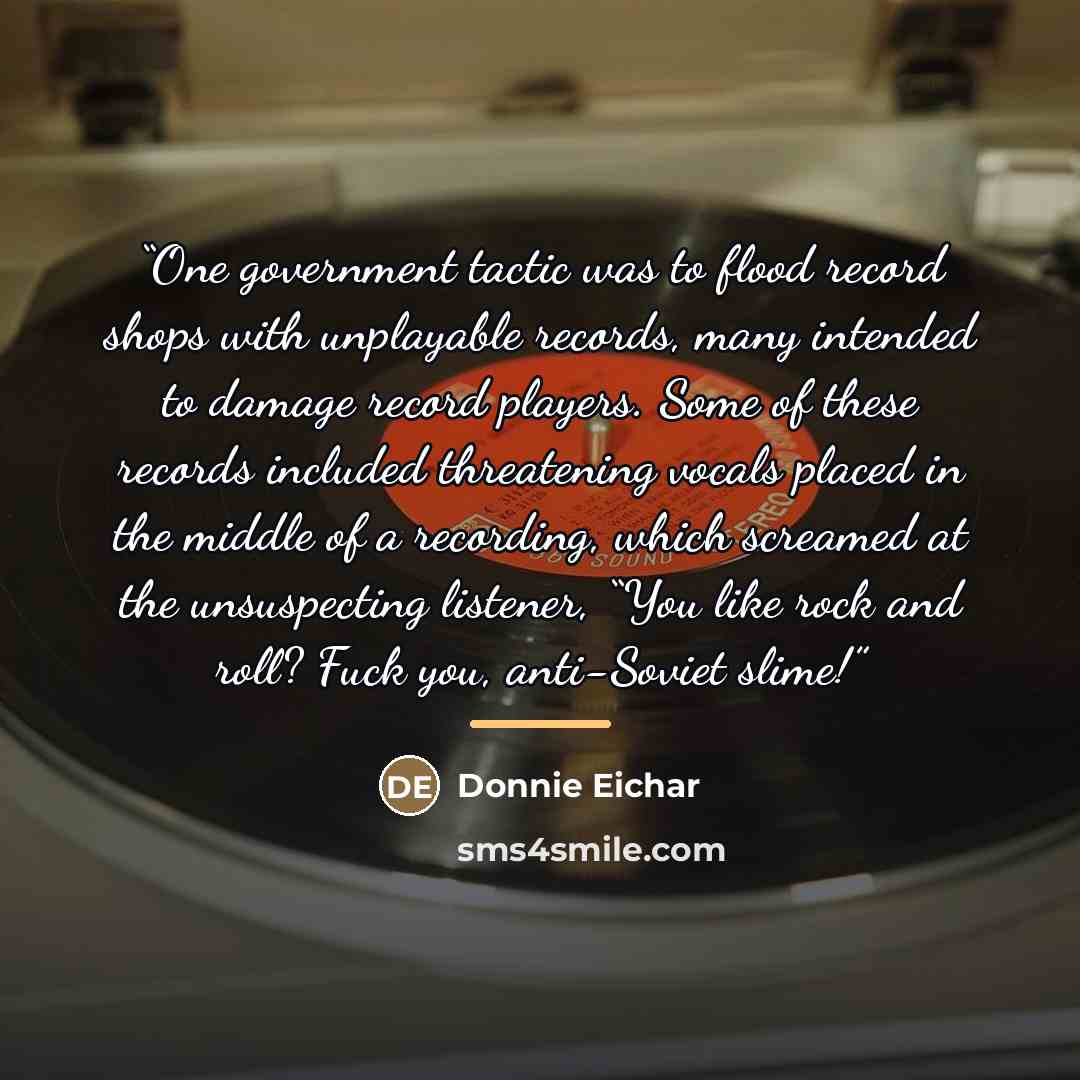
““During World War II, rationing in Russia had made vinyl prohibitively expensive, and cheap X-ray film became the bootleg music industry’s substitute. After purchasing a used X-ray plate for a ruble or two from a medical facility, music lovers could cut the plate into a disk with scissors or a knife before having it etched with their favorite tunes. Students studying engineering, I was told, particularly excelled in this bootlegging process. But even a thawed Khrushchev regime had its standards to uphold, and in 1959 the government began a crackdown on this illicit music market. One government tactic was to flood record shops with unplayable records, many intended to damage record players. Some of these records included threatening vocals placed in the middle of a recording, which screamed at the unsuspecting listener, “You like rock and roll? Fuck you, anti-Soviet slime!” Eventually the use of bone records declined as replacement technologies, such as magnetic reel-to-reel tape, took over. But until then, bone-record makers were hunted down and sent to the Gulags. Particularly offensive to the Soviet government were bootleggers who reproduced American jazz records, music Stalin had declared a “threat to civilization.” Despite””
About This Quote
Source Book: “The Bone Record” by Donnie Eichar, 2021
Soviet citizens used discarded X‑ray plates to create illegal music discs, showing ingenuity under repression and the state's harsh response to cultural dissent.
In simple terms: People made music from X‑rays, defying Soviet bans.
Key Takeaway
Creative resistance can thrive under oppression.
Themes
creativity
resistance
culture
politics
repression
Mood
defiant
resourceful
tense
Type
historical
cultural
political
When to use this quote
- underground music
- student engineering projects
- political protest
- cultural preservation
Key Concepts
bootlegging
subversion
state control
Questions to Reflect On
- What risks are worth taking to preserve art?
- How does scarcity spark innovation?
A Different Perspective
The method was dangerous and could lead to imprisonment or forced labor.

![“That song [You Got To Make It Through The World] came from a vibe I picked up from an old blues singer named Bo Carter. My lady was making a film as a thesis for U.C.L.A. and she wanted me to write a song to depict this character. The movie had something to do with bootlegging and stuff like that…” quote by Van Morrison](https://sms4smile.com/quotes/img-quotes/f99/van-morrison-1192_bootlegging_that-song-you-got-to-make-it-through-the_1193292.jpg)