Human potential Quote by Devdutt Pattanaik
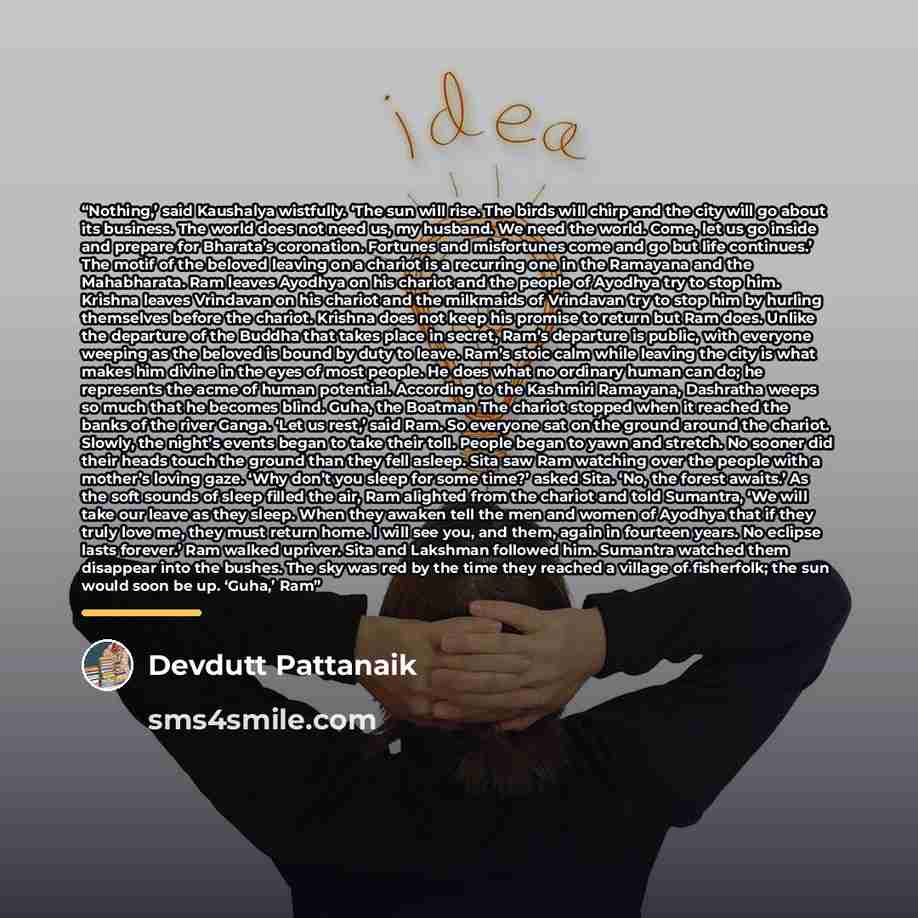
““Nothing,’ said Kaushalya wistfully. ‘The sun will rise. The birds will chirp and the city will go about its business. The world does not need us, my husband. We need the world. Come, let us go inside and prepare for Bharata’s coronation. Fortunes and misfortunes come and go but life continues.’ The motif of the beloved leaving on a chariot is a recurring one in the Ramayana and the Mahabharata. Ram leaves Ayodhya on his chariot and the people of Ayodhya try to stop him. Krishna leaves Vrindavan on his chariot and the milkmaids of Vrindavan try to stop him by hurling themselves before the chariot. Krishna does not keep his promise to return but Ram does. Unlike the departure of the Buddha that takes place in secret, Ram’s departure is public, with everyone weeping as the beloved is bound by duty to leave. Ram’s stoic calm while leaving the city is what makes him divine in the eyes of most people. He does what no ordinary human can do; he represents the acme of human potential. According to the Kashmiri Ramayana, Dashratha weeps so much that he becomes blind. Guha, the Boatman The chariot stopped when it reached the banks of the river Ganga. ‘Let us rest,’ said Ram. So everyone sat on the ground around the chariot. Slowly, the night’s events began to take their toll. People began to yawn and stretch. No sooner did their heads touch the ground than they fell asleep. Sita saw Ram watching over the people with a mother’s loving gaze. ‘Why don’t you sleep for some time?’ asked Sita. ‘No, the forest awaits.’ As the soft sounds of sleep filled the air, Ram alighted from the chariot and told Sumantra, ‘We will take our leave as they sleep. When they awaken tell the men and women of Ayodhya that if they truly love me, they must return home. I will see you, and them, again in fourteen years. No eclipse lasts forever.’ Ram walked upriver. Sita and Lakshman followed him. Sumantra watched them disappear into the bushes. The sky was red by the time they reached a village of fisherfolk; the sun would soon be up. ‘Guha,’ Ram””
About This Quote
Source Mythology: Ramayana and Mahabharata narratives, oral tradition
The passage reflects on the inevitability of duty, the continuity of life despite personal loss, and the heroic ideal of self‑sacrifice for the greater good.
In simple terms: Duty and life go on; heroes leave for a purpose.
Key Takeaway
Accept duty, trust that life endures.
Themes
duty
sacrifice
continuity
heroism
destiny
Mood
somber
inspirational
Type
mythic
philosophical
When to use this quote
- leadership decisions
- grieving processes
- cultural storytelling
- personal sacrifice
Key Concepts
mythic archetype
self‑less service
impermanence
Questions to Reflect On
- What does true duty look like in modern life?
- How can we honor both personal bonds and larger responsibilities?
A Different Perspective
Heroic sacrifice can neglect personal relationships and emotional health.
![“Seorang perempuan yang sifatnya jahat tidak pantas diperlakukan sebagai seorang perempuan. [Ramayana Mahabharata, hal. 33]” quote by R.K. Narayan](https://sms4smile.com/quotes/img-quotes/fc2/r-k-narayan-20109_mahabharata_seorang-perempuan-yang-sifatnya-jahat-ti_2355071.jpg)