Confession Quote by Christopher J. H. Wright
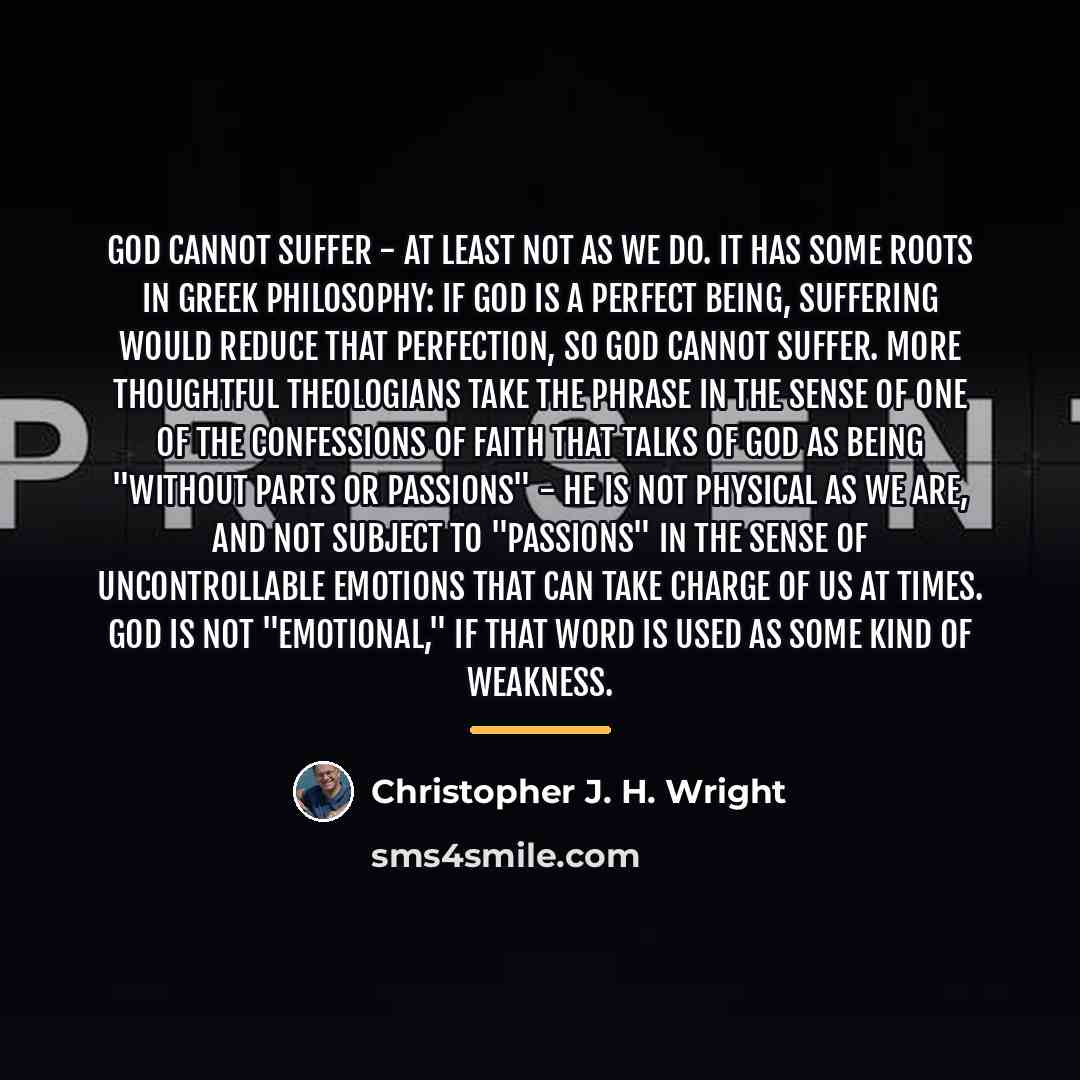
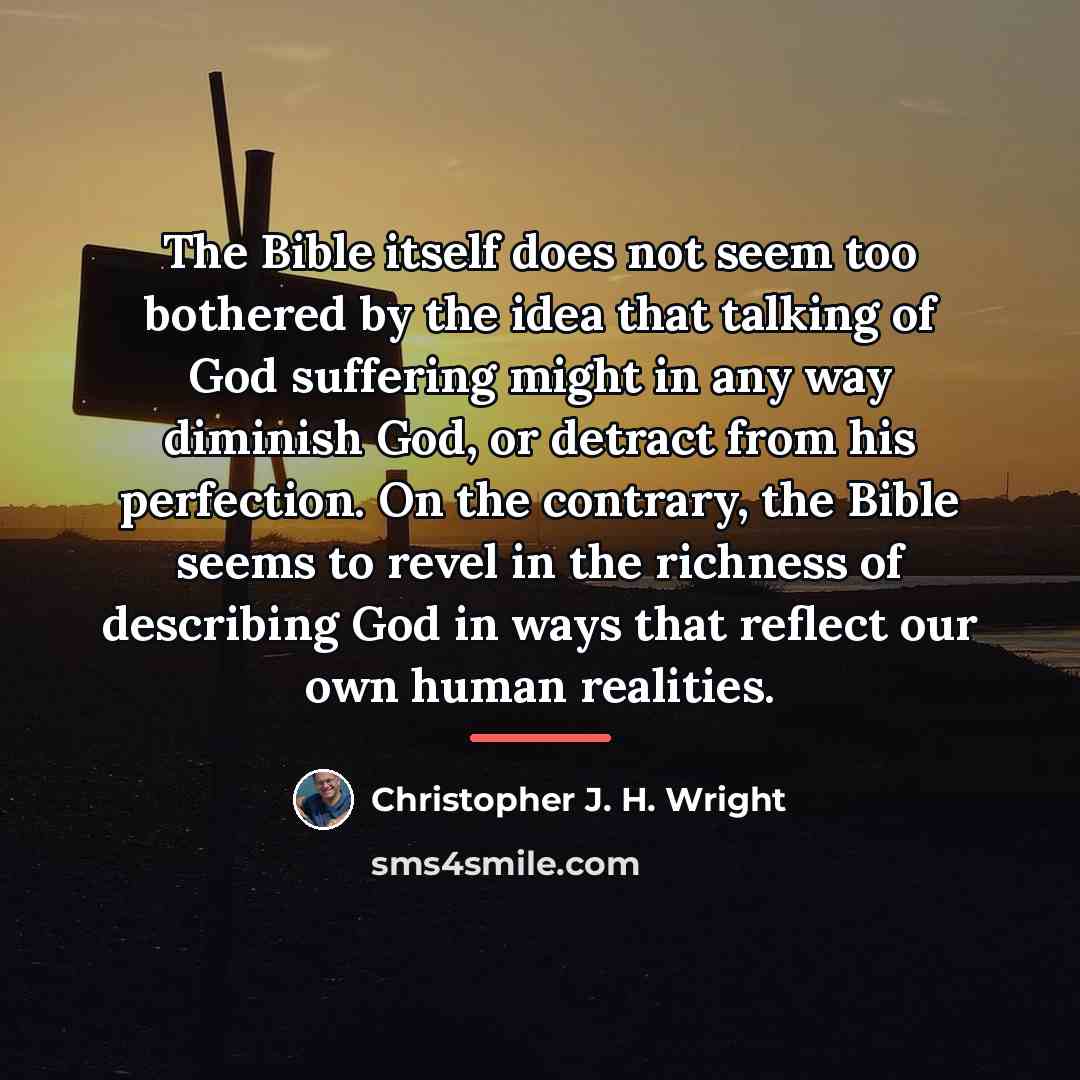
“God cannot suffer - at least not as we do. It has some roots in Greek philosophy: if God is a perfect being, suffering would reduce that perfection, so God cannot suffer. More thoughtful theologians take the phrase in the sense of one of the confessions of faith that talks of God as being "without parts or passions" - he is not physical as we are, and not subject to "passions" in the sense of uncontrollable emotions that can take charge of us at times. God is not "emotional," if that word is used as some kind of weakness.”
About This Quote
Source Philosophy: Greek theological discourse, ancient;Modern theology
The quote argues that a perfect divine being cannot experience suffering or uncontrolled emotions because such experiences would diminish divine perfection.
In simple terms: Divine perfection excludes suffering and uncontrolled passions.
Key Takeaway
Recognize the distinction between human frailty and divine nature.
Themes
theology
philosophy
divine nature
human emotion
perfection
Mood
contemplative
inquisitive
serious
Type
theoretical
reflective
When to use this quote
- religious debate
- philosophical discussion
- spiritual reflection
- ethical counseling
Key Concepts
Metaphysics
theodicy
passion
immutability
Questions to Reflect On
- How does viewing God as emotionless affect moral responsibility?
- Can divine perfection coexist with compassion?
A Different Perspective
Human emotions are complex and can be valuable; denying them may limit empathy.