Kingdom of heaven Quote by Christopher Isherwood
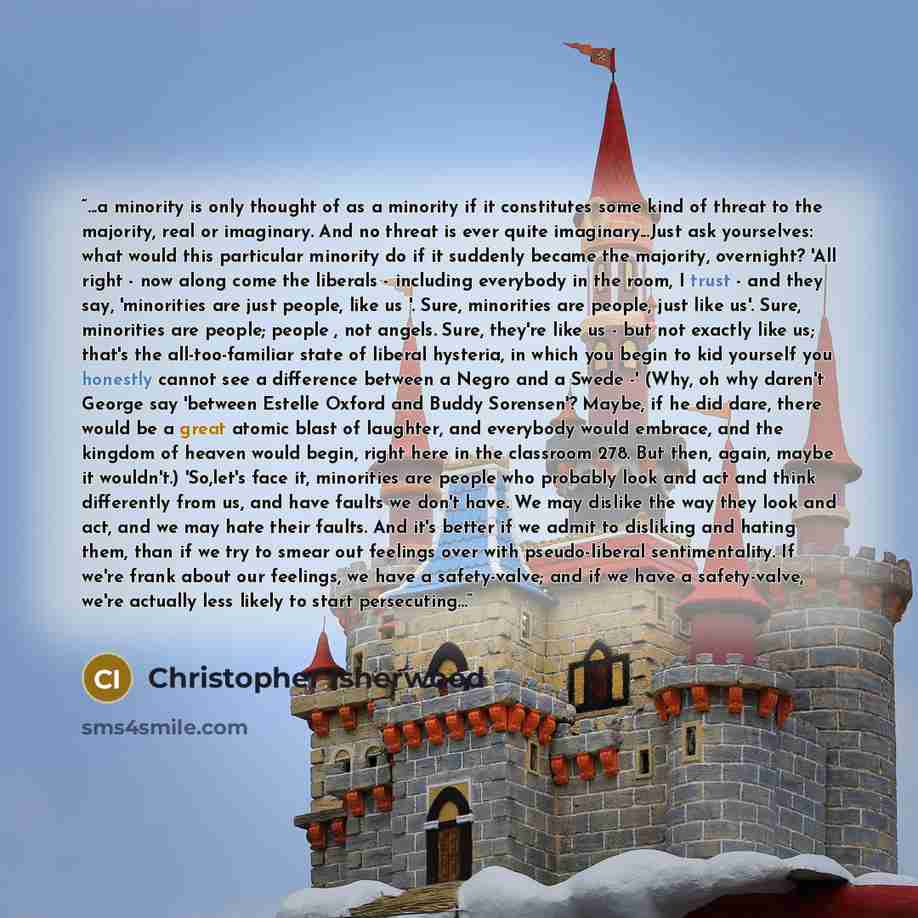
““...a minority is only thought of as a minority if it constitutes some kind of threat to the majority, real or imaginary. And no threat is ever quite imaginary...Just ask yourselves: what would this particular minority do if it suddenly became the majority, overnight? 'All right - now along come the liberals - including everybody in the room, I trust - and they say, 'minorities are just people, like us '. Sure, minorities are people, just like us'. Sure, minorities are people; people , not angels. Sure, they're like us - but not exactly like us; that's the all-too-familiar state of liberal hysteria, in which you begin to kid yourself you honestly cannot see a difference between a Negro and a Swede -' (Why, oh why daren't George say 'between Estelle Oxford and Buddy Sorensen'? Maybe, if he did dare, there would be a great atomic blast of laughter, and everybody would embrace, and the kingdom of heaven would begin, right here in the classroom 278. But then, again, maybe it wouldn't.) 'So,let's face it, minorities are people who probably look and act and think differently from us, and have faults we don't have. We may dislike the way they look and act, and we may hate their faults. And it's better if we admit to disliking and hating them, than if we try to smear out feelings over with pseudo-liberal sentimentality. If we're frank about our feelings, we have a safety-valve; and if we have a safety-valve, we're actually less likely to start persecuting...””
About This Quote
Source Novel: Goodbye to Berlin by Christopher Isherwood, 1939
Minorities are seen as threatening only when they challenge the majority’s sense of normalcy; acknowledging real differences can reduce repression.
In simple terms: Minorities feel threatening when they differ; honest recognition helps prevent persecution.
Key Takeaway
Recognize and discuss differences openly.
Themes
identity
power
prejudice
social dynamics
Mood
reflective
critical
thoughtful
Type
sociopolitical
psychological
philosophical
When to use this quote
- classroom debates
- policy making
- media analysis
- personal reflection
- community workshops
Key Concepts
minority-majority dynamics
psychology of fear
liberal hypocrisy
Questions to Reflect On
- How can honest dialogue reduce fear of the 'other'?
- What safeguards prevent honest critique from becoming hate?
A Different Perspective
Overemphasis on differences can deepen division if not paired with empathy.