Change Quote by Blaise Pascal
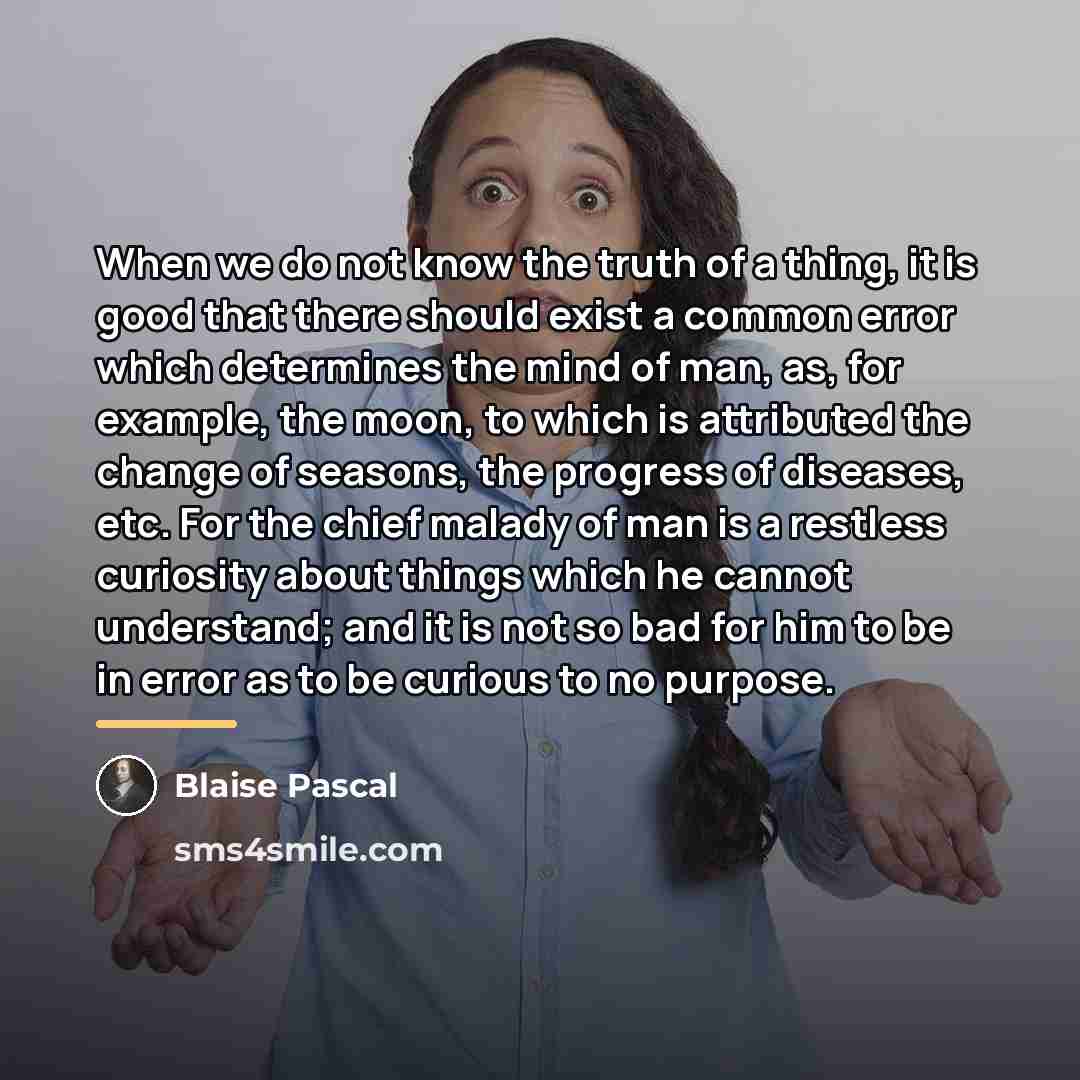
“When we do not know the truth of a thing, it is good that there should exist a common error which determines the mind of man, as, for example, the moon, to which is attributed the change of seasons, the progress of diseases, etc. For the chief malady of man is a restless curiosity about things which he cannot understand; and it is not so bad for him to be in error as to be curious to no purpose.”
About This Quote
Human curiosity about the unknown leads to common errors, which can be harmless and even useful for mental activity.
In simple terms: Mistakes arise from our restless desire to understand the unknowable.
Key Takeaway
Accept errors as part of learning.
Themes
curiosity
error
knowledge
philosophy
Mood
thoughtful
analytical
Type
philosophical
critical
When to use this quote
- scientific inquiry
- daily decision‑making
Key Concepts
human nature
epistemology
mental health
Questions to Reflect On
- What “common errors” guide your thinking?
- When is curiosity harmful?
A Different Perspective
Errors can mislead if unexamined.