Beauty Quote by Bill Bryson

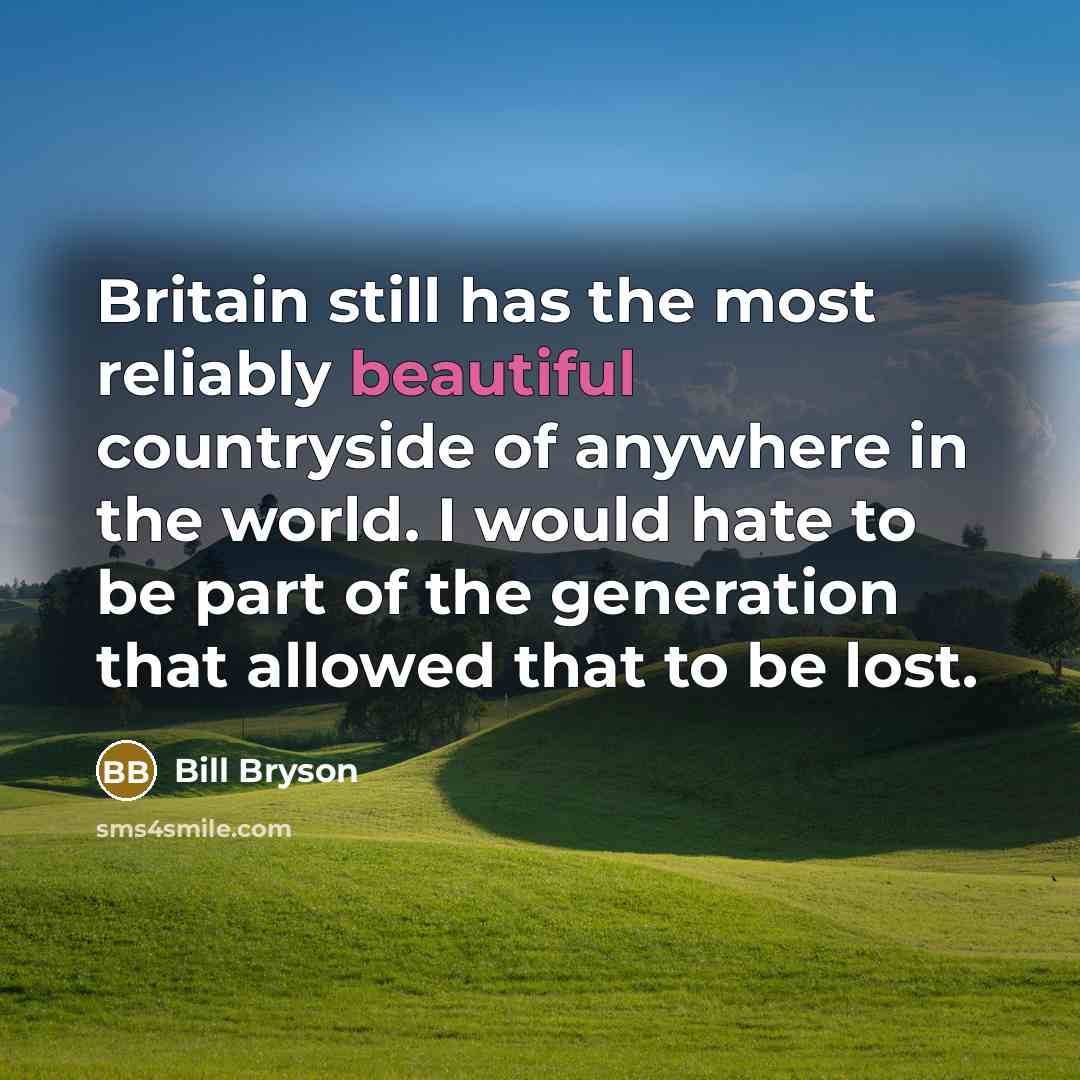
““Nothing – and I mean, really, absolutely nothing – is more extraordinary in Britain than the beauty of the countryside. Nowhere in the world is there a landscape that has been more intensively utilized – more mined, farmed, quarried, covered with cities and clanging factories, threaded with motorways and railway lines – and yet remains so comprehensively and reliably lovely over most of its extent. It is the happiest accident in history. In terms of natural wonders, you know, Britain is a pretty unspectacular place. It has no alpine peaks or broad rift valleys, no mighty gorges or thundering cataracts. It is built to really quite a modest scale. And yet with a few unassuming natural endowments, a great deal of time and an unfailing instinct for improvement, the makers of Britain created the most superlatively park-like landscapes, the most orderly cities, the handsomest provincial towns, the jauntiest seaside resorts, the stateliest homes, the most dreamily spired, cathedral-rich, castle-strewn, abbey-bedecked, folly-scattered, green-wooded, winding-laned, sheep-dotted, plumply hedgerowed, well-tended, sublimely decorated 88,386 square miles the world has ever known – almost none of it undertaken with aesthetics in mind, but all of it adding up to something that is, quite often, perfect. What an achievement that is. And””
About This Quote
Source Book: Notes from a Small Island, Bill Bryson, 1995
Britain’s landscape, though heavily used and modest, unexpectedly achieves a harmonious, picturesque quality through centuries of practical development.
In simple terms: Britain’s countryside looks beautiful despite heavy use.
Key Takeaway
Appreciate everyday beauty in familiar places.
Themes
nature
landscape
culture
history
beauty
Mood
reflective
admiring
nostalgic
Type
observational
descriptive
appreciative
When to use this quote
- travel writing
- environmental observation
- cultural commentary
- heritage tourism
- urban development
Key Concepts
industrialization
urban planning
aesthetic paradox
regional identity
Questions to Reflect On
- How does intensive use affect ecological health?
- What role does cultural perception play in valuing landscapes?
A Different Perspective
The quote overlooks environmental costs and social inequities tied to such development.