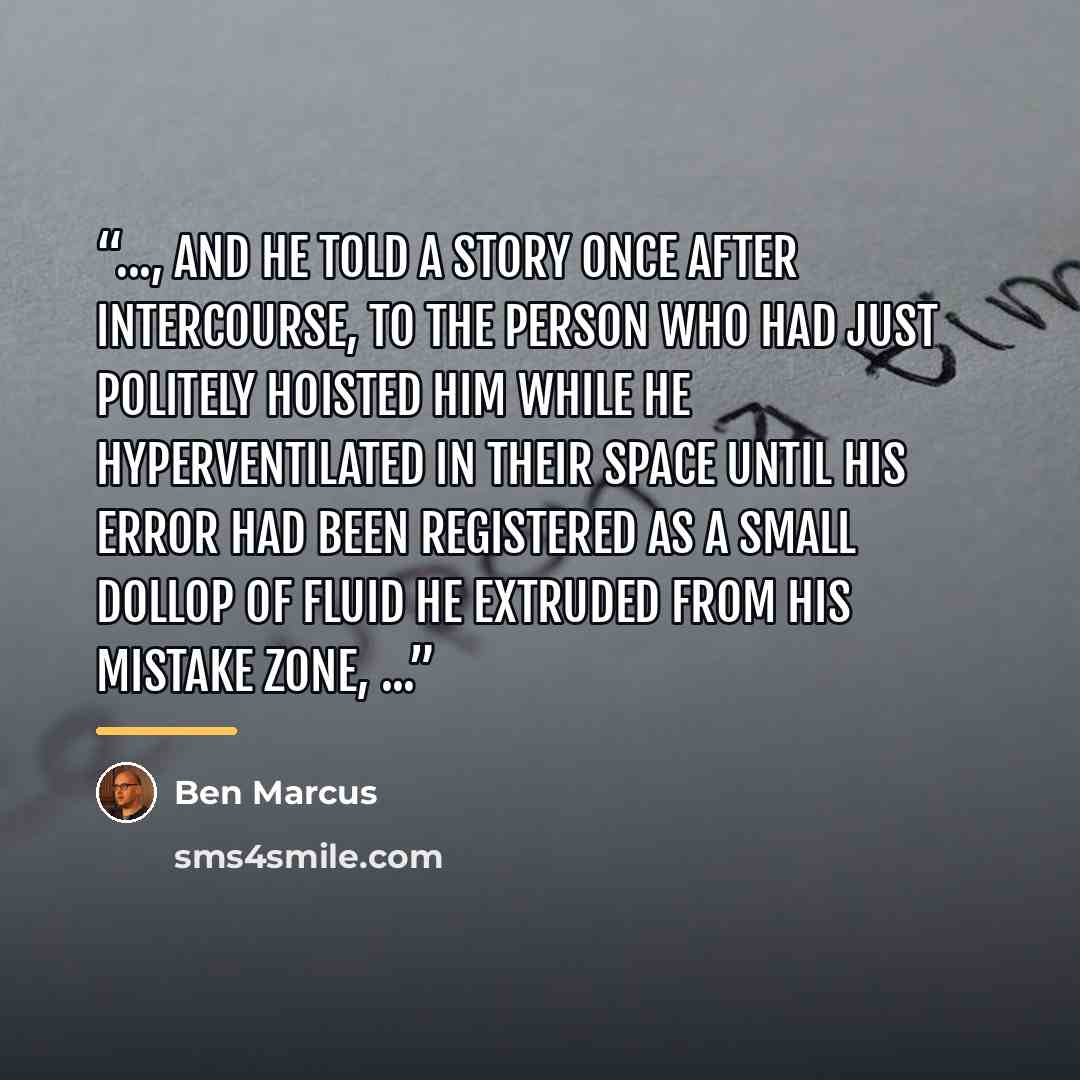
Antiperson Derived Quote by Ben Marcus
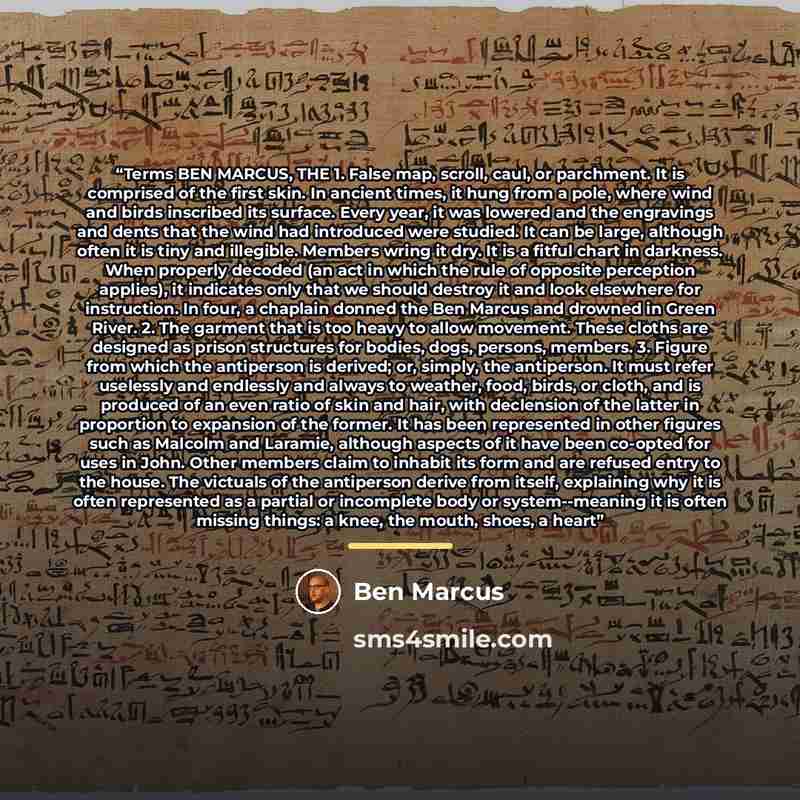
““Terms BEN MARCUS, THE 1. False map, scroll, caul, or parchment. It is comprised of the first skin. In ancient times, it hung from a pole, where wind and birds inscribed its surface. Every year, it was lowered and the engravings and dents that the wind had introduced were studied. It can be large, although often it is tiny and illegible. Members wring it dry. It is a fitful chart in darkness. When properly decoded (an act in which the rule of opposite perception applies), it indicates only that we should destroy it and look elsewhere for instruction. In four, a chaplain donned the Ben Marcus and drowned in Green River. 2. The garment that is too heavy to allow movement. These cloths are designed as prison structures for bodies, dogs, persons, members. 3. Figure from which the antiperson is derived; or, simply, the antiperson. It must refer uselessly and endlessly and always to weather, food, birds, or cloth, and is produced of an even ratio of skin and hair, with declension of the latter in proportion to expansion of the former. It has been represented in other figures such as Malcolm and Laramie, although aspects of it have been co-opted for uses in John. Other members claim to inhabit its form and are refused entry to the house. The victuals of the antiperson derive from itself, explaining why it is often represented as a partial or incomplete body or system--meaning it is often missing things: a knee, the mouth, shoes, a heart””
About This Quote
The passage offers a cryptic, multi‑layered definition of a metaphorical object that symbolizes oppressive structures, hidden knowledge, and the futility of seeking instruction from it.
In simple terms: It describes a confusing, oppressive symbol that should be discarded.
Key Takeaway
Obscure symbols can imprison thought.
Themes
symbolism
oppression
knowledge
absurdity
Mood
enigmatic
critical
Type
literary
philosophical
When to use this quote
- interpreting bureaucratic jargon
- analyzing abstract art
- navigating corporate policies
Key Concepts
semantic inversion
cultural critique
Practical Applications
- Question the authority of opaque systems
- Seek transparent alternatives
Questions to Reflect On
- What does the 'Ben Marcus' represent in modern institutions?
- How can we recognize and dismantle such oppressive symbols?
A Different Perspective
Its dense, surreal language may alienate readers, limiting practical insight.