Doing things Quote by B.R. Ambedkar
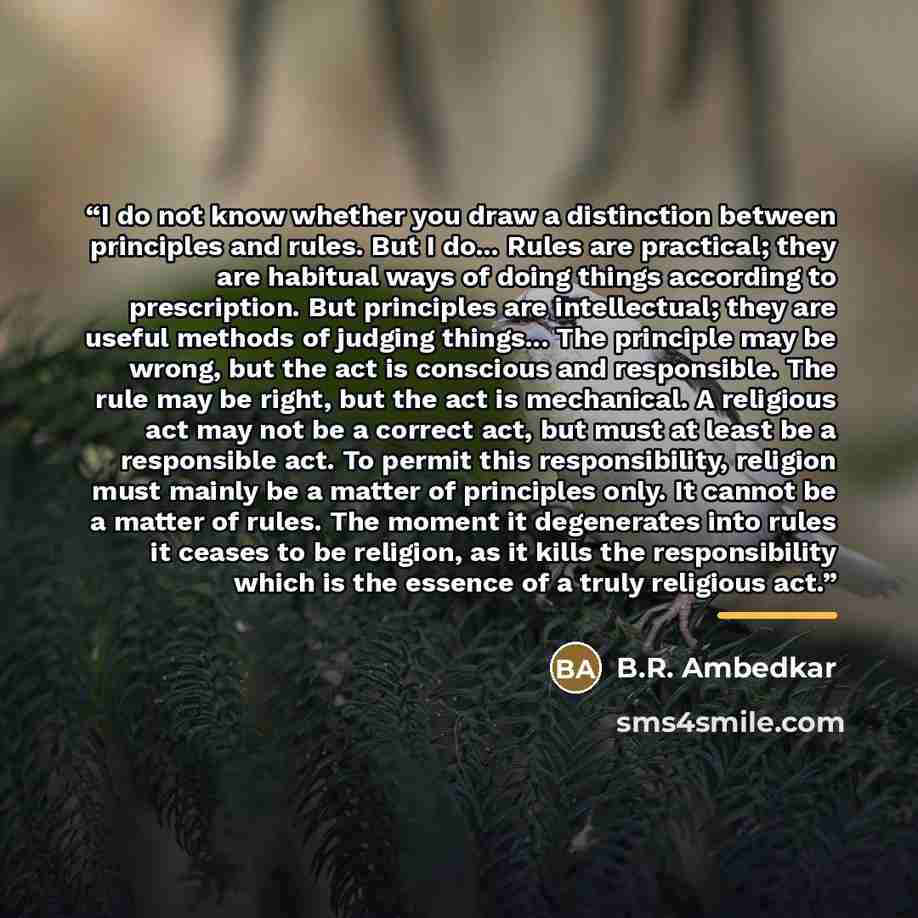
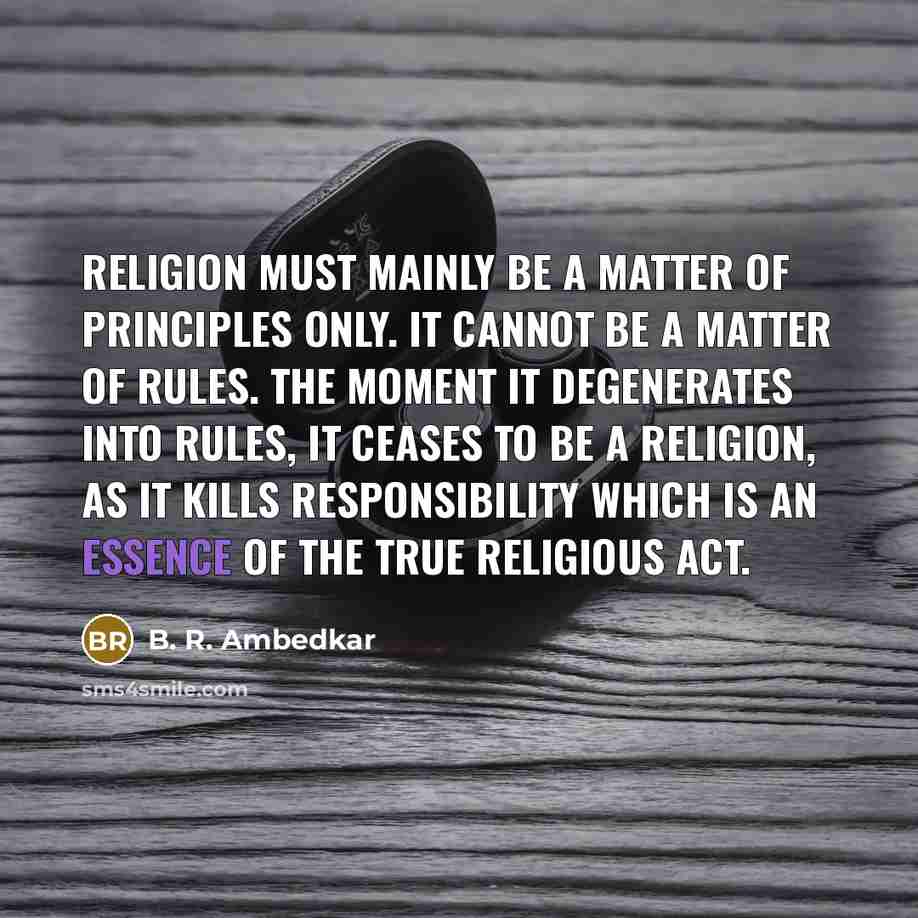
““I do not know whether you draw a distinction between principles and rules. But I do... Rules are practical; they are habitual ways of doing things according to prescription. But principles are intellectual; they are useful methods of judging things... The principle may be wrong, but the act is conscious and responsible. The rule may be right, but the act is mechanical. A religious act may not be a correct act, but must at least be a responsible act. To permit this responsibility, religion must mainly be a matter of principles only. It cannot be a matter of rules. The moment it degenerates into rules it ceases to be religion, as it kills the responsibility which is the essence of a truly religious act.””
About This Quote
Source Speech: “Principles vs Rules” (1936)
Principles demand conscious responsibility; rules can become mechanical, eroding true religious intent.
In simple terms: Principles require thoughtful responsibility.
Key Takeaway
Prioritize principles over rigid rules.
Themes
ethics
religion
responsibility
Mood
thoughtful
serious
Type
philosophical
ethical
When to use this quote
- moral decision making
- organizational policy
Key Concepts
philosophy
theology
Practical Applications
- personal conduct
Questions to Reflect On
- How do you distinguish a principle from a rule?
- When should you challenge a rule?
A Different Perspective
Rigid rules may stifle flexibility.






![“In the Hindu religion, one can[not] have freedom of speech. A Hindu must surrender his freedom of speech. He must act according to the Vedas. If the Vedas do not support the actions, instructions must be sought from the Smritis, and if the Smritis fail to provide any such instructions, he must…” quote by B.R. Ambedkar](https://sms4smile.com/quotes/img-quotes/49b/b-r-ambedkar-2-27051_communication_in-the-hindu-religion-one-can-not-have-f_1093917.jpg)