Character Quote by Ayn Rand

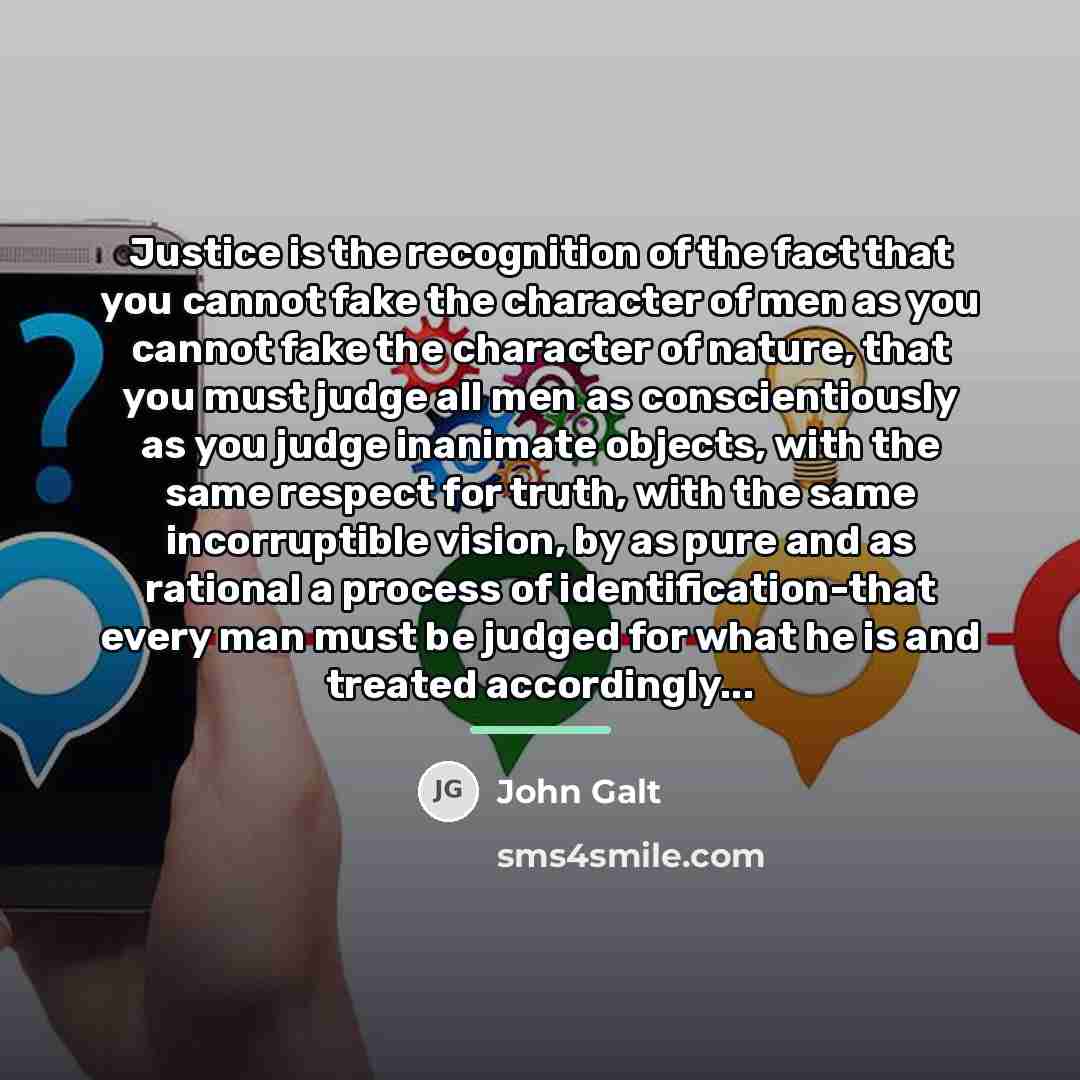
““Justice is the recognition of the fact that you cannot fake the character of men as you cannot fake the character of nature, that you must judge all men as conscientiously as you judge inanimate objects, with the same respect for truth, with the same incorruptible vision, by as pure and as rational a process of identification—that every man must be judged for what he is and treated accordingly, that just as you do not pay a higher price for a rusty chunk of scrap than for a piece of shining metal, so you do not value a rotter above a hero—that your moral appraisal is the coin paying men for their virtues or vices, and this payment demands of you as scrupulous an honor as you bring to financial transactions—that to withhold your contempt from men’s vices is an act of moral counterfeiting, and to withhold your admiration from their virtues is an act of moral embezzlement—that to place any other concern higher than justice is to devaluate your moral currency and defraud the good in favor of the evil, since only the good can lose by a default of justice and only the evil can profit—and that the bottom of the pit at the end of that road, the act of moral bankruptcy, is to punish men for their virtues and reward them for their vices, that that is the collapse to full depravity, the Black Mass of the worship of death, the dedication of your consciousness to the destruction of existence.””
About This Quote
Source Essay: The Virtue of Selfishness (1964)
The quote argues that justice requires judging each individual impartially, without bias toward virtue or vice, and that any deviation devalues moral integrity.
In simple terms: Justice means treating everyone fairly, regardless of status.
Key Takeaway
Apply impartial standards in personal and societal judgments.
Themes
justice
morality
fairness
integrity
ethical standards
Mood
analytical
serious
thought‑provoking
Type
ethical
philosophical
social commentary
When to use this quote
- legal systems
- employment evaluations
- educational grading
- personal relationships
- public policy
Key Concepts
deontological ethics
virtue ethics
social contract
Questions to Reflect On
- How can we balance fairness with empathy?
- What mechanisms ensure just outcomes?
A Different Perspective
Strict impartiality can ignore contextual nuances and systemic inequities.