Climate-crisis Quote by Alice Irene Whittaker
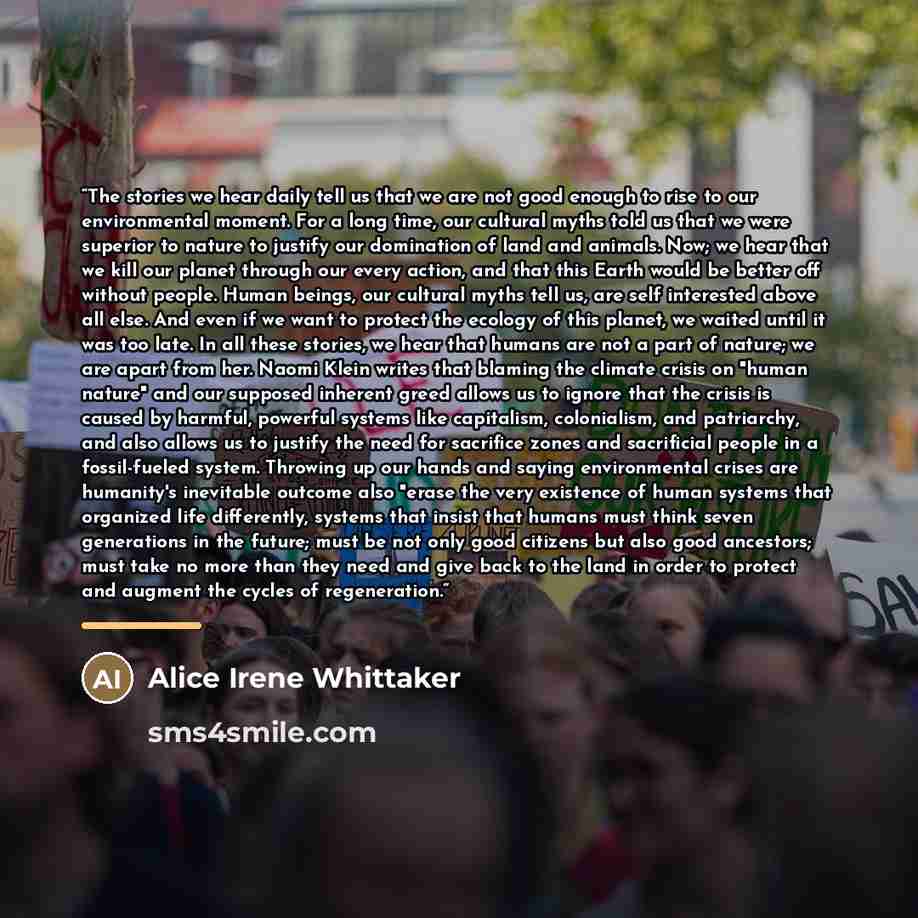
““The stories we hear daily tell us that we are not good enough to rise to our environmental moment. For a long time, our cultural myths told us that we were superior to nature to justify our domination of land and animals. Now; we hear that we kill our planet through our every action, and that this Earth would be better off without people. Human beings, our cultural myths tell us, are self interested above all else. And even if we want to protect the ecology of this planet, we waited until it was too late. In all these stories, we hear that humans are not a part of nature; we are apart from her. Naomi Klein writes that blaming the climate crisis on "human nature" and our supposed inherent greed allows us to ignore that the crisis is caused by harmful, powerful systems like capitalism, colonialism, and patriarchy, and also allows us to justify the need for sacrifice zones and sacrificial people in a fossil-fueled system. Throwing up our hands and saying environmental crises are humanity's inevitable outcome also "erase the very existence of human systems that organized life differently, systems that insist that humans must think seven generations in the future; must be not only good citizens but also good ancestors; must take no more than they need and give back to the land in order to protect and augment the cycles of regeneration.””
About This Quote
Source Article: “Reframing Climate Narratives”, 2023
Dominant cultural myths separate humans from nature, blaming “human nature” for climate crisis, which obscures systemic causes and hinders collective responsibility.
In simple terms: Stories claim humans are separate from nature, blaming greed, hiding systemic issues.
Key Takeaway
Shift narratives to recognize systemic roots of ecological harm.
Themes
environment
myths
systemic oppression
intergenerational responsibility
Mood
urgent
hopeful
Type
activist
educational
When to use this quote
- policy advocacy
- community education
- sustainable business models
- intergenerational planning
Key Concepts
ecology
political economy
colonialism
patriarchy
Questions to Reflect On
- How can we expose systemic causes in everyday conversation?
- What actions can individuals take while demanding systemic change?
A Different Perspective
Changing narratives can meet resistance from entrenched interests.