Making a book is a craft, like making a clock; it needs more than native wit to be an author. — Jean de la Bruyere Copy Share Image
A man often runs the risk of throwing away a witticism if he admits that it is his own. — Jean de la Bruyere Copy Share Image
Impertinent wits are a kind of insect which are in everybody's way and plentiful in all countries. — Jean de la Bruyere Copy Share Image
It is a great misfortune not to possess sufficient wit to speak well, nor sufficient judgment to keep silent. — Jean de la Bruyere Copy Share Image
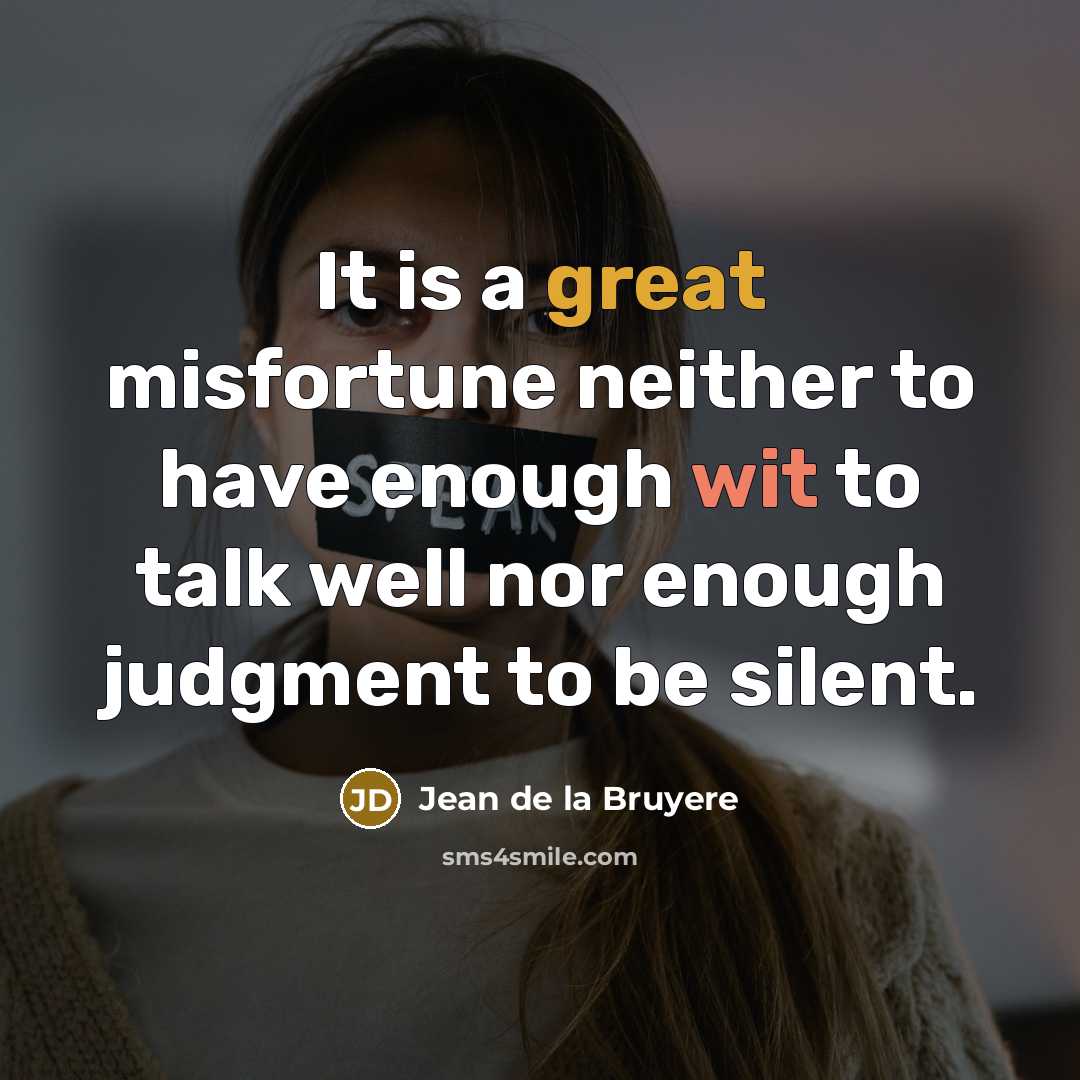
It is a great misfortune neither to have enough wit to talk well nor enough judgment to be silent. — Jean de la Bruyere Copy Share Image
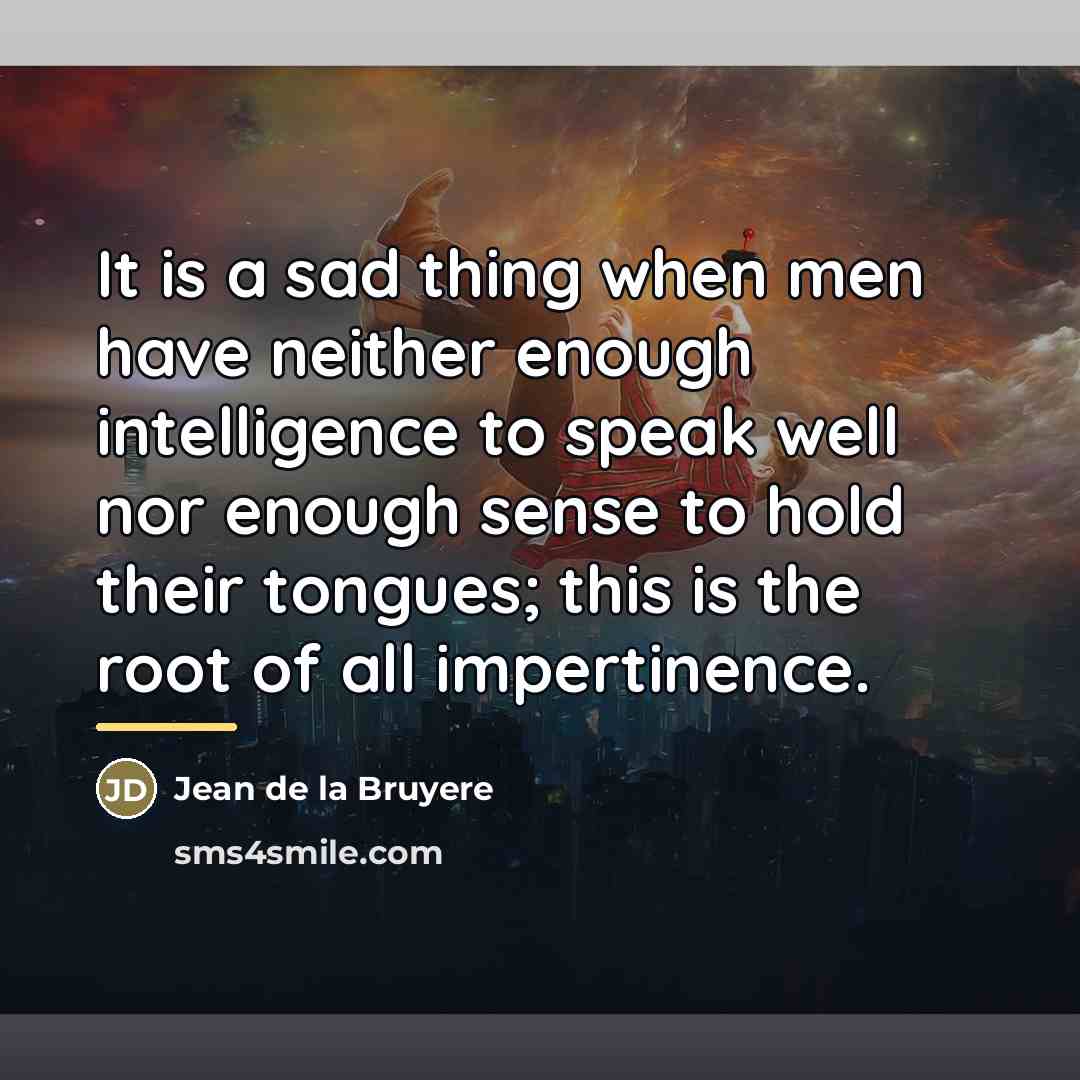
It is a sad thing when men have neither enough intelligence to speak well nor enough sense to hold their tongues; this… — Jean de la Bruyere Copy Share Image
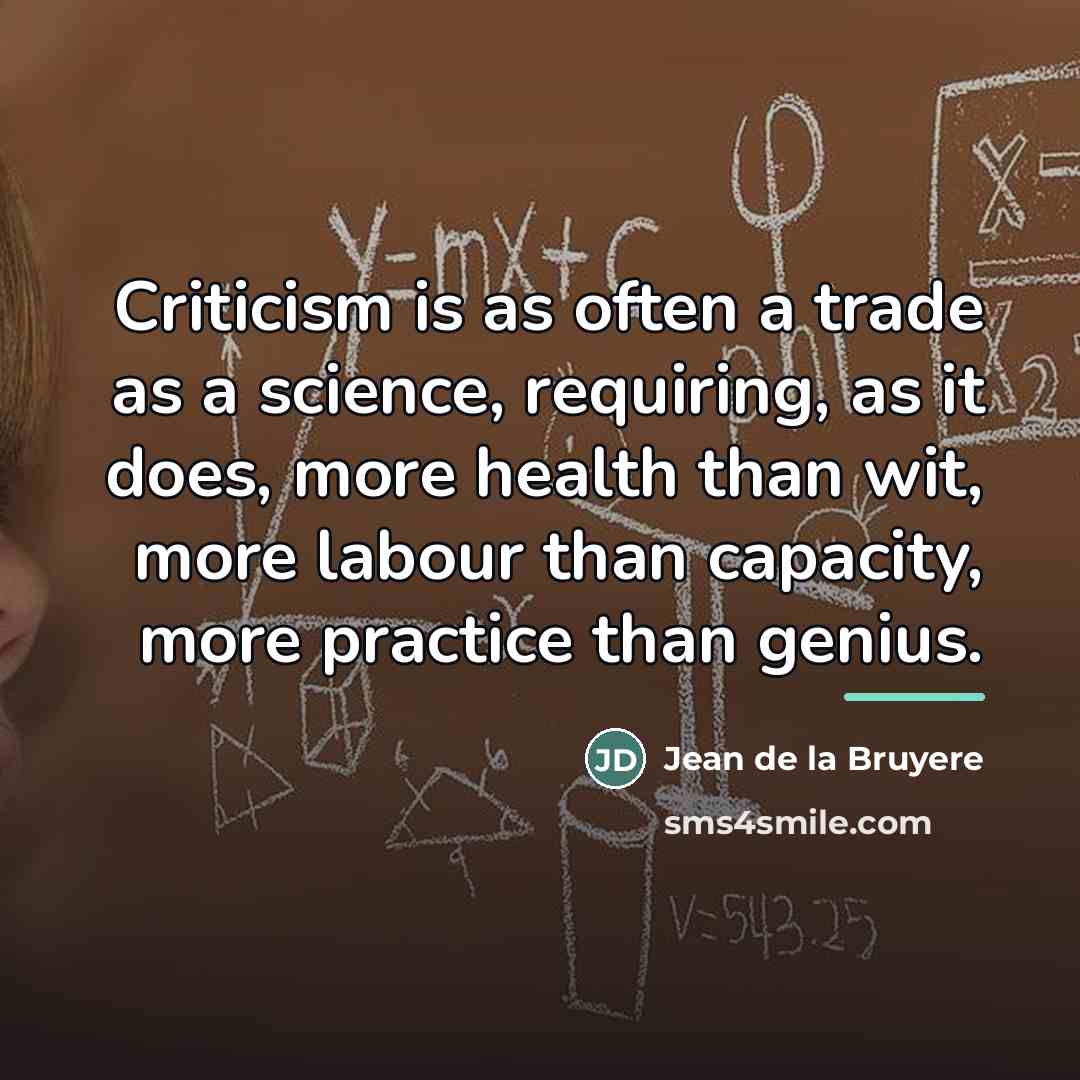
Criticism is as often a trade as a science, requiring, as it does, more health than wit, more labour than capacity, more… — Jean de la Bruyere Copy Share Image
One should never risk a joke, even of the mildest and most unexceptional charters, except among people of culture and wit. — Jean de la Bruyere Copy Share Image
The great charm of conversation consists less in the display of one's own wit and intelligence than in the power to draw… — Jean de la Bruyere Copy Share Image
How much wit, good-nature, indulgences, how many good offices and civilities, are required among friends to accomplish in some years what a… — Jean de la Bruyere Copy Share Image
The Great slight the men of wit, who have nothing but wit; the men of wit despise the Great, who have nothing… — Jean de la Bruyere Copy Share Image
Foolish jokers are thick on the ground, and it rains insects of that sort everywhere. A good joker is a rarity; even… — Jean de la Bruyere Copy Share Image
Criticism is often not a science; it is a craft, requiring more good health than wit, more hard work than talent, more… — Jean de la Bruyere Copy Share Image
The best thing next to wit is a consciousness that it is not in us; without wit, a man might then know… — Jean de la Bruyere Copy Share Image
I never have wit until I am below stairs. [Fr., Je n'ai jamais d'esprit qu'au bas de l'escalier.] — Jean de la Bruyere Copy Share Image
It is a sad thing when men have neither the wit to speak well nor the judgment to hold their tongues. — Jean de la Bruyere Copy Share Image
I cannot forbid a person to marry several wives, for it does not contradict Scripture. MARTIN LUTHER, letter to Chancellor Gregory Brück, January 13,… — Jean de la Bruyere Copy Share Image
The unfaithful woman, if she is known for such by the person concerned, is only unfaithful. If she is thought faithful, she is perfidious. — Jean De La Bruyere Copy Share Image
What greater weakness can there be than not to know what is the source of one's being, of one's life, of one's senses, of… — Jean de la Bruyere Copy Share Image
Some people pretend they never were in love and never wrote poetry; two weaknesses which they dare not own -- one of the heart,… — Jean de la Bruyere Copy Share Image
How much wit, good-nature, indulgences, how many good offices and civilities, are required among friends to accomplish in some years what a lovely face… — Jean de la Bruyere Copy Share Image
A man starts upon a sudden, takes Pen, Ink, and Paper, and without ever having had a thought of it before, resolves within himself… — Jean de la Bruyere Copy Share Image
A man of variable mind is not one man, but several men in one; he multiplies himself as often as he changes his taste… — Jean de la Bruyere Copy Share Image
He who knows how to wait for what he desires does not feel very desperate if he fails in obtaining it; and he, on… — Jean de la Bruyere Copy Share Image
The court is like a palace built of marble; I mean that it is made up of very hard but very polished people. [Fr.,… — Jean de la Bruyere Copy Share Image
Grief that is dazed and speechless is out of fashion: the modern woman mourns her husband loudly and tells you the whole story of… — Jean de la Bruyere Copy Share Image
Every hour in itself, as it respects us in particular, is the only one we can call our own. — Jean de la Bruyere Copy Share Image




![“I never have wit until I am below stairs. [Fr., Je n'ai jamais d'esprit qu'au bas de l'escalier.]” quote by Jean de la Bruyere](https://sms4smile.com/quotes/img-quotes/8cd/jean-de-la-bruyere-575_stairs_i-never-have-wit-until-i-am-below-stairs_286948.jpg)





![“The court is like a palace built of marble; I mean that it is made up of very hard but very polished people. [Fr., La cour est comme un edifice bati de marbre; je veux dire qu'elle est composee d'hommes fort durs mais fort polis.]” quote by Jean de la Bruyere](https://sms4smile.com/quotes/img-quotes/fcf/jean-de-la-bruyere-575_built_the-court-is-like-a-palace-built-of-marb_77288.jpg)