Studies of children in playgrounds with both green areas and manufactured play areas found that children engaged in more creative forms of… — Richard Louv Copy Share Image
In a famous Middletown study of Muncie, Indiana, in 1924, mothers were asked to rank the qualities they most desire in their… — Richard Louv Copy Share Image
From 1997 to 2003, there was a decline of 50 percent in the proportion of children nine to twelve who spent time… — Richard Louv Copy Share Image
Environment-based education produces student gains in social studies, science, language arts, and math; improves standardized test scores and grade-point averages; and develops… — Richard Louv Copy Share Image
As the nature deficit grows, another emerging body of scientific evidence indicates that direct exposure to nature is essential for physical and… — Richard Louv Copy Share Image
Another British study discovered that average eight-year-olds were better able to identify characters from the Japanese card trading game Pokemon than native… — Richard Louv Copy Share Image
Numerous studies document the benefits to students from school grounds that are ecologically diverse and include free play areas, habitats for wildlife,… — Richard Louv Copy Share Image
“She was one of those exceptional children who do still spend time outside, in solitude. In her case nature represented beauty - and refuge.… — Richard Louv Copy Share Image
Children need nature for the healthy development of their senses, and therefore, for learning and creativity. — Richard Louv Copy Share Image
As the young spend less of their lives in natural surroundings, their senses narrow, physiologically and psychologically and this reduces the richness of human… — Richard Louv Copy Share Image
No other youth group like the Scouts has trained so many future leaders while at the same time being a nature organization with its… — Richard Louv Copy Share Image
In medieval times, if someone displayed the symptoms we now identify as boredom, that person was thought to be committing something called acedia, a… — Richard Louv Copy Share Image
Rather than accepting the drifting separation of the generations, we might begin to define a more complex and interesting set of life stages and… — Richard Louv Copy Share Image
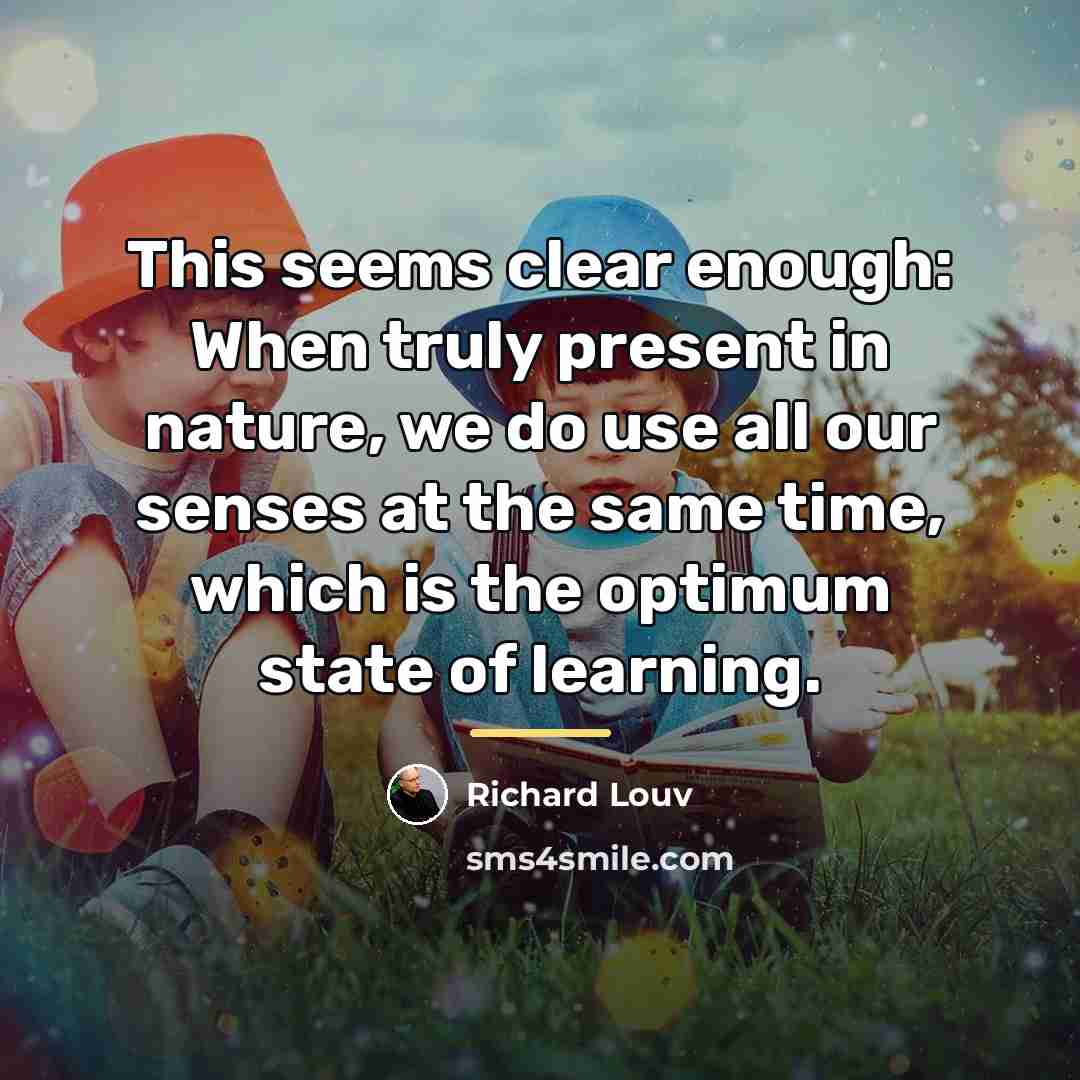
This seems clear enough: When truly present in nature, we do use all our senses at the same time, which is the optimum state… — Richard Louv Copy Share Image
Reconnection to the natural world is fundamental to human health, well-being, spirit, and survival. — Richard Louv Copy Share Image
“Most scientists who study human perception no longer assume that we have five senses: taste, touch, smell, sight, and hearing. The current number ranges… — Richard Louv Copy Share Image