“Reading Mrs Gaskell's Life of Charlotte Brontë after Jane Eyre is a curious experience. The subject of the biography is recognisably the same person who wrote the novel, but the effect of the two books is utterly different. The biography… — Ian Gregor Copy Share
“Because it is written by a nineteenth-century American, and because of its closeness to the twentieth century, The Portrait of a Lady foregoes Victorian… — Ian Gregor Copy Share Image
“Reading Mrs Gaskell's Life of Charlotte Brontë after Jane Eyre is a curious experience. The subject of the biography is recognisably the same person who wrote the novel, but the effect of the two books is utterly different. The biography is indeed depressing and painful reading. It captures better, I believe, than any any subsequent biography the introverted and puritan… — Ian Gregor Copy Share
“Nowhere is the sense of medium felt more strongly, even by the casual reader, than in a story about to end. For the novelist the problem is no longer how to tell his tale, but how to close it down; how to switch imaginative energies which have been used in sustaining the tale, into energies which will not just stop… — Ian Gregor Copy Share
“Wuthering Heights, however it may appear in retrospect, demands a reading of the utmost intensity, the feeling present in the writing seems to seek a matching response in the reading. If we turn from the story that Emily Brontë tells to the kind of story that Hardy tells, we find a markedly different kind of reader being called into being,… — Ian Gregor Copy Share
“Discussions of the effects of serial publication of Victorian novels on their authors and readers1 usually draw attention to the author's peculiar opportunities for cliff-hanging suspense, as, for instance, when Thackeray has Becky Sharp counter old Sir Pitt's marriage proposal at the end of Vanity Fair's fourth number with the revelation that she is already married, and the reader must… — Ian Gregor Copy Share
“Indeed, and crucially so, the serial form took the control of the novel away from the reader and left him in an imagined space… — Ian Gregor Copy Share Image
“The first unanalysed impression that most readers receive from Jane Eyre is that it has a very violent atmosphere. If this were simply the… — Ian Gregor Copy Share Image
“What The Mysteries of Udolpho suggests is how a novel, by presenting phenomena before it present resolutions, can create an on-going, perhaps spurious, but… — Ian Gregor Copy Share Image
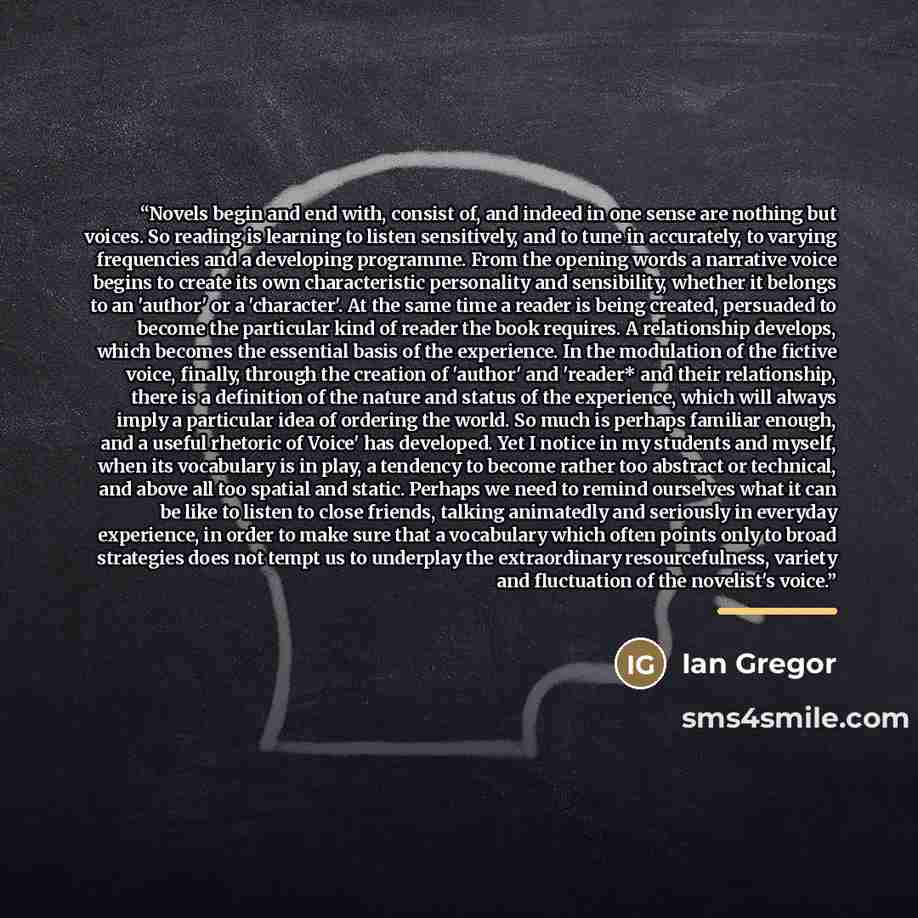
“Novels begin and end with, consist of, and indeed in one sense are nothing but voices. So reading is learning to listen sensitively, and… — Ian Gregor Copy Share Image
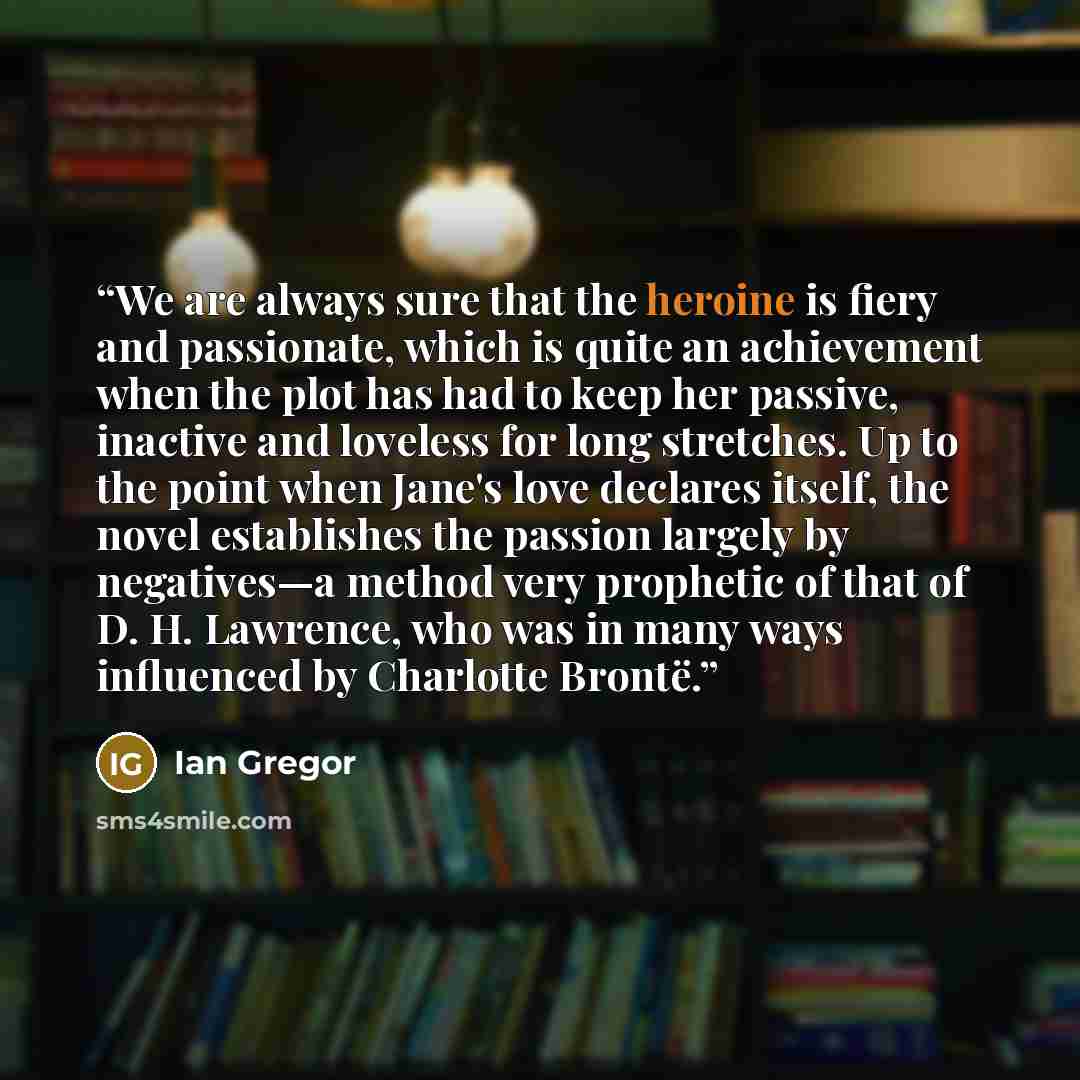
“We are always sure that the heroine is fiery and passionate, which is quite an achievement when the plot has had to keep her… — Ian Gregor Copy Share Image
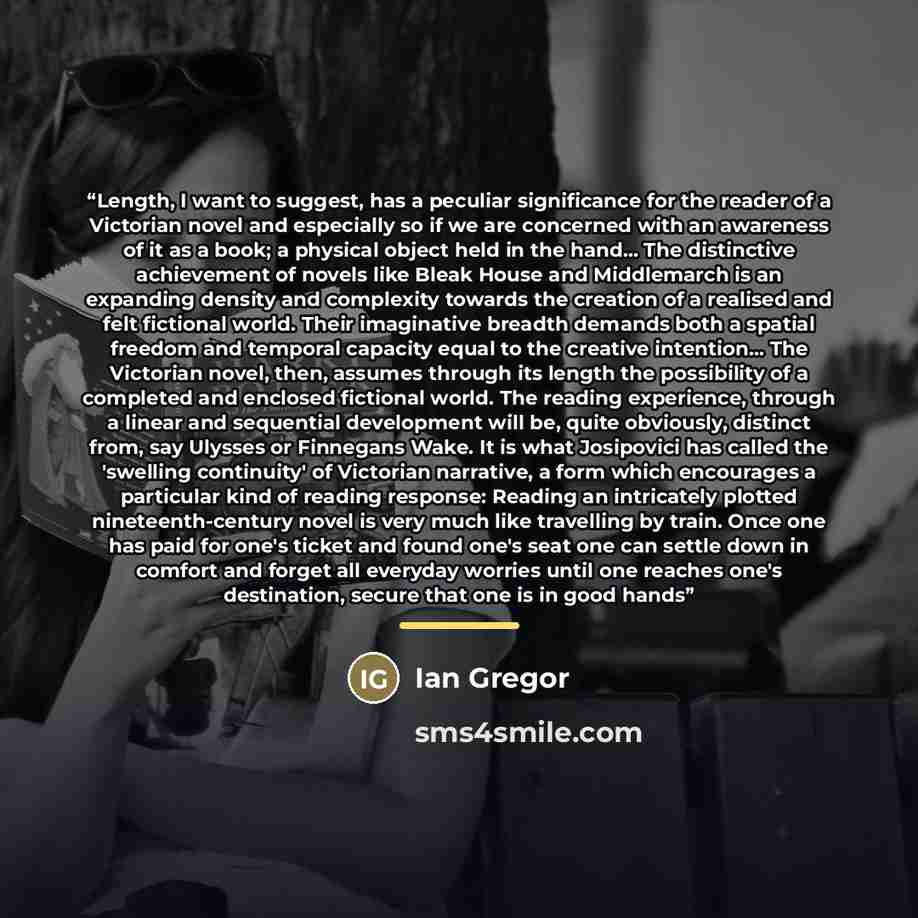
“Length, I want to suggest, has a peculiar significance for the reader of a Victorian novel and especially so if we are concerned with… — Ian Gregor Copy Share Image
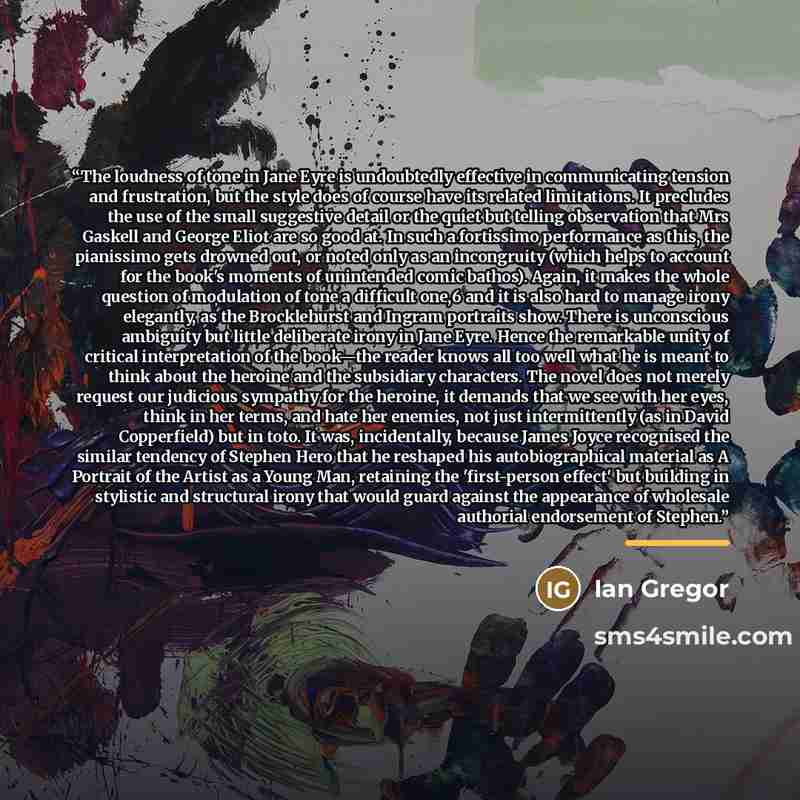
“The loudness of tone in Jane Eyre is undoubtedly effective in communicating tension and frustration, but the style does of course have its related… — Ian Gregor Copy Share Image