If a man knows not to which port he sails, no wind is favorable. — Seneca the Younger Copy Share Image
Slavery holds few men fast; the greater number hold fast their slavery. — Seneca the Younger Copy Share Image
It is safer to offend certain men than it is to oblige them; for as proof that they owe nothing they seek… — Seneca the Younger Copy Share Image
This is the law of benefits between men; the one ought to forget at once what was given, and the other ought… — Seneca the Younger Copy Share Image
If a man does not know to what port he is steering, no wind is favorable to him. Ignoranti quem portum petat,… — Seneca the Younger Copy Share Image
It is the property of a great and good mind to covet, not the fruit of good deeds, but good deeds themselves,… — Seneca the Younger Copy Share Image
Unfamiliarity lends weight to misfortune, and there was never a man whose grief was not heightened by surprise. — Seneca the Younger Copy Share Image
Many men provoke others to overreach them by excessive suspicion; their extraordinary distrust in some sort justifies the deceit. — Seneca the Younger Copy Share Image
No man can live happily who regards himself alone, who turns everything to his own advantage. Thou must live for another, if… — Seneca the Younger Copy Share Image
Men trust rather to their eyes than to their ears; the effect of precepts is therefore slow and tedious, whilst that of… — Seneca the Younger Copy Share Image
Although a man has so well purged his mind that nothing can trouble or deceive him any more, yet he reached his… — Seneca the Younger Copy Share Image
The origin of all mankind was the same; it is only a clear and good conscience that makes a man noble, for… — Seneca the Younger Copy Share Image
Why does no one confess his sins? Because he is yet in them. It is for a man who has awoke from… — Seneca the Younger Copy Share Image
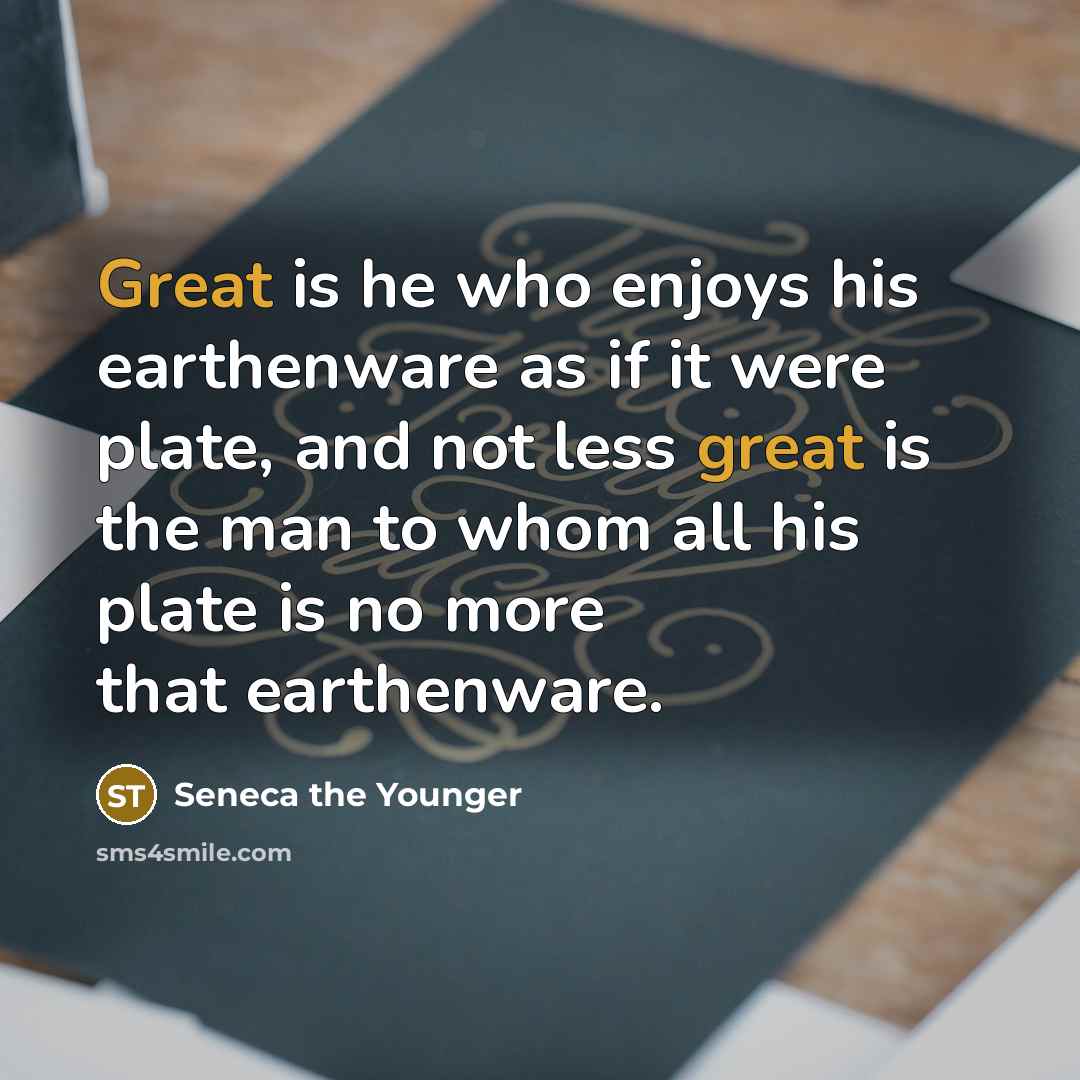
Great is he who enjoys his earthenware as if it were plate, and not less great is the man to whom all… — Seneca the Younger Copy Share Image
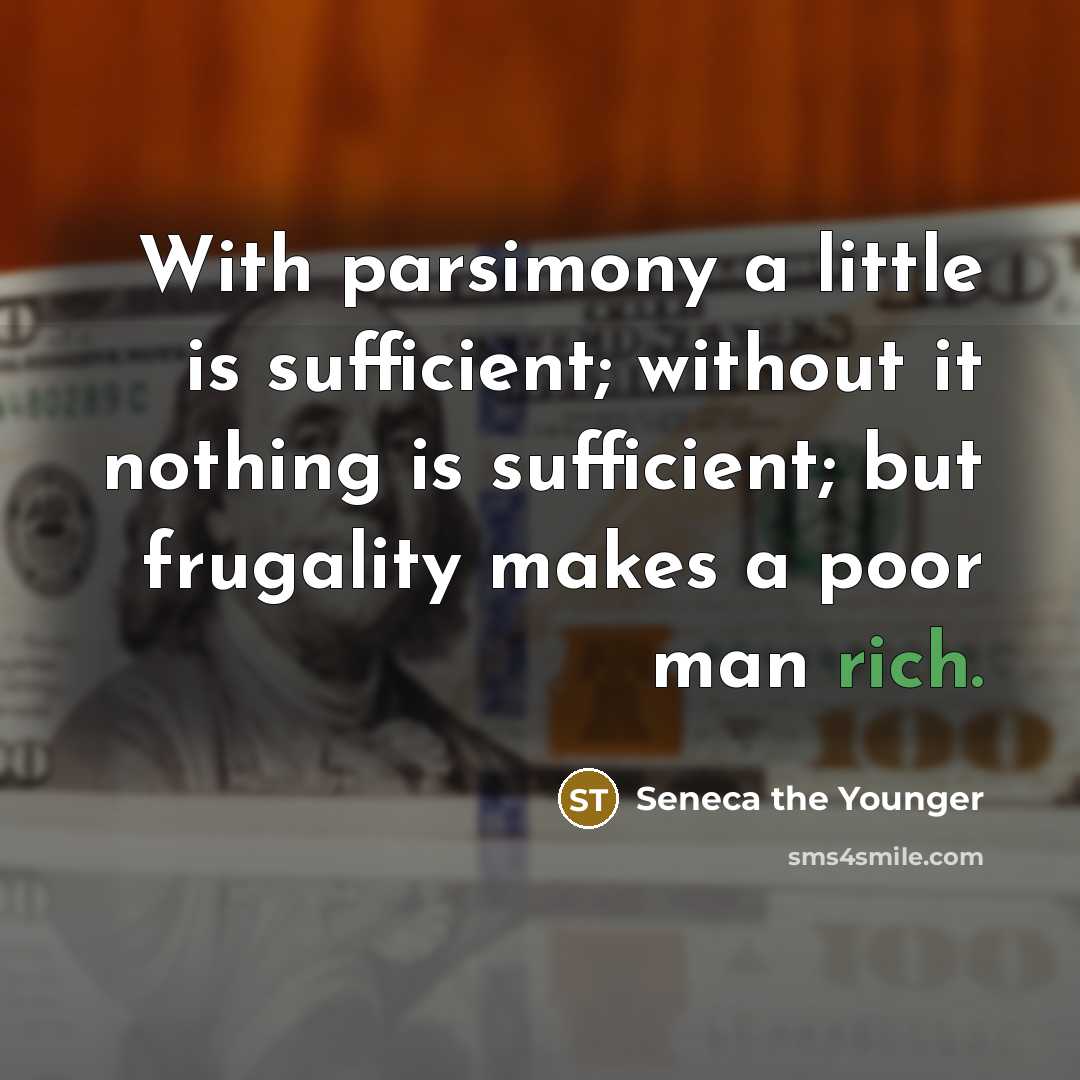
With parsimony a little is sufficient; without it nothing is sufficient; but frugality makes a poor man rich. — Seneca the Younger Copy Share Image
Those vices [luxury and neglect of decent manners] are vices of men, not of the times. [Lat., Hominum sunt ista [vitia], non… — Seneca the Younger Copy Share Image
Men trust their eyes rather than their ears; the road by precept is long and tedious, by example short and effectual. — Seneca the Younger Copy Share Image
Poverty with joy isn't poverty at all. The poor man is not one who has little, but one who hankers after more. — Seneca the Younger Copy Share Image
The voice of flattery affects us after it has ceased, just as after a concert men find some agreeable air ringing in… — Seneca the Younger Copy Share Image
No man is born wise; but wisdom and virtue require a tutor; though we can easily learn to be vicious without a… — Seneca the Younger Copy Share Image
A man can refrain from wanting what he has not and cheerfully make the best of a bird in the hand. — Seneca the Younger Copy Share Image
Happy is the man who can endure the highest and lowest fortune. He who has endured such vicissitudes with equanimity has deprived… — Seneca the Younger Copy Share Image
The wise man lacked nothing but needed a great number of things, whereas the fool, on the other hand, needs nothing (for… — Seneca the Younger Copy Share Image
Who-only let him be a man and intent upon honor-is not eager for the honorable ordeal and prompt to assume perilous duties?… — Seneca the Younger Copy Share Image
For men in a state of freedom had thatch for their shelter, while slavery dwells beneath marble and gold. — Seneca the Younger Copy Share Image
Such is the blindness, nay the insanity of mankind, that some men are driven to death by the fear of it. — Seneca the Younger Copy Share Image
The state of that man's mind who feels too intense an interest as to future events, must be most deplorable. — Seneca the Younger Copy Share Image
Greatness stands upon a precipice, and if prosperity carries a man never so little beyond his poise, it overbears and dashes him… — Seneca the Younger Copy Share Image
There is nothing that we can properly call our own but our time, and yet everybody fools us out of it who has a… — Seneca the Younger Copy Share Image
Men trust rather to their eyes than to their ears; the effect of precepts is therefore slow and tedious, whilst that of examples is… — Seneca the Younger Copy Share Image
A great step towards independence is a good-humored stomach, one that is willing to endure rough treatment. — Seneca the Younger Copy Share Image
Men can be divided into 2 groups: one that goes ahead and achieves something, and one that comes after and criticizes. — Seneca the Younger Copy Share Image
Such as the chain of causes we call Fate, such is the chain of wishes: one links on to another; the whole man is… — Seneca the Younger Copy Share Image
The road by precepts is tedious, by example, short and efficacious. — Seneca the Younger Copy Share Image
He who does not want to die should not want to live. For life is tendered to us with the proviso of death. Life… — Seneca the Younger Copy Share Image
Let us not seek our disease out of ourselves; 'tis in us, and planted in our bowels; and the mere fact that we do… — Seneca the Younger Copy Share Image





![“Those vices [luxury and neglect of decent manners] are vices of men, not of the times. [Lat., Hominum sunt ista [vitia], non temporum.” quote by Seneca the Younger](https://sms4smile.com/quotes/img-quotes/86a/seneca-the-younger-219_decent_those-vices-luxury-and-neglect-of-decent_2255176.jpg)