The concept of loss aversion is certainly the most significant contribution of psychology to behavioral economics. — Daniel Kahneman Copy Share Image
“Having a long-term plan--and not casting it aside--is the key to dealing with our fear of loss (loss aversion).” — Ori Brafman Copy Share Image
“Loss aversion helps produce inertia, meaning a strong desire to stick with your current holdings.” — Richard H. Thaler Copy Share Image
“to taking an action that could make life even worse. Psychologists call this “loss aversion.” Research in cognitive” — Jerome Groopman Copy Share Image
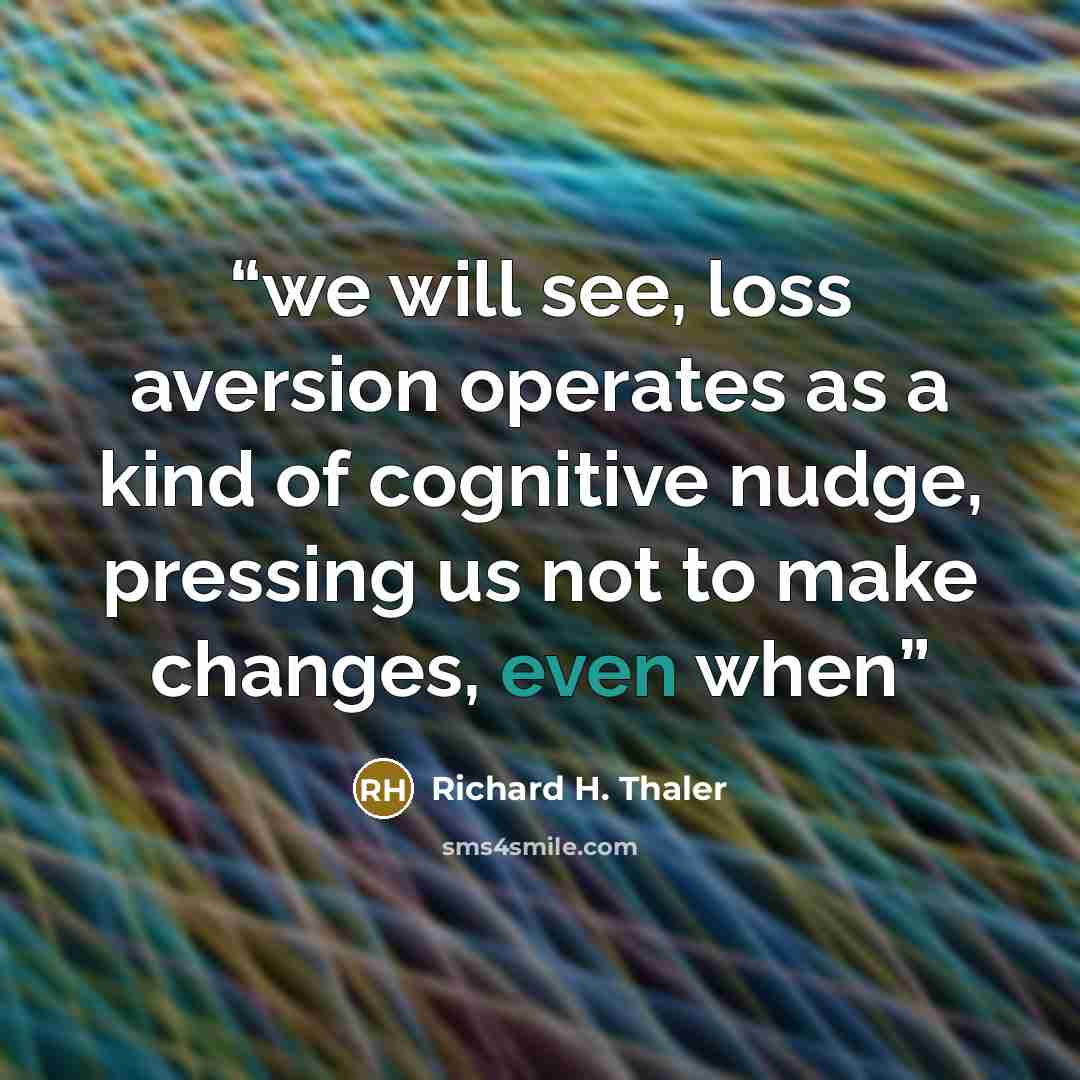
“we will see, loss aversion operates as a kind of cognitive nudge, pressing us not to make changes, even when” — Richard H. Thaler Copy Share Image
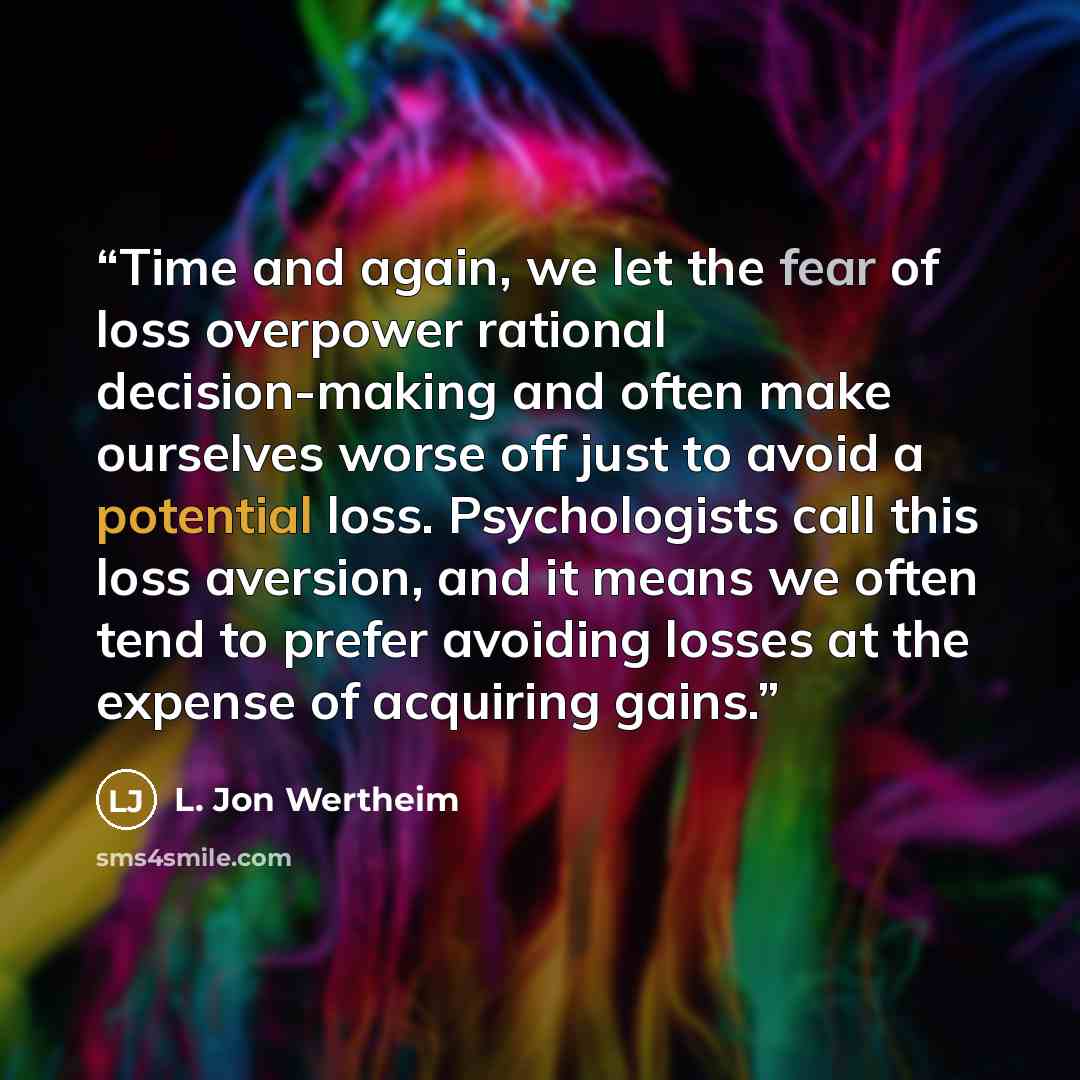
“Time and again, we let the fear of loss overpower rational decision-making and often make ourselves worse off just to avoid a… — L. Jon Wertheim Copy Share Image
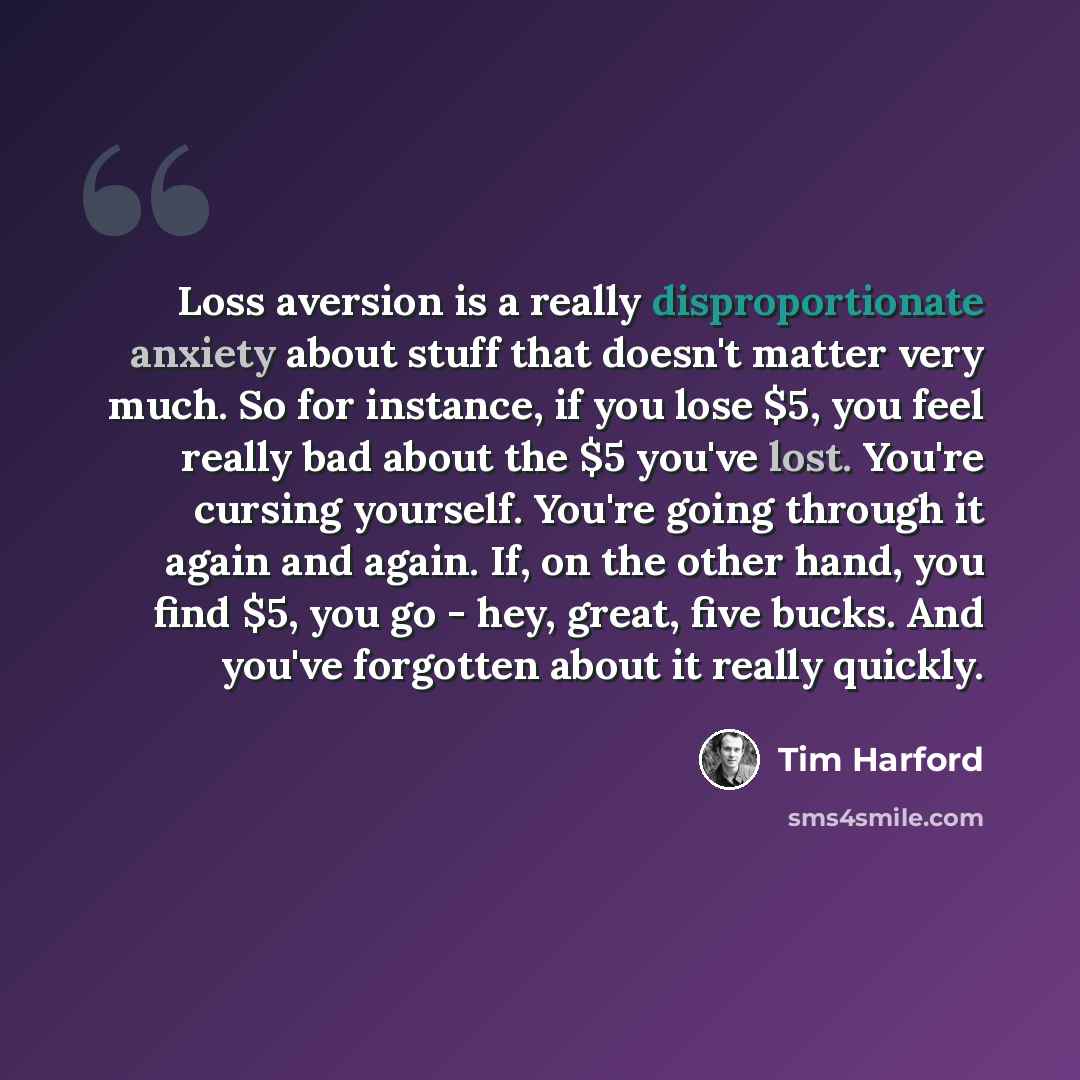
Loss aversion is a really disproportionate anxiety about stuff that doesn't matter very much. So for instance, if you lose $5, you… — Tim Harford Copy Share Image
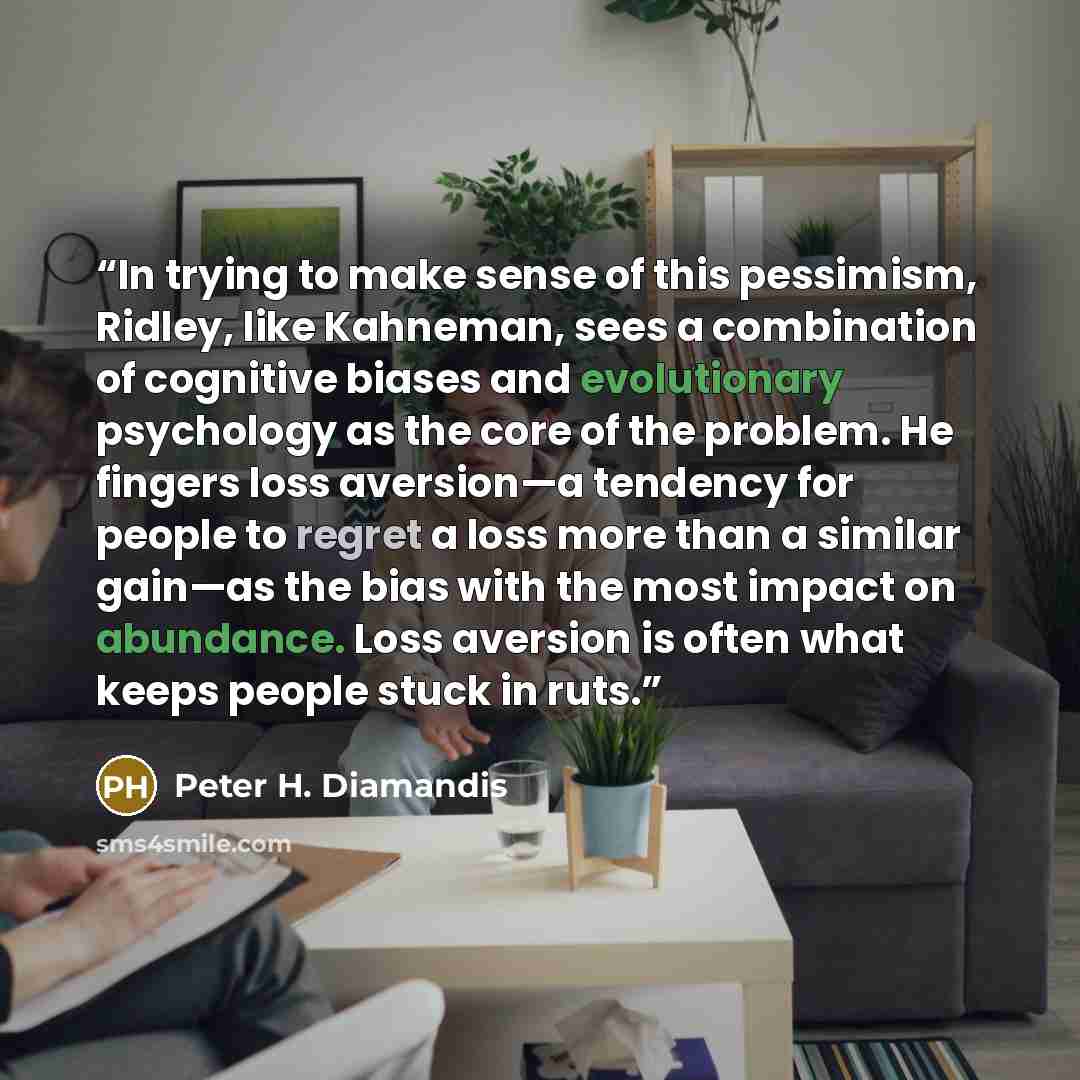
“In trying to make sense of this pessimism, Ridley, like Kahneman, sees a combination of cognitive biases and evolutionary psychology as the… — Peter H. Diamandis Copy Share Image
“a single cockroach will completely wreck the appeal of a bowl of cherries, but a cherry will do nothing at all for… — Daniel Kahneman Copy Share Image
“The combination of loss aversion with mindless choosing implies that if an option is designated as the “default,” it will attract a… — Richard H. Thaler Copy Share Image
“Loss aversion refers to the relative strength of two motives: we are driven more strongly to avoid losses than to achieve gains.… — Daniel Kahneman Copy Share Image