Habit is necessary. It is the habit of having habits, of turning a trail into a rut, that must be incessantly fought… — Edith Wharton Copy Share Image
“In spite of illness, in spite even of the archenemy sorrow, one can remain alive long past the usual date of disintegration… — Edith Wharton Copy Share Image
One can remain alive ... if one is unafraid of change, insatiable in intellectual curiosity interested in big things and happy in… — Edith Wharton Copy Share Image
“Suddenly the air was full of that deep clangor of bells which periodically covers Rome with a roof of silver.” — Edith Wharton Copy Share Image
“Untrained human nature was not frank and innocent; it was full of the twists and defences of an instinctive guile. And he felt himself… — Edith Wharton Copy Share Image
“High Pasture Come up--come up: in the dim vale below The autumn mist muffles the fading trees, But on this keen hill-pasture, though the… — Edith Wharton Copy Share Image
“Two ways to be a light for all, is to be a flaming candle or the mirror that reflects it” — Edith Wharton Copy Share Image
“... no treasure-house of Atreus was ever as rich as a well-stored memory.” — Edith Wharton Copy Share Image
“...the endless labour of rolling human stupidity up the steep hill of understanding.” — Edith Wharton Copy Share Image
“he saw his marriage becoming what most of the other marriages about him were: a dull association of material and social interests held together… — Edith Wharton Copy Share Image
The real loneliness is living among all these kind people who only ask one to pretend! — Edith Wharton Copy Share Image
With a shiver of foreboding he saw his marriage becoming what most of the other marriages about him were: a dull association of material… — Edith Wharton Copy Share Image
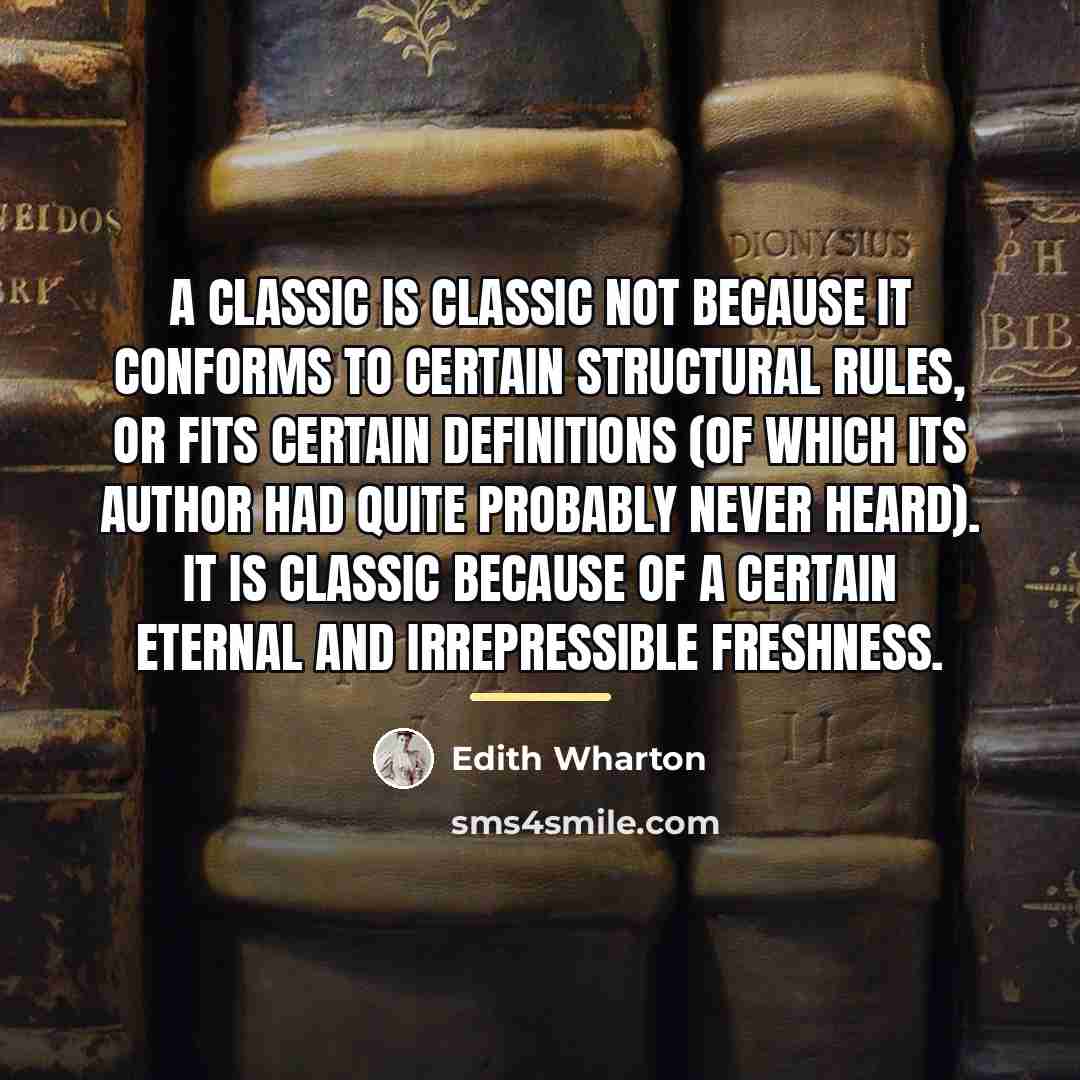
A classic is classic not because it conforms to certain structural rules, or fits certain definitions (of which its author had quite probably never… — Edith Wharton Copy Share Image
There is too much sour grapes for my taste in the present American attitude. The time to denounce the bankers was when we were… — Edith Wharton Copy Share Image