“children whose parents have been unfaithful are often pressured to become the caretaker of the betrayed parent, thus adding to the son’s or daughter’s emotional stress. Young children may be unable to articulate their anger, anxiety, and confusion. They might… — Ana Nogales Copy Share
“When children of any age learn of a parent’s infidelity, they usually find it extremely difficult—if not impossible— to trust that someone they love will not lie to them, reject or abandon them, or otherwise cause them pain somewhere down the road. They very often learn not to put their faith in love, and they may also learn that they… — Ana Nogales Copy Share
“children whose parents have been unfaithful are often pressured to become the caretaker of the betrayed parent, thus adding to the son’s or daughter’s emotional stress. Young children may be unable to articulate their anger, anxiety, and confusion. They might act out, regress, or withdraw. And when an adult child’s family baggage includes lies, cheating, and the breaking of promises,… — Ana Nogales Copy Share
“Most children still want and expect their parents to be a faithful couple. Children are more likely to thrive when their parents are stable… — Ana Nogales Copy Share Image
“While they have nothing to do with one parent’s decision to cheat on the other, children are often left feeling guilty, hopeless, tainted, or damaged— words they often use. As adults, children whose parents cheated are frequently unable to enjoy a healthy relationship because they are plagued by a profound lack of trust, an attraction to partners who cheat, or… — Ana Nogales Copy Share
“The child identifies with the parent who has been betrayed because he is suffering immeasurable loss as well—the loss of trust in one or… — Ana Nogales Copy Share Image
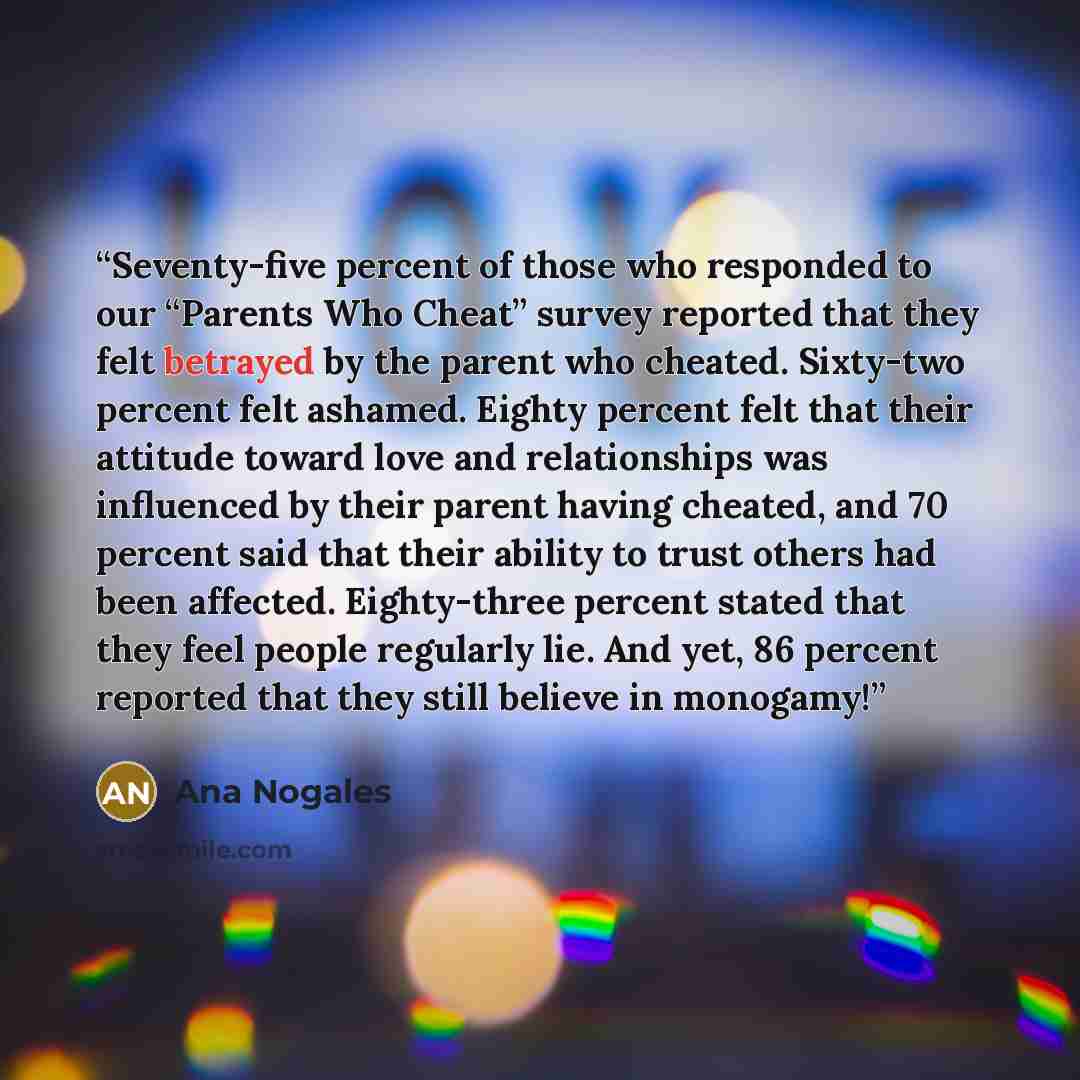
“Seventy-five percent of those who responded to our “Parents Who Cheat” survey reported that they felt betrayed by the parent who cheated. Sixty-two percent… — Ana Nogales Copy Share Image