. . . Yes, I’m an aesthete. I like beauty. Yes – poor…
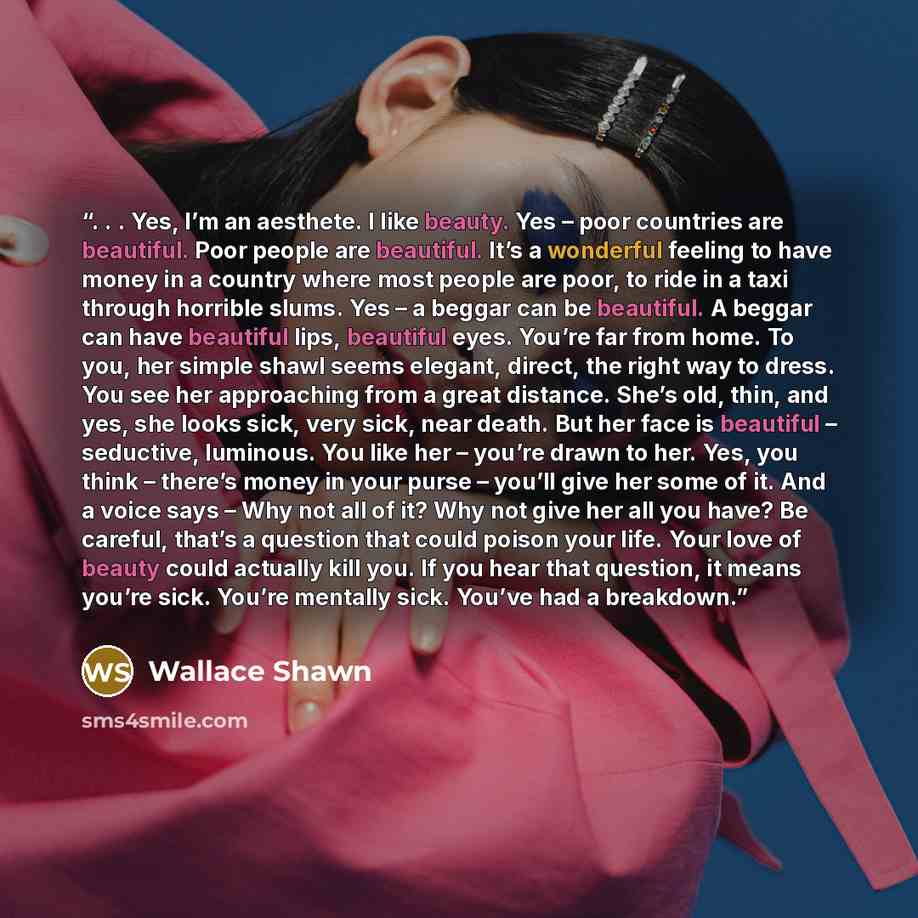
““. . . Yes, I’m an aesthete. I like beauty. Yes – poor countries are beautiful. Poor people are beautiful. It’s a wonderful feeling to have money in a country where most people are poor, to ride in a taxi through horrible slums. Yes – a beggar can be beautiful. A beggar can have beautiful lips, beautiful eyes. You’re far from home. To you, her simple shawl seems elegant, direct, the right way to dress. You see her approaching from a great distance. She’s old, thin, and yes, she looks sick, very sick, near death. But her face is beautiful – seductive, luminous. You like her – you’re drawn to her. Yes, you think – there’s money in your purse – you’ll give her some of it. And a voice says – Why not all of it? Why not give her all you have? Be careful, that’s a question that could poison your life. Your love of beauty could actually kill you. If you hear that question, it means you’re sick. You’re mentally sick. You’ve had a breakdown.””
About This Quote
This interpretation was drafted with AI assistance. It is one reading of the quote, not the author's own explanation.
The speaker warns that an obsessive pursuit of aesthetic beauty, especially in impoverished contexts, can become self‑destructive and morally dangerous.
In simple terms: Obsessing over beauty can lead to harmful choices.
Key Takeaway
Beware letting beauty blind moral judgment.
Themes
ethics
beauty
poverty
self‑destruction
Mood
reflective
cautionary
thoughtful
Type
philosophical
critical
warning
When to use this quote
- Charity work
- tourism
- art criticism
- personal reflection
Key Concepts
Aestheticism
moral hazard
psychological breakdown
Questions to Reflect On
- What drives your attraction to beauty in suffering?
- How can you appreciate beauty without harming yourself?
A Different Perspective
The appeal of beauty may mask exploitation or personal instability.