Sir, sir, I am sorry for Marie Antoinette, archduchess and…
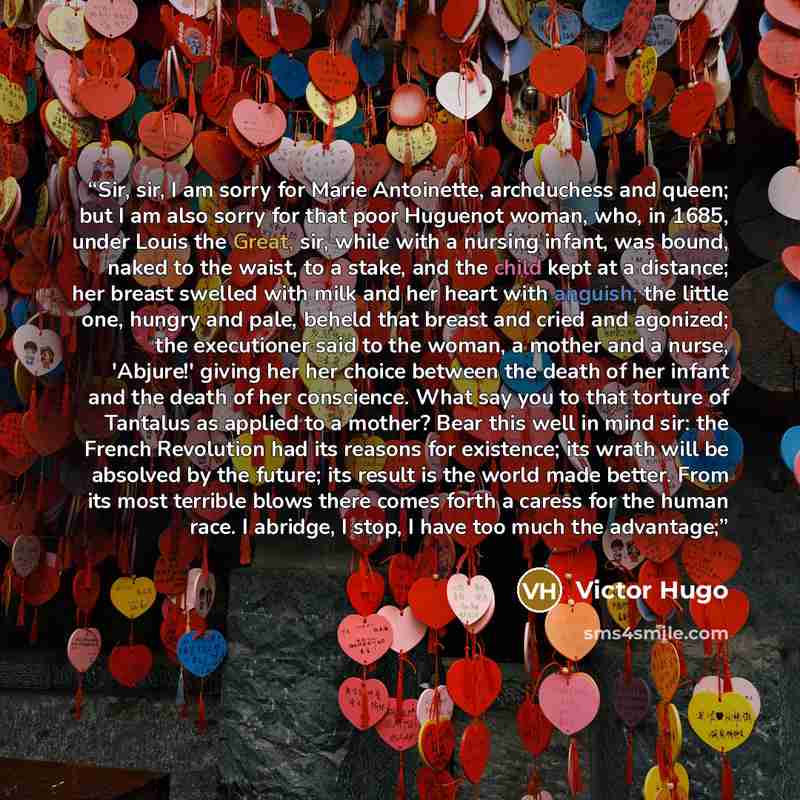
““Sir, sir, I am sorry for Marie Antoinette, archduchess and queen; but I am also sorry for that poor Huguenot woman, who, in 1685, under Louis the Great, sir, while with a nursing infant, was bound, naked to the waist, to a stake, and the child kept at a distance; her breast swelled with milk and her heart with anguish; the little one, hungry and pale, beheld that breast and cried and agonized; the executioner said to the woman, a mother and a nurse, 'Abjure!' giving her her choice between the death of her infant and the death of her conscience. What say you to that torture of Tantalus as applied to a mother? Bear this well in mind sir: the French Revolution had its reasons for existence; its wrath will be absolved by the future; its result is the world made better. From its most terrible blows there comes forth a caress for the human race. I abridge, I stop, I have too much the advantage;””
About This Quote
This interpretation was drafted with AI assistance. It is one reading of the quote, not the author's own explanation.
The suffering of a mother forced to choose between her child's life and her conscience illustrates the brutal moral dilemmas of revolution.
In simple terms: Revolution forces painful choices that test humanity.
Key Takeaway
Recognize the human cost of political upheaval.
Themes
ethics
humanity
revolutionary violence
Mood
somber
thoughtful
Type
historical
ethical
When to use this quote
- political discourse
- human rights advocacy
- educational curricula
- peacebuilding efforts
Key Concepts
moral conflict
historical trauma
Questions to Reflect On
- How do we balance revolutionary ideals with compassion?
- What responsibilities do societies have to protect the vulnerable?
A Different Perspective
Romanticizing revolution can overlook individual suffering.