Charity is the filthiest invention of the human mind…
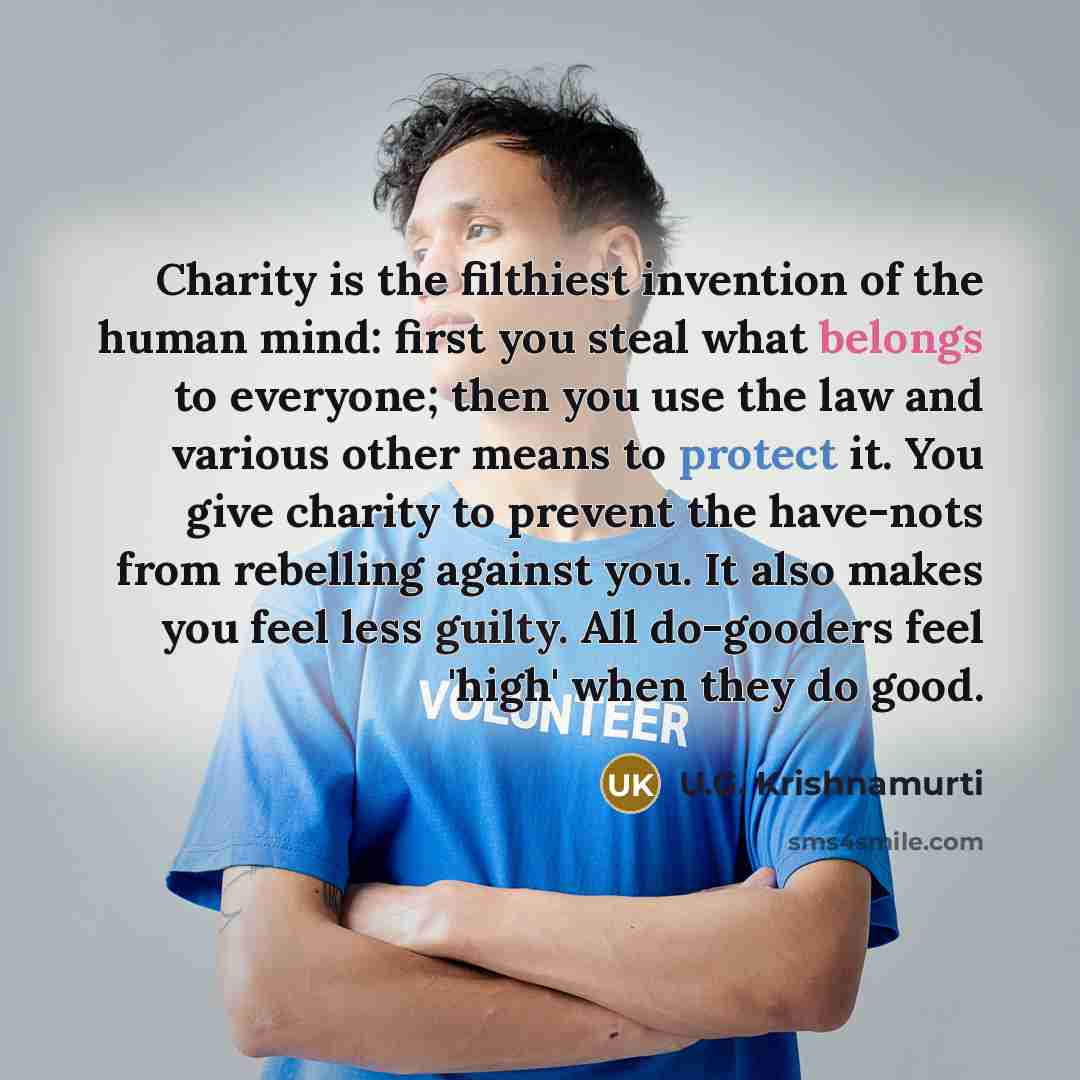
“Charity is the filthiest invention of the human mind: first you steal what belongs to everyone; then you use the law and various other means to protect it. You give charity to prevent the have-nots from rebelling against you. It also makes you feel less guilty. All do-gooders feel 'high' when they do good.”
About This Quote
This interpretation was drafted with AI assistance. It is one reading of the quote, not the author's own explanation.
Charity is portrayed as a manipulative tool that extracts communal resources and uses legal and moral frameworks to legitimize control, offering donors a sense of moral superiority while pacifying the disadvantaged.
In simple terms: Charity as a power‑maintaining mechanism.
Key Takeaway
Charity can serve self‑interest more than altruism.
Themes
Power dynamics
Moral hypocrisy
Social control
Economic exploitation
Psychology of guilt
Mood
Skeptical
Cynical
Reflective
Type
Aphorism
Social critique
When to use this quote
- Wealthy elites managing public perception
- Governments using aid to quell dissent
- Corporations sponsoring philanthropy for brand image
- Individuals seeking personal redemption through donations
Key Concepts
Resource appropriation
Legitimization
Social pacification
Moral licensing
Practical Applications
- Designing transparent aid structures
- Critiquing philanthropic motives in policy debates
Questions to Reflect On
- What mechanisms can ensure charity benefits recipients rather than donors?
- How might societies balance the need for aid with the risk of power abuse?
A Different Perspective
Charitable acts can also genuinely alleviate suffering and foster community solidarity, independent of donor motives.