A good conscience fears no witness, but a guilty…
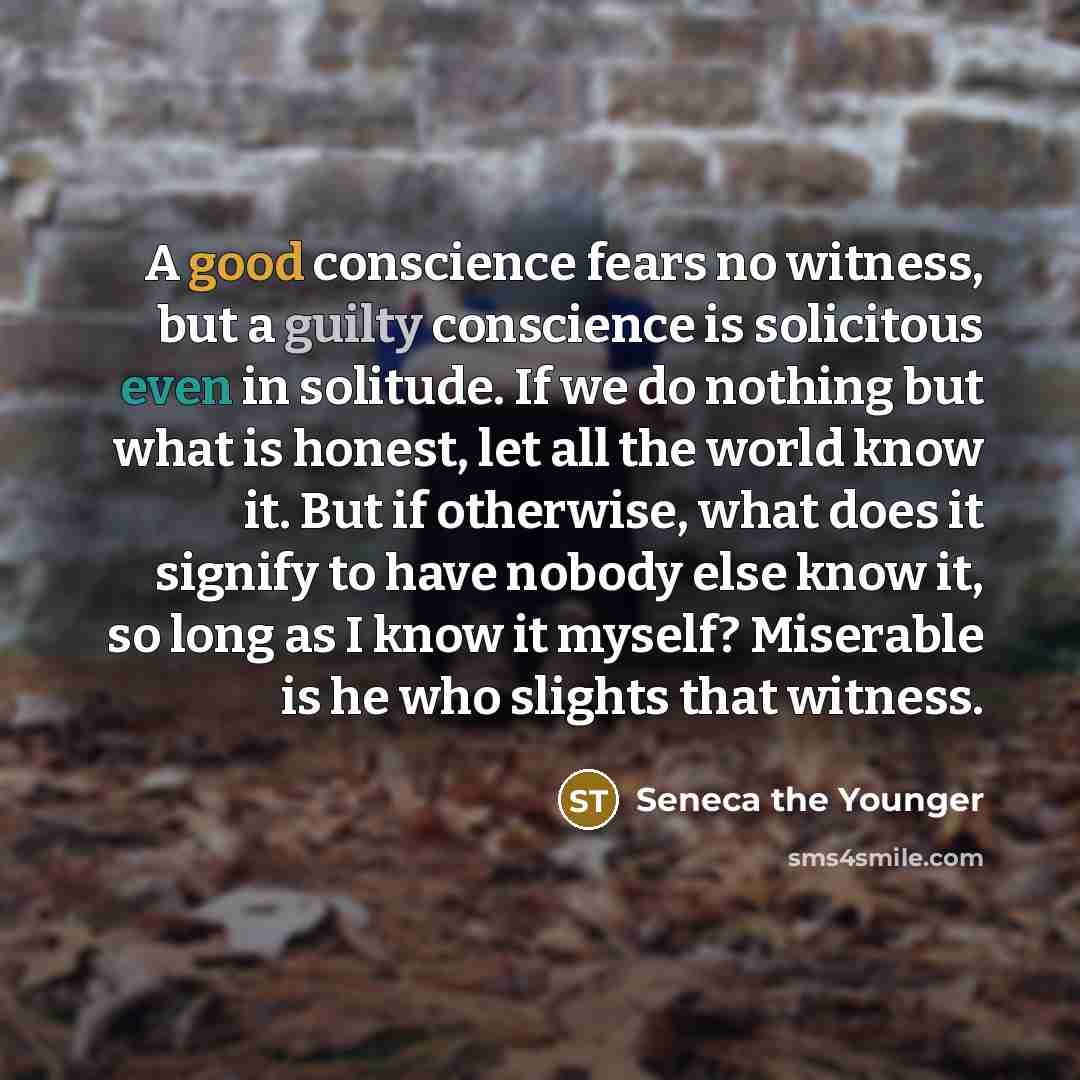
“A good conscience fears no witness, but a guilty conscience is solicitous even in solitude. If we do nothing but what is honest, let all the world know it. But if otherwise, what does it signify to have nobody else know it, so long as I know it myself? Miserable is he who slights that witness.”
About This Quote
This interpretation was drafted with AI assistance. It is one reading of the quote, not the author's own explanation.
A clear conscience needs no external proof, while guilt haunts even in solitude; honesty should be public.
In simple terms: Honest actions need no witness; guilt is solitary.
Key Takeaway
Act honestly and share your integrity openly.
Themes
conscience
honesty
guilt
integrity
public virtue
Mood
thoughtful
serious
inspirational
Type
philosophical
ethical
advice
When to use this quote
- public speaking
- leadership
- personal decision making
- conflict resolution
Key Concepts
philosophy
ethics
Stoicism
Questions to Reflect On
- What actions can you take to align inner and outer honesty?
- How does secrecy affect your moral compass?
A Different Perspective
Public acknowledgment may not change inner guilt.