I am a Dalit in Khairlanji. A Pandit in the Kashmir…
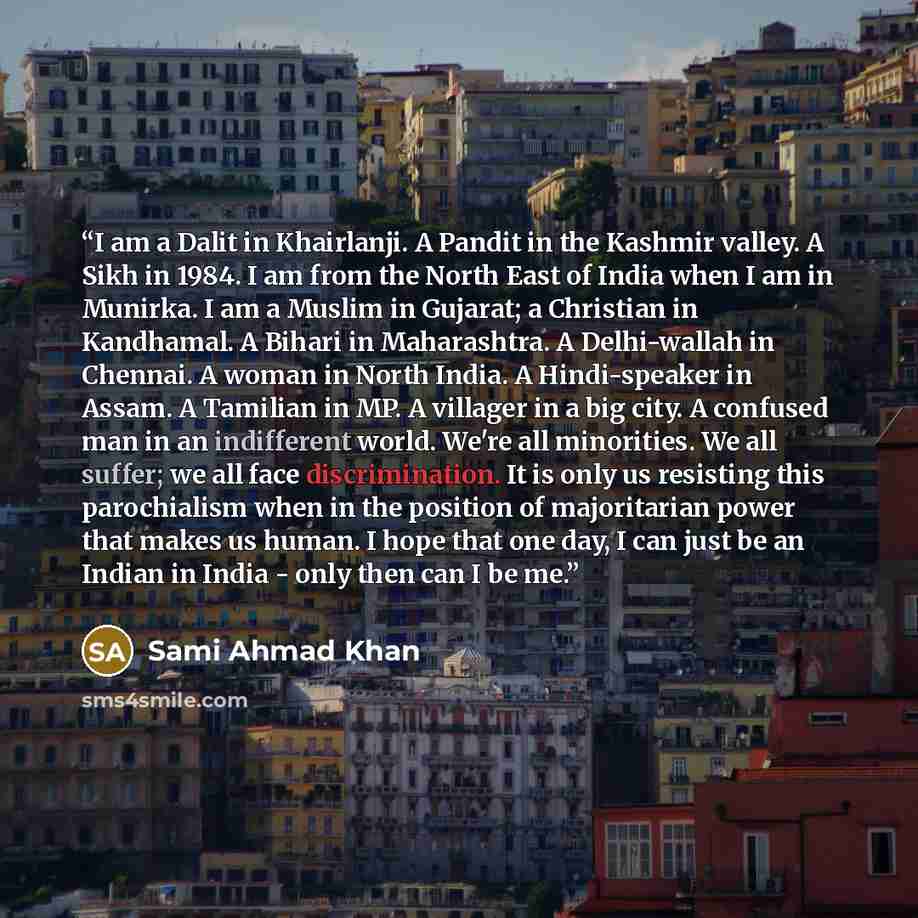
““I am a Dalit in Khairlanji. A Pandit in the Kashmir valley. A Sikh in 1984. I am from the North East of India when I am in Munirka. I am a Muslim in Gujarat; a Christian in Kandhamal. A Bihari in Maharashtra. A Delhi-wallah in Chennai. A woman in North India. A Hindi-speaker in Assam. A Tamilian in MP. A villager in a big city. A confused man in an indifferent world. We're all minorities. We all suffer; we all face discrimination. It is only us resisting this parochialism when in the position of majoritarian power that makes us human. I hope that one day, I can just be an Indian in India - only then can I be me.””
About This Quote
This interpretation was drafted with AI assistance. It is one reading of the quote, not the author's own explanation.
The speaker embodies many identities, highlighting minority experiences, discrimination, and the desire for a unified human identity beyond parochialism.
In simple terms: Multiple identities reveal shared humanity.
Key Takeaway
Embrace diversity and resist division.
Themes
identity
diversity
minority
humanity
discrimination
Mood
reflective
hopeful
Type
Big city:1
Different world:1
Discrimination:1
Humanity:1
India:1
Inspirational:1
Minorities:1
Nationalism:1
North east:1
Protest:1
Racism:1
Minorities Suffer:1
World Minorities:1
Discrimination Resisting:1
Resisting Parochialism:1
When to use this quote
- social activism
- community building
- personal storytelling
Key Concepts
sociology
human rights
Questions to Reflect On
- How do you honor each part of your identity?
- What actions reduce discrimination?
A Different Perspective
Unity may overlook individual struggles.