It must be said here that ‘Bharat Mata ki Jai’ is not an…
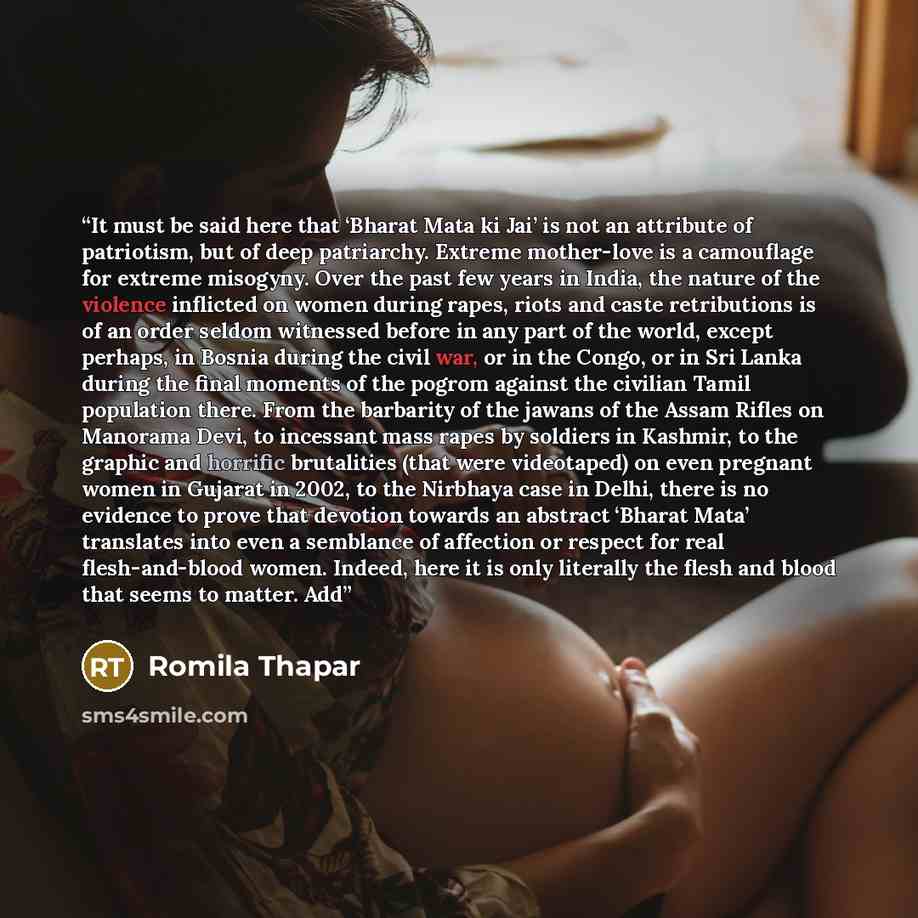
““It must be said here that ‘Bharat Mata ki Jai’ is not an attribute of patriotism, but of deep patriarchy. Extreme mother-love is a camouflage for extreme misogyny. Over the past few years in India, the nature of the violence inflicted on women during rapes, riots and caste retributions is of an order seldom witnessed before in any part of the world, except perhaps, in Bosnia during the civil war, or in the Congo, or in Sri Lanka during the final moments of the pogrom against the civilian Tamil population there. From the barbarity of the jawans of the Assam Rifles on Manorama Devi, to incessant mass rapes by soldiers in Kashmir, to the graphic and horrific brutalities (that were videotaped) on even pregnant women in Gujarat in 2002, to the Nirbhaya case in Delhi, there is no evidence to prove that devotion towards an abstract ‘Bharat Mata’ translates into even a semblance of affection or respect for real flesh-and-blood women. Indeed, here it is only literally the flesh and blood that seems to matter. Add””
About This Quote
This interpretation was drafted with AI assistance. It is one reading of the quote, not the author's own explanation.
Patriotic slogans can mask deep patriarchal attitudes that enable gender violence, showing a disconnect between abstract nationalism and real respect for women.
In simple terms: National pride may hide sexism and violence against women.
Key Takeaway
Critically examine how patriotism affects gender equality.
Themes
patriarchal
nationalism
gender violence
Mood
critical
concerned
Type
analysis
political
When to use this quote
- policy debates
- activist movements
- educational curricula
- media analysis
Key Concepts
feminist critique
political rhetoric
human rights
Questions to Reflect On
- How can nationalism be reframed to empower women?
- What alternatives promote inclusive patriotism?
A Different Perspective
Patriotic symbols can also inspire positive social change when reinterpreted.