Hudson Taylor and Charles Spurgeon believed that Romans…
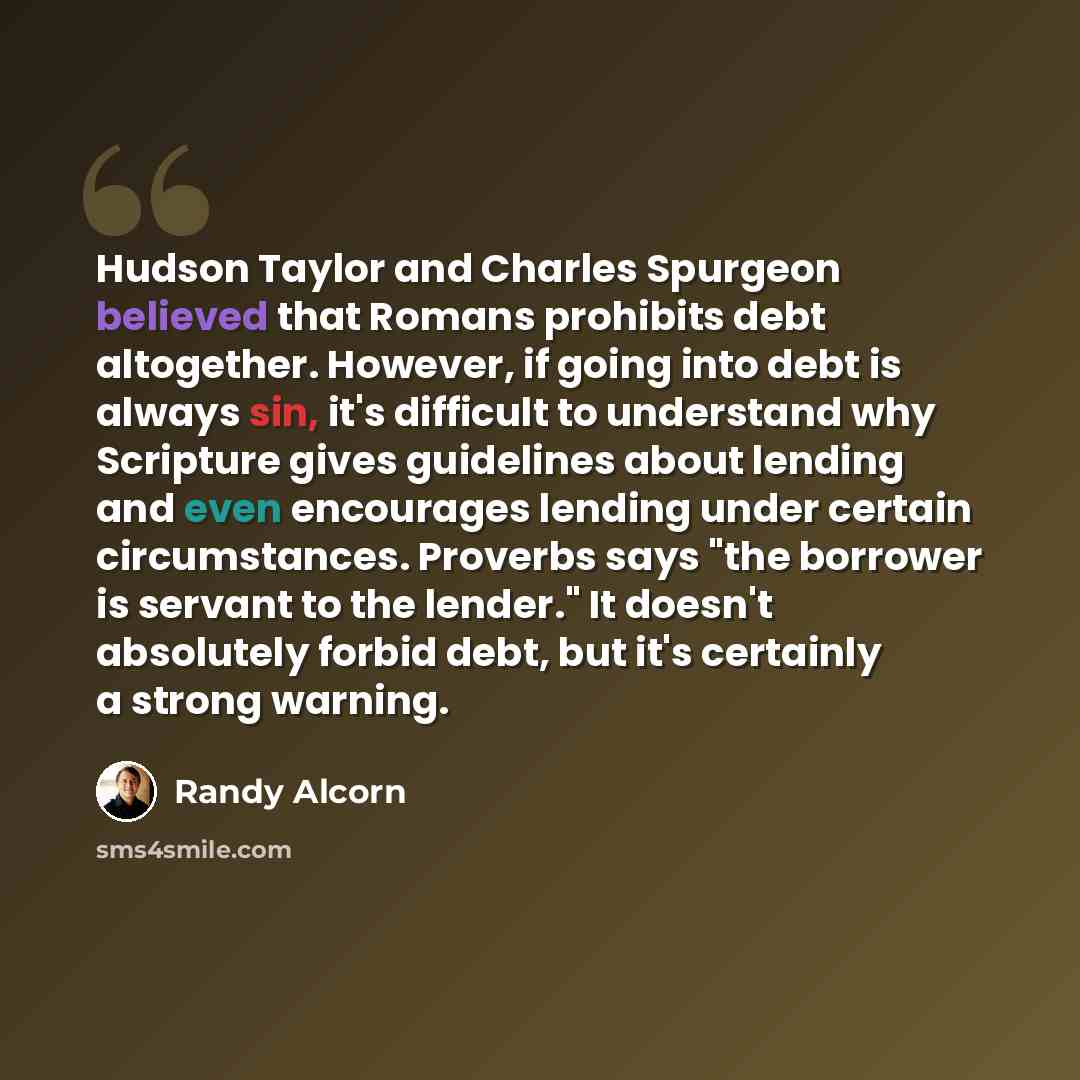
“Hudson Taylor and Charles Spurgeon believed that Romans prohibits debt altogether. However, if going into debt is always sin, it's difficult to understand why Scripture gives guidelines about lending and even encourages lending under certain circumstances. Proverbs says "the borrower is servant to the lender." It doesn't absolutely forbid debt, but it's certainly a strong warning.”
About This Quote
This interpretation was drafted with AI assistance. It is one reading of the quote, not the author's own explanation.
The quote discusses the tension between biblical prohibition of debt and scriptural allowances for lending, highlighting that debt is discouraged but not absolutely forbidden.
In simple terms: Debt is warned against but not outright banned in Scripture.
Key Takeaway
Recognize debt’s risks while understanding permissible lending.
Themes
finance
ethics
scripture
debt
guidelines
Mood
thoughtful
analytical
Type
theological
ethical
When to use this quote
- personal budgeting
- church lending policies
- financial counseling
- loan agreements
Key Concepts
Christian ethics
biblical interpretation
financial stewardship
Questions to Reflect On
- How do you balance biblical cautions with practical financial needs?
- When is lending ethically acceptable?
A Different Perspective
Debt may be necessary in emergencies, challenging the blanket prohibition view.