They know what the “perfumes” are going to say because…
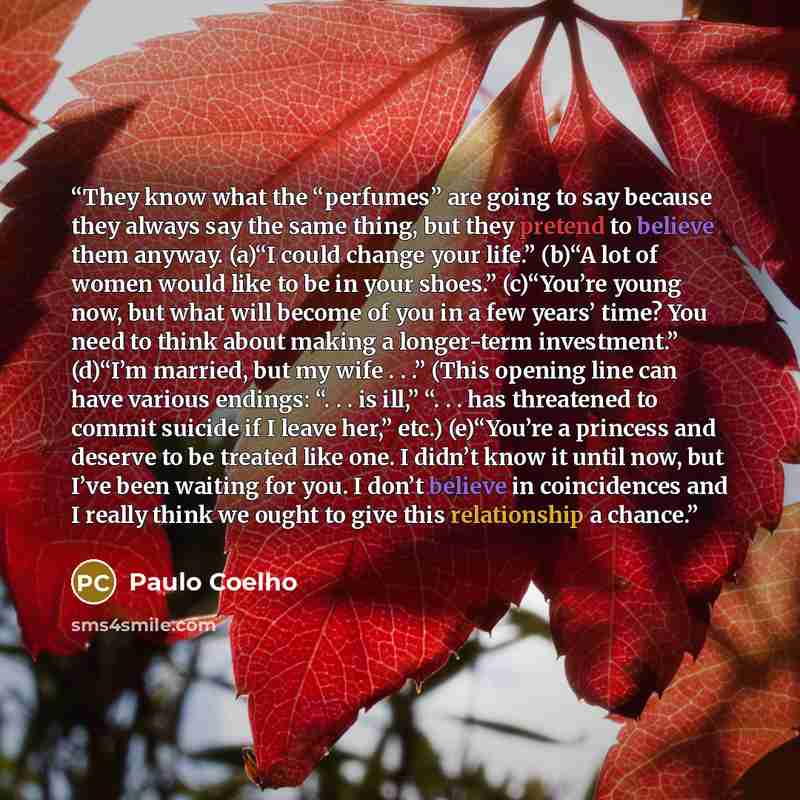
““They know what the “perfumes” are going to say because they always say the same thing, but they pretend to believe them anyway. (a)“I could change your life.” (b)“A lot of women would like to be in your shoes.” (c)“You’re young now, but what will become of you in a few years’ time? You need to think about making a longer-term investment.” (d)“I’m married, but my wife . . .” (This opening line can have various endings: “. . . is ill,” “. . . has threatened to commit suicide if I leave her,” etc.) (e)“You’re a princess and deserve to be treated like one. I didn’t know it until now, but I’ve been waiting for you. I don’t believe in coincidences and I really think we ought to give this relationship a chance.””
About This Quote
This interpretation was drafted with AI assistance. It is one reading of the quote, not the author's own explanation.
The speaker manipulates listeners by offering vague promises and emotional appeals, exploiting hopes and insecurities to gain trust.
In simple terms: People are swayed by empty promises.
Key Takeaway
Question the motives behind persuasive offers.
Themes
manipulation
trust
psychology
hope
relationships
persuasion
Mood
cautious
critical
Type
ethical
psychological
When to use this quote
- sales pitches
- online dating
- political speeches
- self‑help seminars
Key Concepts
cognitive bias
emotional appeal
ethical persuasion
Questions to Reflect On
- What red flags indicate manipulation?
- How can you protect yourself from empty promises?
A Different Perspective
Such tactics can backfire if the audience detects insincerity.