Once a year, the inhabitants shut themselves up in their…
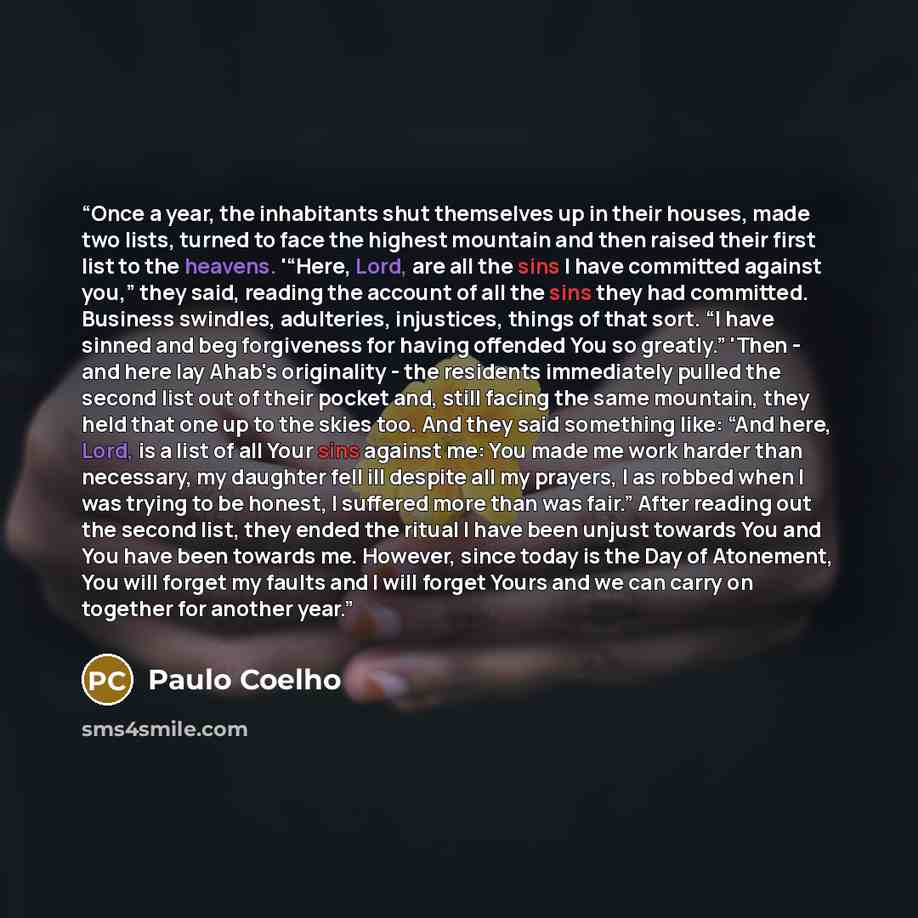
““Once a year, the inhabitants shut themselves up in their houses, made two lists, turned to face the highest mountain and then raised their first list to the heavens. '“Here, Lord, are all the sins I have committed against you,” they said, reading the account of all the sins they had committed. Business swindles, adulteries, injustices, things of that sort. “I have sinned and beg forgiveness for having offended You so greatly.” 'Then - and here lay Ahab's originality - the residents immediately pulled the second list out of their pocket and, still facing the same mountain, they held that one up to the skies too. And they said something like: “And here, Lord, is a list of all Your sins against me: You made me work harder than necessary, my daughter fell ill despite all my prayers, I as robbed when I was trying to be honest, I suffered more than was fair.” After reading out the second list, they ended the ritual I have been unjust towards You and You have been towards me. However, since today is the Day of Atonement, You will forget my faults and I will forget Yours and we can carry on together for another year.””
About This Quote
This interpretation was drafted with AI assistance. It is one reading of the quote, not the author's own explanation.
The ritual shows people list both their own faults and perceived injustices, seeking mutual forgiveness and balance.
In simple terms: People admit sins and blame to reset relationships.
Key Takeaway
Acknowledge both sides to heal.
Themes
forgiveness
balance
reflection
ritual
Mood
reflective
hopeful
Type
philosophical
inspirational
When to use this quote
- annual confession
- family disputes
- community healing
- personal accountability
Key Concepts
reciprocity
self-awareness
justice
Questions to Reflect On
- What injust you hold against others?
- How can you balance self‑critique with fairness?
A Different Perspective
May overlook systemic issues by focusing on individual blame.