It might feel, at least to some of us, that our opinions…
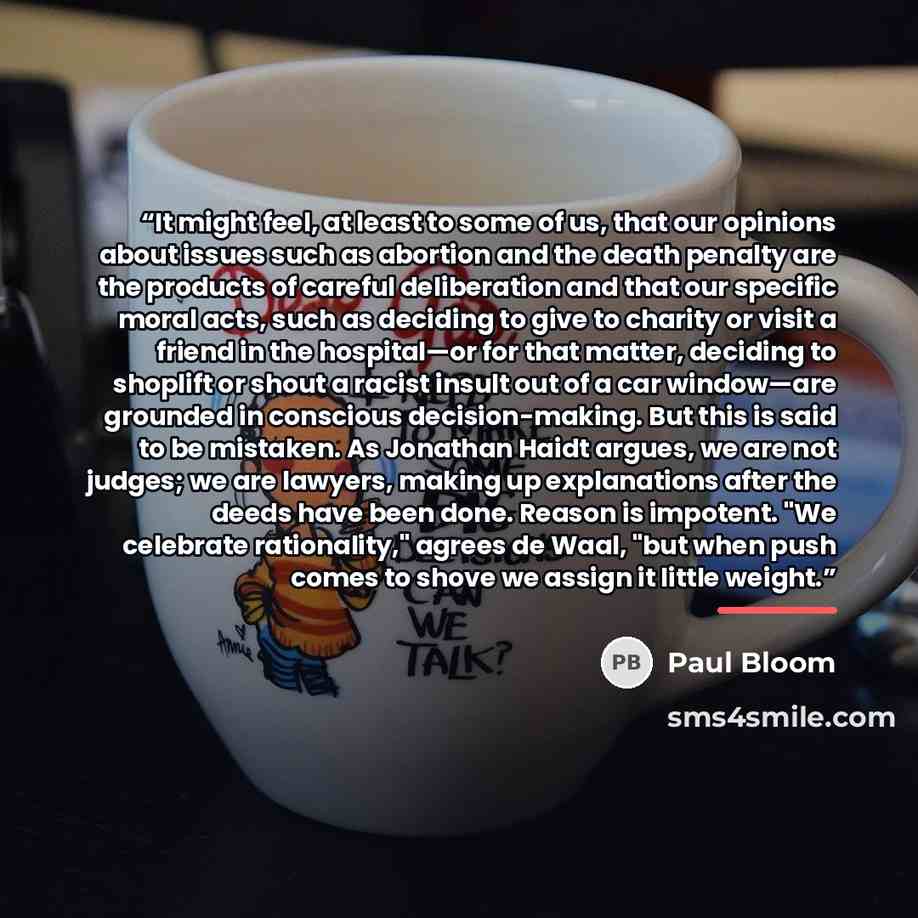
““It might feel, at least to some of us, that our opinions about issues such as abortion and the death penalty are the products of careful deliberation and that our specific moral acts, such as deciding to give to charity or visit a friend in the hospital—or for that matter, deciding to shoplift or shout a racist insult out of a car window—are grounded in conscious decision-making. But this is said to be mistaken. As Jonathan Haidt argues, we are not judges; we are lawyers, making up explanations after the deeds have been done. Reason is impotent. "We celebrate rationality," agrees de Waal, "but when push comes to shove we assign it little weight.””
About This Quote
This interpretation was drafted with AI assistance. It is one reading of the quote, not the author's own explanation.
We often think our moral choices are rational, but post‑hoc rationalizations shape them; true reasoning is weak.
In simple terms: Moral judgments are mostly after‑the‑fact justifications.
Key Takeaway
Recognize the role of intuition in decisions.
Themes
morality
intuition
reasoning
Mood
reflective
critical
Type
philosophical
analytical
When to use this quote
- political debate
- personal ethics
- charitable giving
- conflict resolution
Key Concepts
psychology
behavioral economics
Questions to Reflect On
- How much of your moral stance is intuitive?
- Can you identify a recent post‑hoc rationalization?
A Different Perspective
Intuition can be biased, leading to flawed justifications.