One UniVerse for the Living While palaces attest to the…
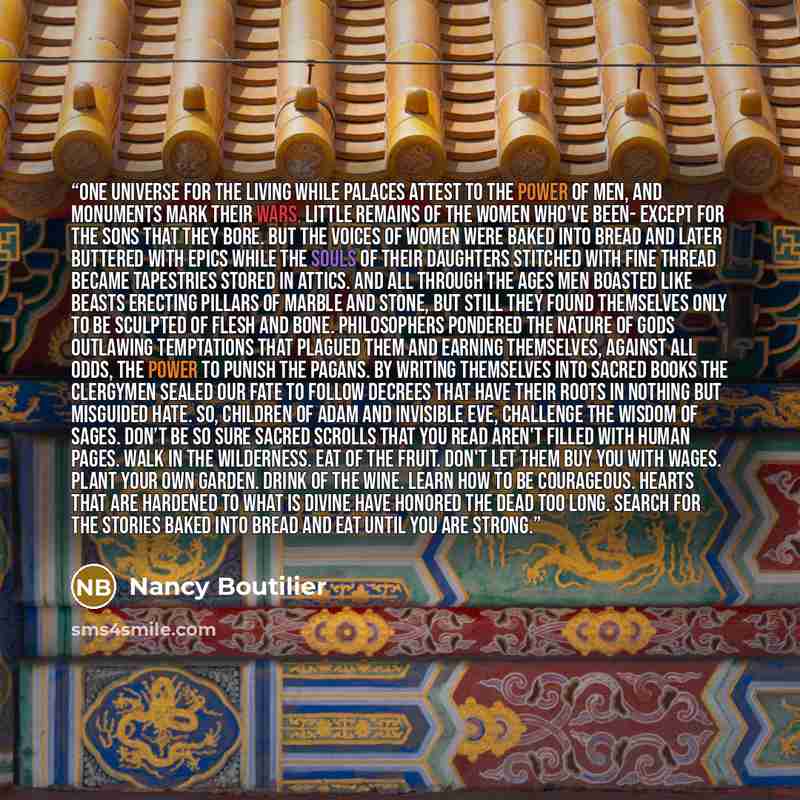
““One UniVerse for the Living While palaces attest to the power of men, And monuments mark their wars, Little remains of the women who've been- Except for the sons that they bore. But the voices of women were baked into bread And later buttered with epics While the souls of their daughters Stitched with fine thread Became tapestries stored in attics. And all through the ages Men boasted like beasts Erecting pillars of marble and stone, But still they found themselves only to be Sculpted of flesh and bone. Philosophers pondered the nature of gods Outlawing temptations that plagued them And earning themselves, against all odds, The power to punish the pagans. By writing themselves into sacred books The clergymen sealed our fate To follow decrees that have their roots In nothing but misguided hate. So, children of Adam and invisible Eve, challenge the wisdom of sages. Don’t be so sure sacred scrolls that you read Aren't filled with human pages. Walk in the wilderness. Eat of the fruit. Don't let them buy you with wages. Plant your own garden. Drink of the wine. Learn how to be courageous. Hearts that are hardened To what is divine Have honored the dead too long. Search for the stories Baked into bread And eat until you are strong.””
About This Quote
This interpretation was drafted with AI assistance. It is one reading of the quote, not the author's own explanation.
The poem critiques patriarchal histories that erase women’s contributions, urging individuals to question authority and reclaim agency through personal courage and communal storytelling.
In simple terms: History silences women; we must reclaim our stories.
Key Takeaway
Challenge dominant narratives and nurture personal empowerment.
Themes
gender
history
empowerment
resistance
Mood
inspirational
defiant
Type
poetic
motivational
When to use this quote
- education reform
- activist movements
- family storytelling
- community art projects
- personal journaling
Key Concepts
feminist theory
social critique
mythology
Questions to Reflect On
- How can you amplify marginalized voices in your community?
- What personal actions can disrupt patriarchal norms?
A Different Perspective
Changing deep-rooted cultural narratives is a slow, collective effort.