The impact of the new caste system is most tragically felt…
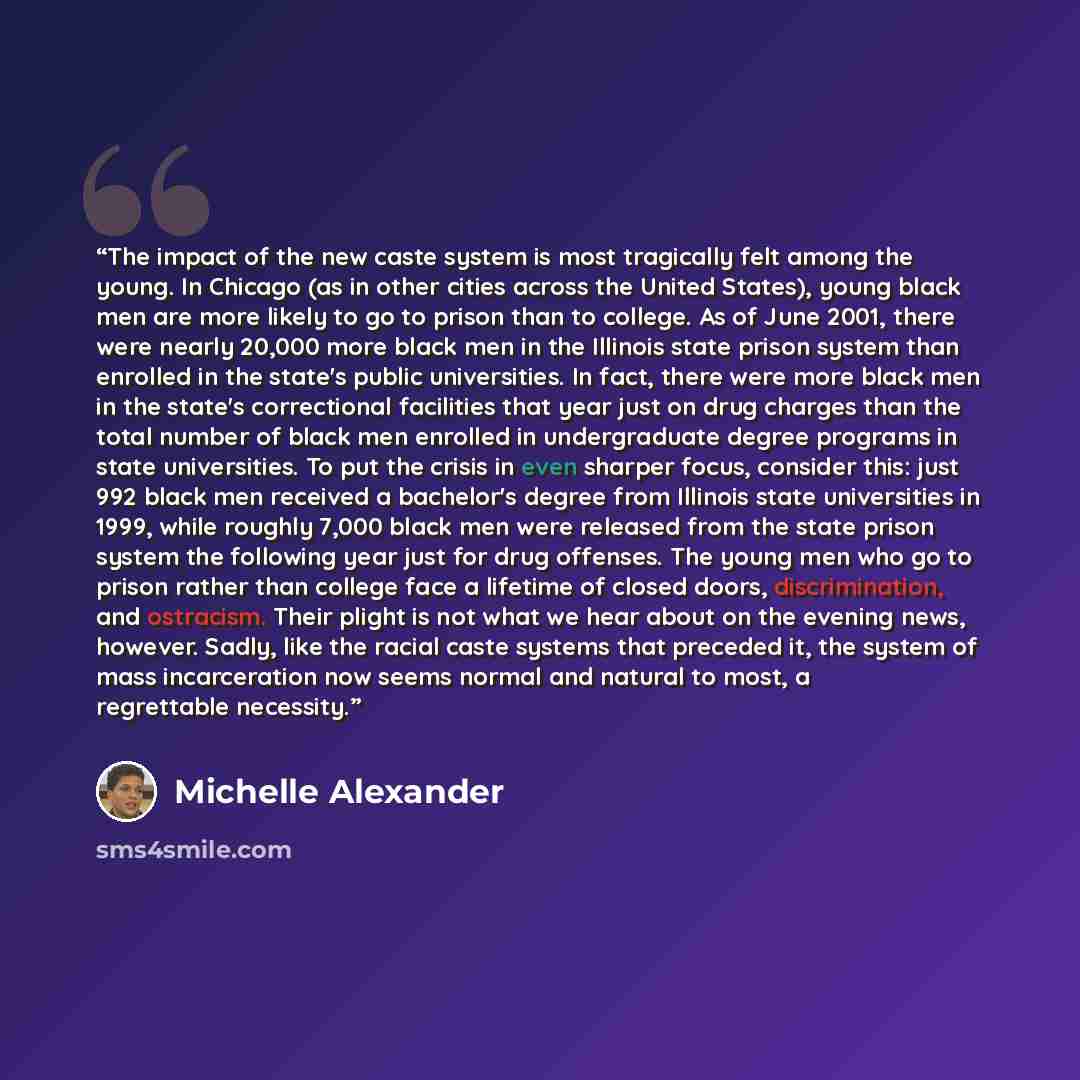
““The impact of the new caste system is most tragically felt among the young. In Chicago (as in other cities across the United States), young black men are more likely to go to prison than to college. As of June 2001, there were nearly 20,000 more black men in the Illinois state prison system than enrolled in the state's public universities. In fact, there were more black men in the state's correctional facilities that year just on drug charges than the total number of black men enrolled in undergraduate degree programs in state universities. To put the crisis in even sharper focus, consider this: just 992 black men received a bachelor's degree from Illinois state universities in 1999, while roughly 7,000 black men were released from the state prison system the following year just for drug offenses. The young men who go to prison rather than college face a lifetime of closed doors, discrimination, and ostracism. Their plight is not what we hear about on the evening news, however. Sadly, like the racial caste systems that preceded it, the system of mass incarceration now seems normal and natural to most, a regrettable necessity.””
About This Quote
This interpretation was drafted with AI assistance. It is one reading of the quote, not the author's own explanation.
Mass incarceration functions as a modern caste system, disproportionately imprisoning young black men and limiting their opportunities for education and advancement.
In simple terms: Prison replaces college for many young black men, creating lasting barriers.
Key Takeaway
Address systemic bias and invest in education and reform.
Themes
racial inequality
justice system
education
mass incarceration
Mood
somber
urgent
Type
analytical
advocacy
When to use this quote
- criminal justice reform
- college outreach
- community mentorship
- policy advocacy
Key Concepts
systemic racism
social stratification
policy failure
Questions to Reflect On
- How can communities empower young black men despite systemic barriers?
- What policies could reduce the prison‑college gap?
A Different Perspective
The data may overlook individual agency and community resilience.