Provincetown is by nature a destination. It is the land’s…
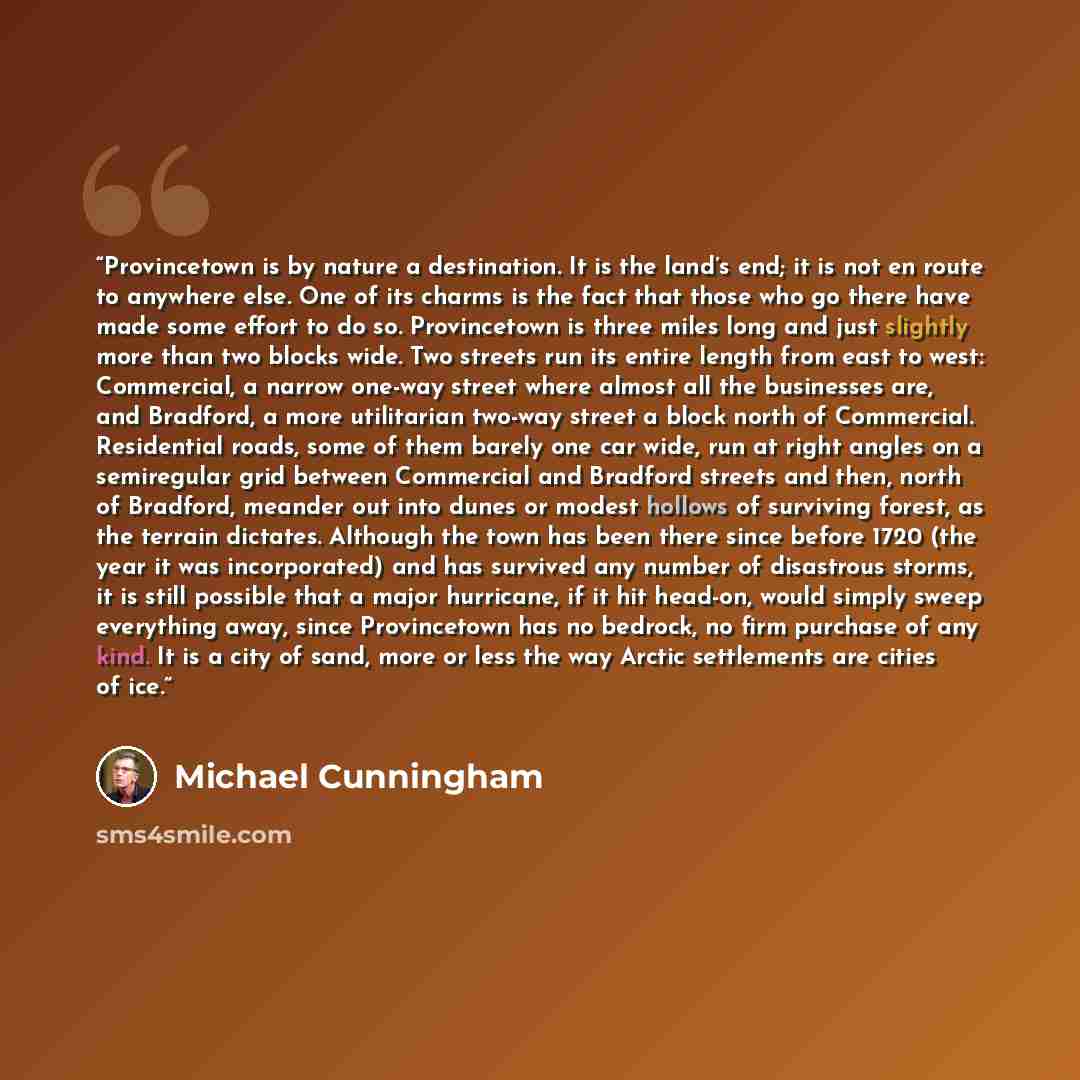
““Provincetown is by nature a destination. It is the land’s end; it is not en route to anywhere else. One of its charms is the fact that those who go there have made some effort to do so. Provincetown is three miles long and just slightly more than two blocks wide. Two streets run its entire length from east to west: Commercial, a narrow one-way street where almost all the businesses are, and Bradford, a more utilitarian two-way street a block north of Commercial. Residential roads, some of them barely one car wide, run at right angles on a semiregular grid between Commercial and Bradford streets and then, north of Bradford, meander out into dunes or modest hollows of surviving forest, as the terrain dictates. Although the town has been there since before 1720 (the year it was incorporated) and has survived any number of disastrous storms, it is still possible that a major hurricane, if it hit head-on, would simply sweep everything away, since Provincetown has no bedrock, no firm purchase of any kind. It is a city of sand, more or less the way Arctic settlements are cities of ice.””
About This Quote
This interpretation was drafted with AI assistance. It is one reading of the quote, not the author's own explanation.
Provincetown’s unique geography makes it a purposeful destination, not a waypoint; its isolation demands intentional effort to reach and appreciate it.
In simple terms: The town is a deliberate end, not a stop‑over.
Key Takeaway
Seek places with purpose.
Themes
place
journey
intentionality
environment
Mood
contemplative
melancholic
Type
literary
descriptive
When to use this quote
- travel planning
- relocation decisions
- urban exploration
- environmental appreciation
Key Concepts
human geography
place attachment
existential meaning
Questions to Reflect On
- Why do we value remote, fragile places?
- How can we protect such unique environments?
A Different Perspective
Its fragility makes it vulnerable to climate threats, challenging sustainability.