To be in touch with wilderness is to have stepped past the…
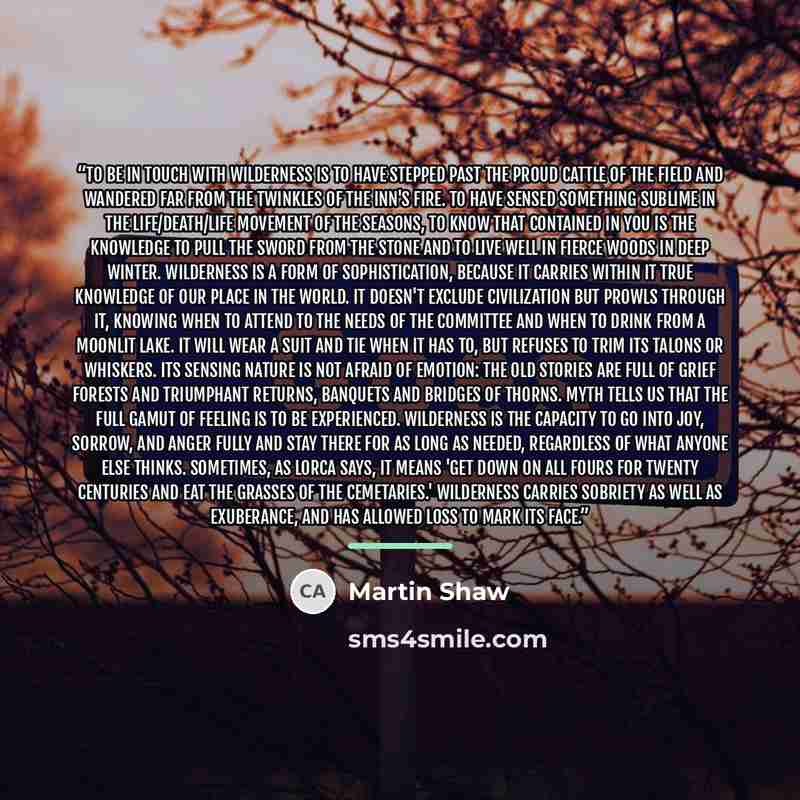
““To be in touch with wilderness is to have stepped past the proud cattle of the field and wandered far from the twinkles of the Inn's fire. To have sensed something sublime in the life/death/life movement of the seasons, to know that contained in you is the knowledge to pull the sword from the stone and to live well in fierce woods in deep winter. Wilderness is a form of sophistication, because it carries within it true knowledge of our place in the world. It doesn't exclude civilization but prowls through it, knowing when to attend to the needs of the committee and when to drink from a moonlit lake. It will wear a suit and tie when it has to, but refuses to trim its talons or whiskers. Its sensing nature is not afraid of emotion: the old stories are full of grief forests and triumphant returns, banquets and bridges of thorns. Myth tells us that the full gamut of feeling is to be experienced. Wilderness is the capacity to go into joy, sorrow, and anger fully and stay there for as long as needed, regardless of what anyone else thinks. Sometimes, as Lorca says, it means 'get down on all fours for twenty centuries and eat the grasses of the cemetaries.' Wilderness carries sobriety as well as exuberance, and has allowed loss to mark its face.””
About This Quote
This interpretation was drafted with AI assistance. It is one reading of the quote, not the author's own explanation.
Wilderness represents a deep, authentic connection to nature that teaches humility, emotional breadth, and a balance between wildness and civilization.
In simple terms: Wilderness teaches humility and emotional depth.
Key Takeaway
Embrace wild experiences to grow.
Themes
nature
humility
emotion
balance
Mood
reverent
reflective
Type
philosophical
inspirational
When to use this quote
- hiking
- solo travel
- creative retreats
- meditation
Key Concepts
existentialism
psychology
ecology
Questions to Reflect On
- How does nature challenge your self‑image?
- What emotions surface when you confront wildness?
A Different Perspective
Wilderness can be unsafe and isolating without preparation.