There is too wide a gap, for most of us, between what we…
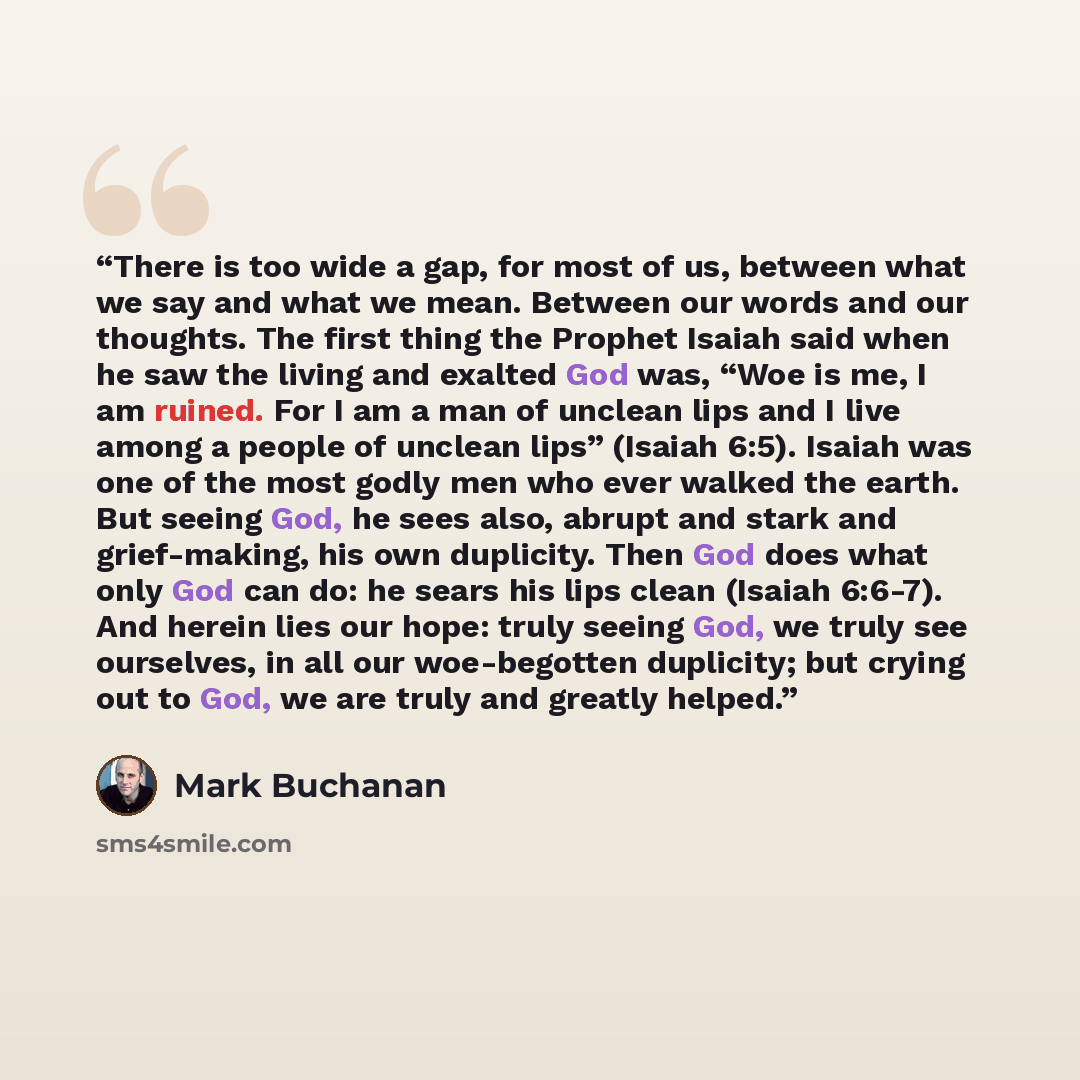
““There is too wide a gap, for most of us, between what we say and what we mean. Between our words and our thoughts. The first thing the Prophet Isaiah said when he saw the living and exalted God was, “Woe is me, I am ruined. For I am a man of unclean lips and I live among a people of unclean lips” (Isaiah 6:5). Isaiah was one of the most godly men who ever walked the earth. But seeing God, he sees also, abrupt and stark and grief-making, his own duplicity. Then God does what only God can do: he sears his lips clean (Isaiah 6:6-7). And herein lies our hope: truly seeing God, we truly see ourselves, in all our woe-begotten duplicity; but crying out to God, we are truly and greatly helped.””
About This Quote
This interpretation was drafted with AI assistance. It is one reading of the quote, not the author's own explanation.
The quote highlights the gap between spoken words and true intentions, using Isaiah's vision of his own impurity and God's cleansing as a metaphor for self-awareness and divine forgiveness.
In simple terms: Words often don’t match inner truth; seeing God reveals our flaws and offers cleansing.
Key Takeaway
Recognize hypocrisy, seek divine cleansing.
Themes
self-awareness
spirituality
humility
redemption
Mood
reflective
hopeful
Type
spiritual
philosophical
When to use this quote
- personal confession
- prayer
- conflict resolution
- leadership accountability
Key Concepts
theology
psychology
ethics
Questions to Reflect On
- How does confronting personal impurity change behavior?
- What role does divine forgiveness play in personal growth?
A Different Perspective
Human self-deception can persist despite spiritual insight.