Whenever I see an erring man, I say to myself I have also…
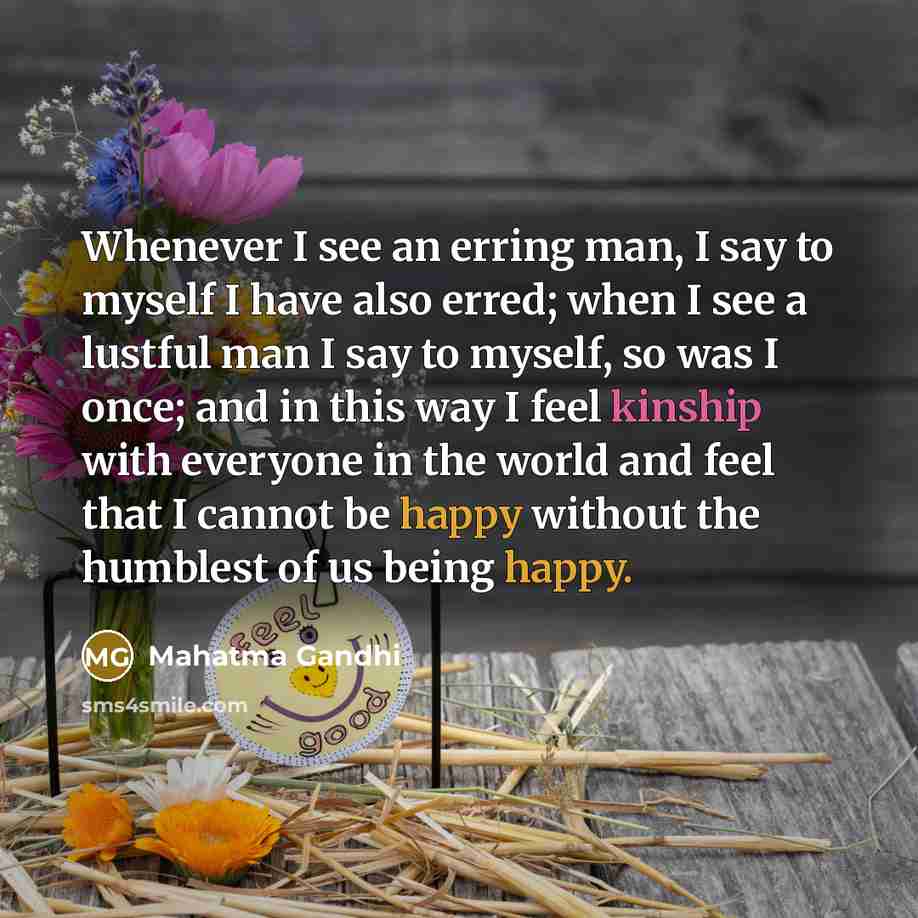
“Whenever I see an erring man, I say to myself I have also erred; when I see a lustful man I say to myself, so was I once; and in this way I feel kinship with everyone in the world and feel that I cannot be happy without the humblest of us being happy.”
About This Quote
This interpretation was drafted with AI assistance. It is one reading of the quote, not the author's own explanation.
Recognizing one's own flaws in others fosters empathy and a sense of shared humanity, linking personal humility to collective well‑being.
In simple terms: Shared humility creates empathy.
Key Takeaway
Self‑reflection builds kinship.
Themes
Empathy
Humility
Shared Humanity
Self‑Awareness
Compassion
Mood
Reflective
Compassionate
Humbling
Type
Philosophical
Moral
Inspirational
When to use this quote
- When judging a colleague
- When encountering a stranger's mistake
- When feeling superior to others
- When confronting personal bias
Key Concepts
Self‑Reflection
Interconnectedness
Moral Equality
Practical Applications
- Therapeutic counseling
- Ethical leadership training
Questions to Reflect On
- How does acknowledging your own errors change your view of others?
- What practices help maintain humility in daily interactions?