No honor, no heart, no religion; a corrupt woman. I always…
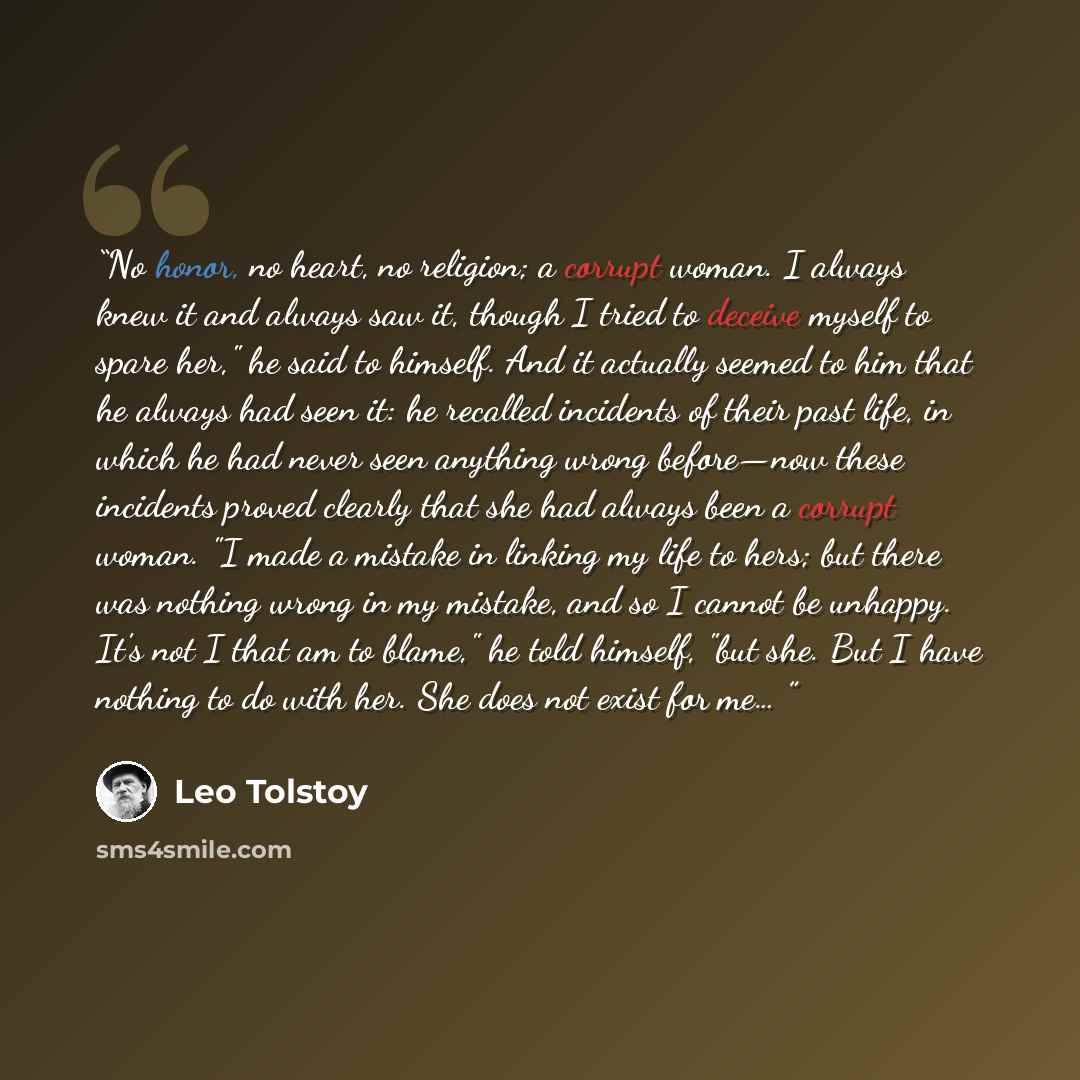
““No honor, no heart, no religion; a corrupt woman. I always knew it and always saw it, though I tried to deceive myself to spare her," he said to himself. And it actually seemed to him that he always had seen it: he recalled incidents of their past life, in which he had never seen anything wrong before—now these incidents proved clearly that she had always been a corrupt woman. "I made a mistake in linking my life to hers; but there was nothing wrong in my mistake, and so I cannot be unhappy. It's not I that am to blame," he told himself, "but she. But I have nothing to do with her. She does not exist for me… ””
About This Quote
This interpretation was drafted with AI assistance. It is one reading of the quote, not the author's own explanation.
The narrator rationalizes blaming a woman for his unhappiness, denying personal responsibility and seeing her as inherently corrupt.
In simple terms: He blames the woman for his problems, refusing to see his own role.
Key Takeaway
Accept personal accountability instead of scapegoating.
Themes
responsibility
blame
selfdeception
relationships
Mood
conflicted
defensive
reflective
Type
literary
philosophical
psychological
When to use this quote
- marriage conflict
- self‑reflection
- relationship counseling
- personal growth
- ethical decision‑making
Key Concepts
psychology
moral philosophy
gender dynamics
Questions to Reflect On
- How does blaming others limit personal growth?
- What evidence would change his perception?
A Different Perspective
This view ignores the narrator’s own choices and the complexity of mutual influence.