I have spoken here of what ought and ought not to be done…
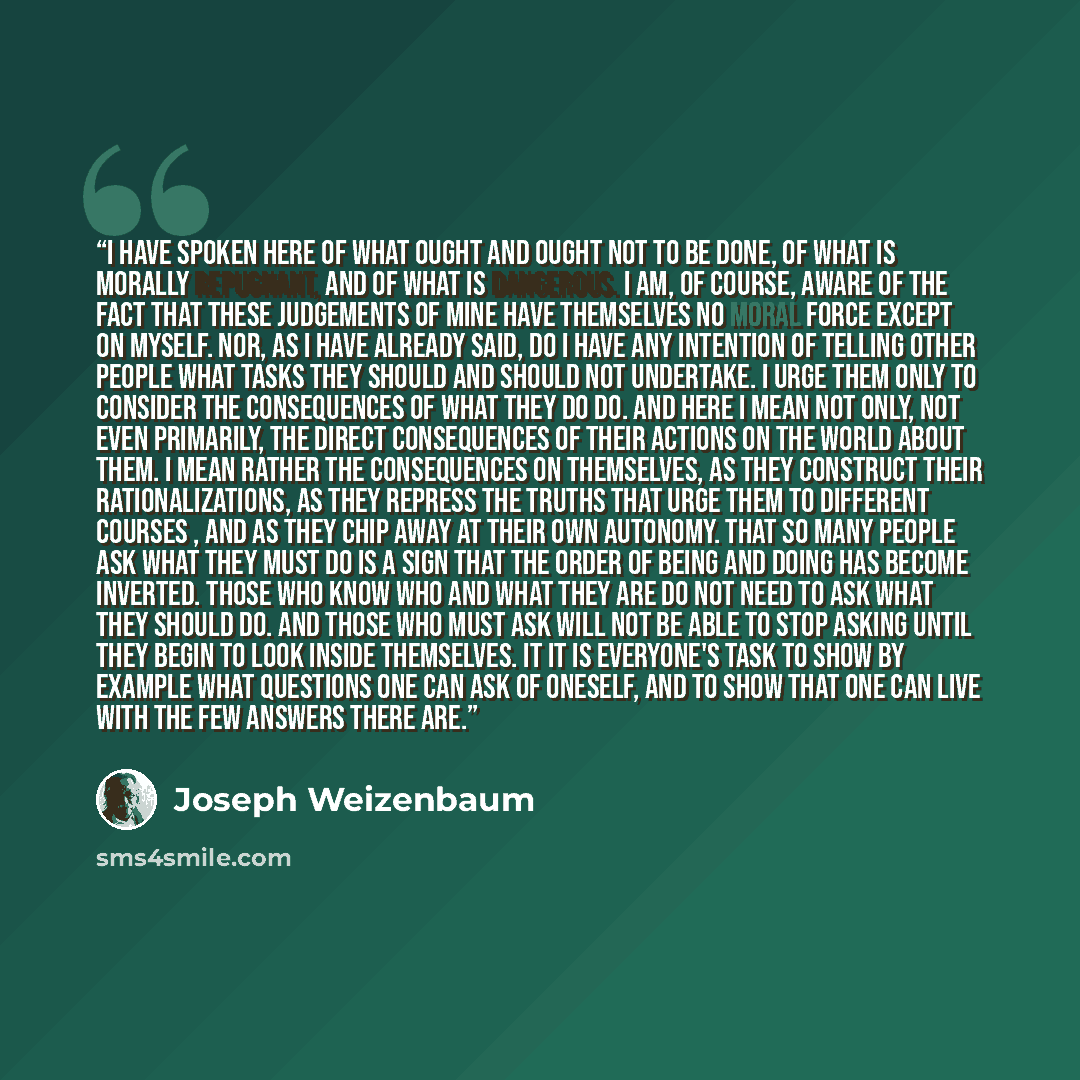
““I have spoken here of what ought and ought not to be done, of what is morally repugnant, and of what is dangerous. I am, of course, aware of the fact that these judgements of mine have themselves no moral force except on myself. Nor, as I have already said, do I have any intention of telling other people what tasks they should and should not undertake. I urge them only to consider the consequences of what they do do. And here I mean not only, not even primarily, the direct consequences of their actions on the world about them. I mean rather the consequences on themselves, as they construct their rationalizations, as they repress the truths that urge them to different courses , and as they chip away at their own autonomy. That so many people ask what they must do is a sign that the order of being and doing has become inverted. Those who know who and what they are do not need to ask what they should do. And those who must ask will not be able to stop asking until they begin to look inside themselves. It it is everyone's task to show by example what questions one can ask of oneself, and to show that one can live with the few answers there are.””
About This Quote
This interpretation was drafted with AI assistance. It is one reading of the quote, not the author's own explanation.
Self‑reflection is essential; external judgments lack moral force, so one must examine personal motives and autonomy.
In simple terms: Look inward to understand actions.
Key Takeaway
Question your motives, not just outcomes.
Themes
self‑reflection
autonomy
ethics
personal responsibility
Mood
contemplative
thoughtful
Type
philosophical
ethical
When to use this quote
- decision making
- personal growth
- ethical dilemmas
- leadership
Key Concepts
moral philosophy
psychology
critical thinking
Questions to Reflect On
- What inner questions guide your choices?
- How do you balance self‑examination with decisive action?
A Different Perspective
Self‑reflection can be paralyzing without actionable guidance.