The way of even the most justifiable revolution is…
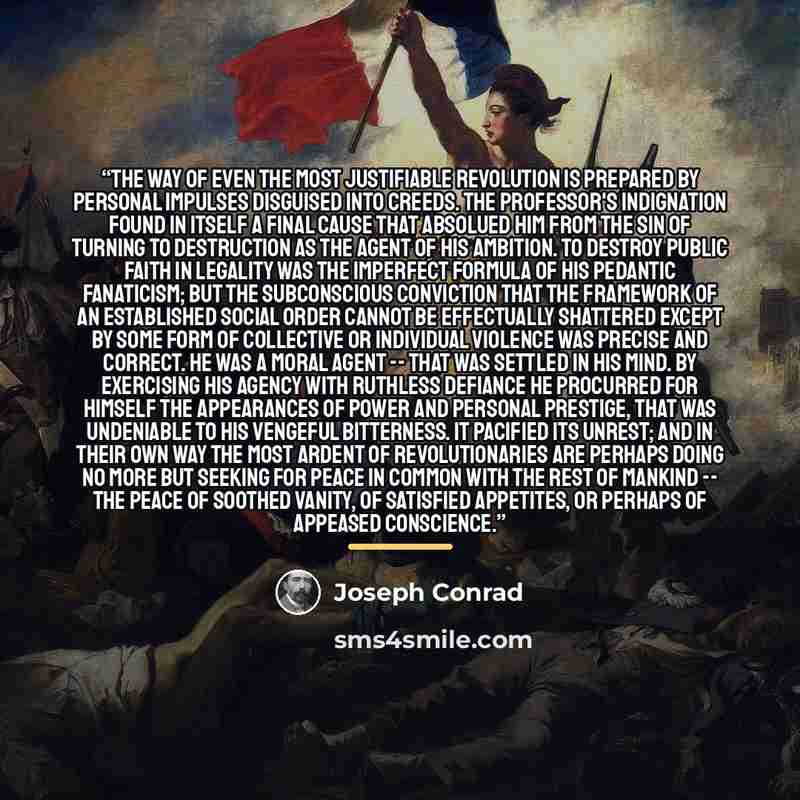
““The way of even the most justifiable revolution is prepared by personal impulses disguised into creeds. The Professor's indignation found in itself a final cause that absolued him from the sin of turning to destruction as the agent of his ambition. To destroy public faith in legality was the imperfect formula of his pedantic fanaticism; but the subconscious conviction that the framework of an established social order cannot be effectually shattered except by some form of collective or individual violence was precise and correct. He was a moral agent -- that was settled in his mind. By exercising his agency with ruthless defiance he procurred for himself the appearances of power and personal prestige, that was undeniable to his vengeful bitterness. It pacified its unrest; and in their own way the most ardent of revolutionaries are perhaps doing no more but seeking for peace in common with the rest of mankind -- the peace of soothed vanity, of satisfied appetites, or perhaps of appeased conscience.””
About This Quote
This interpretation was drafted with AI assistance. It is one reading of the quote, not the author's own explanation.
A revolutionary rational personal motives and hidden impulses, masquerading as ideology, to gain power and satisfy personal grievances, while believing violence is necessary to disrupt an entrenched order.
In simple terms: Revolutionaries hide personal motives behind ideology, using violence to gain power and soothe personal grievances.
Key Takeaway
Recognize hidden personal motives in political movements.
Themes
politics
psychology
revolution
ethics
power
motivation
Mood
cautious
critical
analytical
Type
philosophical
political
When to use this quote
- political activism
- academic analysis
- personal reflection
- leadership training
Key Concepts
Ideology
moral agency
violence
self‑justification
Questions to Reflect On
- What personal grievances drive your political actions?
- How can societies address underlying impulses without resorting to violence?
A Different Perspective
Violence may cause unintended harm and undermine moral legitimacy.