I may be what my enemies desire me to be, yet never an…
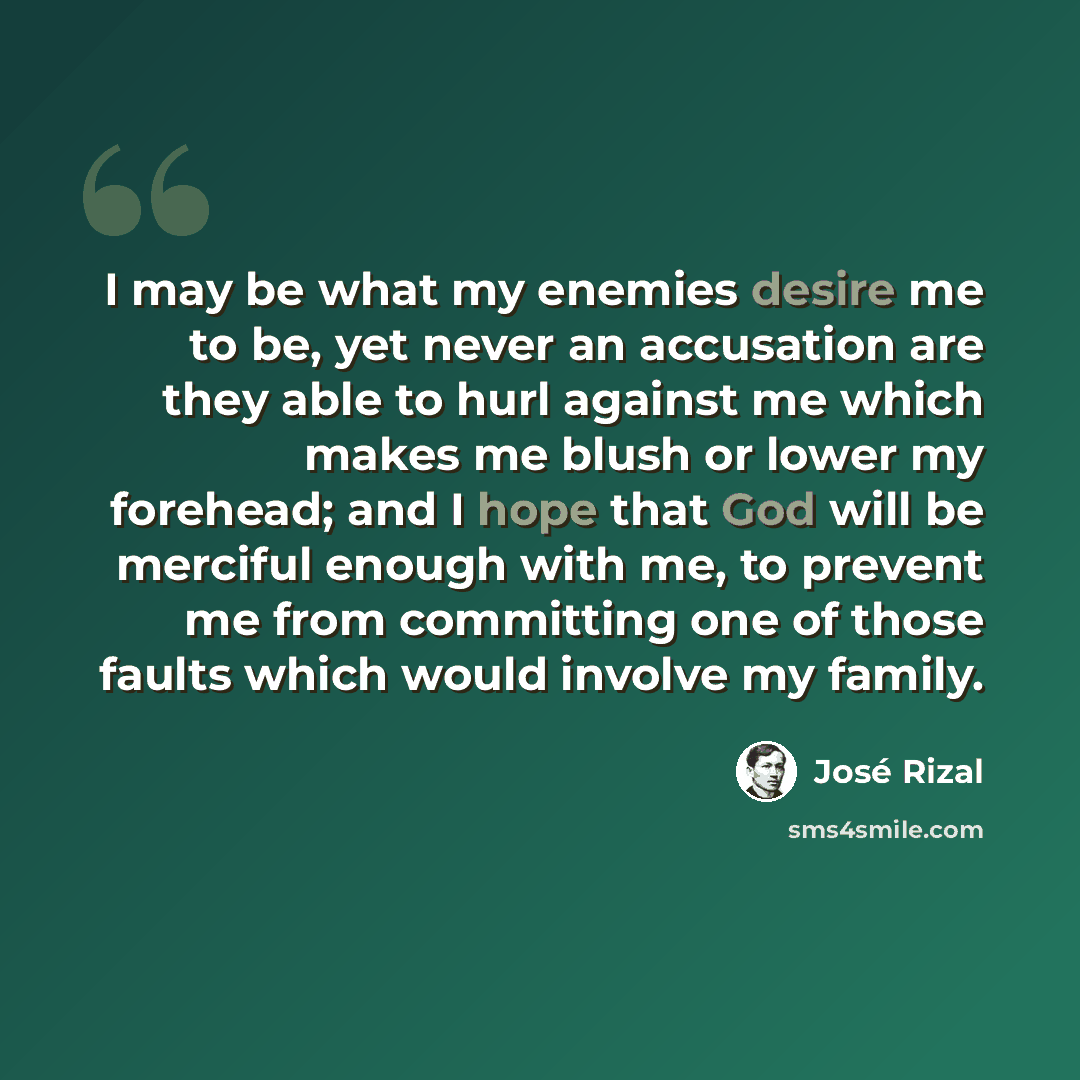
“I may be what my enemies desire me to be, yet never an accusation are they able to hurl against me which makes me blush or lower my forehead; and I hope that God will be merciful enough with me, to prevent me from committing one of those faults which would involve my family.”
About This Quote
This interpretation was drafted with AI assistance. It is one reading of the quote, not the author's own explanation.
The speaker asserts moral integrity, claiming that even if others label him, he cannot be truly blamed, and he seeks divine mercy to avoid sinful actions that would shame his family.
In simple terms: He claims innocence and asks for God's help to stay virtuous.
Key Takeaway
Seek moral clarity and divine guidance.
Themes
integrity
faith
family reputation
Mood
reflective
hopeful
Type
ethical
spiritual
When to use this quote
- personal decision‑making
- family leadership
- public service
- conflict resolution
Key Concepts
morality
self‑perception
spiritual accountability
Questions to Reflect On
- How do you maintain integrity under false accusations?
- What role does faith play in ethical choices?
A Different Perspective
Reliance on divine mercy may not address personal responsibility.