Those who think money can't buy happiness just don't know…
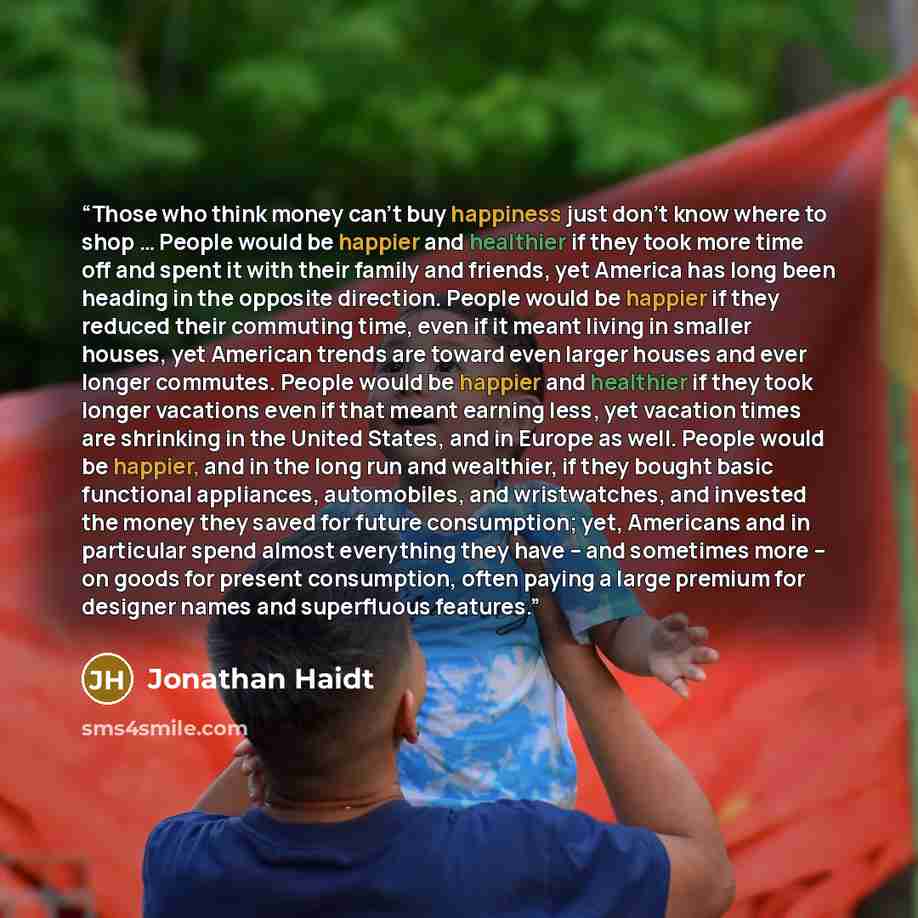
““Those who think money can't buy happiness just don't know where to shop … People would be happier and healthier if they took more time off and spent it with their family and friends, yet America has long been heading in the opposite direction. People would be happier if they reduced their commuting time, even if it meant living in smaller houses, yet American trends are toward even larger houses and ever longer commutes. People would be happier and healthier if they took longer vacations even if that meant earning less, yet vacation times are shrinking in the United States, and in Europe as well. People would be happier, and in the long run and wealthier, if they bought basic functional appliances, automobiles, and wristwatches, and invested the money they saved for future consumption; yet, Americans and in particular spend almost everything they have – and sometimes more – on goods for present consumption, often paying a large premium for designer names and superfluous features.””
About This Quote
This interpretation was drafted with AI assistance. It is one reading of the quote, not the author's own explanation.
People often sacrifice happiness and health for material consumption and longer commutes, while simpler living and time with loved ones would improve well‑being.
In simple terms: More time with family and less consumption leads to happiness.
Key Takeaway
Prioritize relationships over possessions.
Themes
happiness
health
consumption
work‑life balance
social values
Mood
reflective
concerned
Type
analytical
social critique
When to use this quote
- family gatherings
- vacations
- commuting
- housing choices
- budgeting
Key Concepts
consumerism
well‑being
time allocation
social norms
Questions to Reflect On
- How can you redesign daily habits to value time over things?
- What policies could support shorter commutes?
A Different Perspective
Cultural norms and advertising encourage consumption, making change difficult.