hurt your feelings, and then observe how they react (this…
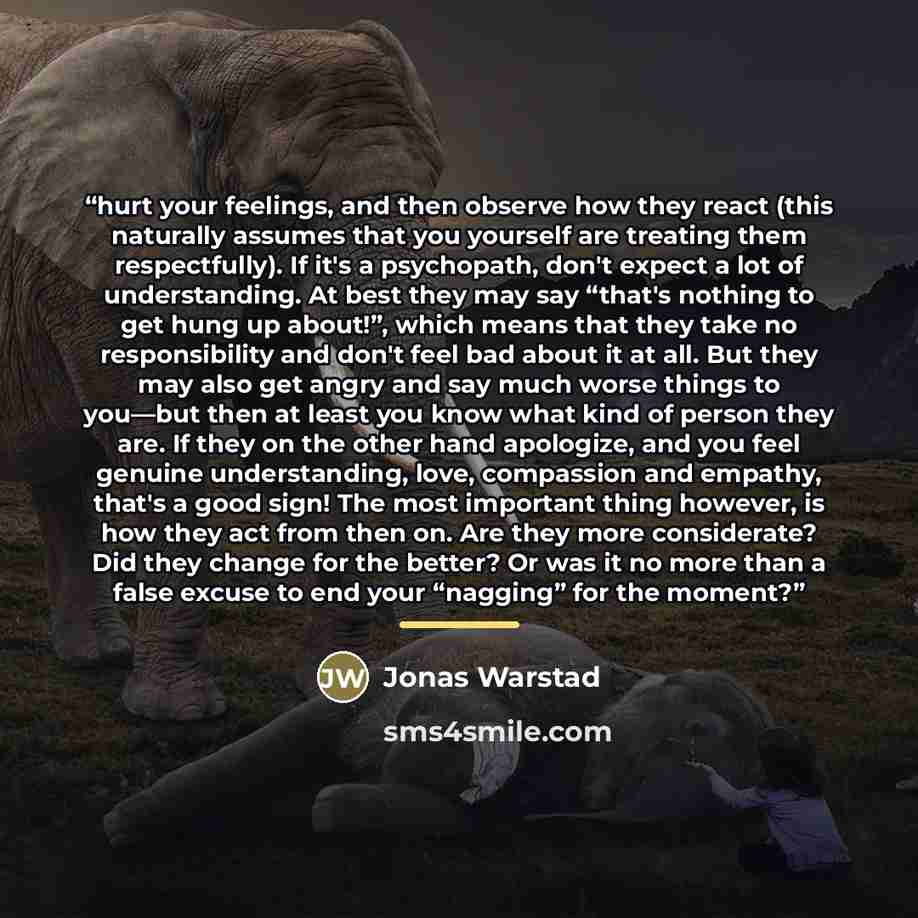
““hurt your feelings, and then observe how they react (this naturally assumes that you yourself are treating them respectfully). If it's a psychopath, don't expect a lot of understanding. At best they may say “that's nothing to get hung up about!”, which means that they take no responsibility and don't feel bad about it at all. But they may also get angry and say much worse things to you—but then at least you know what kind of person they are. If they on the other hand apologize, and you feel genuine understanding, love, compassion and empathy, that's a good sign! The most important thing however, is how they act from then on. Are they more considerate? Did they change for the better? Or was it no more than a false excuse to end your “nagging” for the moment?””
About This Quote
This interpretation was drafted with AI assistance. It is one reading of the quote, not the author's own explanation.
Observing reactions to hurt reveals character; genuine empathy and accountability matter more than apologies.
In simple terms: Reactions reveal true character.
Key Takeaway
Value consistent compassionate actions.
Themes
empathy
character
accountability
psychology
relationships
Mood
reflective
cautious
Type
psychological
advice
When to use this quote
- conflict resolution
- relationship counseling
- personal growth
Key Concepts
behavioral observation
emotional intelligence
trust building
Questions to Reflect On
- How to differentiate genuine from performative empathy?
- What actions prove accountability?
A Different Perspective
Apologies may be insincere.